
Nations and Citizens in Yugoslavia and the Post-Yugoslav States
One Hundred Years of Citizenship
Inbunden, Engelska, 2015
2 479 kr
Beställningsvara. Skickas inom 10-15 vardagar. Fri frakt för medlemmar vid köp för minst 249 kr.
Finns i fler format (1)
This book is available as open access through the Bloomsbury Open Access programme and is available on www.bloomsburycollections.com.Between 1914 and the present day the political makeup of the Balkans has relentlessly changed, following unpredictable shifts of international and internal borders. Between and across these borders various political communities were formed, co-existed and (dis)integrated.By analysing one hundred years of modern citizenship in Yugoslavia and post-Yugoslav states, Igor Štiks shows that the concept and practice of citizenship is necessary to understand how political communities are made, un-made and re-made. He argues that modern citizenship is a tool that can be used for different and opposing goals, from integration and re-unification to fragmentation and ethnic engineering. The study of citizenship in the 'laboratory' of the Balkands offers not only an original angle to narrate an alternative political history, but also an insight into the fine mechanics and repeating glitches of modern politics, applicable to multinational states in the European Union and beyond.
Produktinformation
- Utgivningsdatum2015-07-30
- Mått162 x 236 x 18 mm
- Vikt520 g
- FormatInbunden
- SpråkEngelska
- Antal sidor240
- FörlagBloomsbury Publishing PLC
- ISBN9781474221528
Tillhör följande kategorier
Hoppa över listan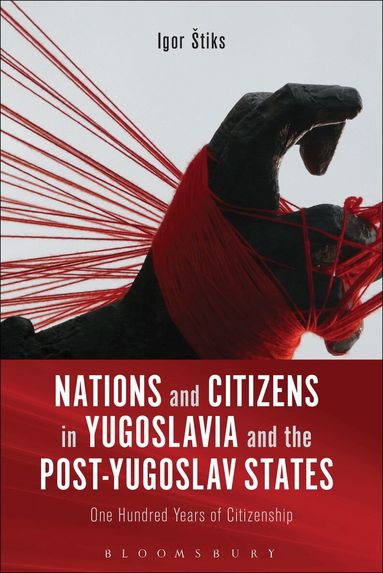


Du kanske också är intresserad av
- Nyhet
Del 3
- Nyhet
Del 6
- Nyhet
- Nyhet
Del 4
- Nyhet
Del 7
- Nyhet
Del 11