
Myth and Politics in Ancient Near Eastern Historiography
Inbunden, Engelska, 2004
1 479 kr
Beställningsvara. Skickas inom 3-6 vardagar. Fri frakt för medlemmar vid köp för minst 249 kr.
Finns i fler format (2)
The essays included in this volume analyze important historical texts from various regions of the Ancient Near East. The distinguished Italian historian Mario Liverani suggests that these historiographical texts were of a "true" historical nature and that their literary forms achieved their intended results. Liverani focuses on two central themes in these texts: myth and politics.There is a close connection, Liverani finds, between the writing of history and the validation of political order and political action. History defines the correct role and behavior of political leaders, especially when they do not possess the validation provided by tradition. Historical texts, he discovers, are more often the tools for supporting change than for supporting stability.Liverani demonstrates that history writing in the Ancient Near East made frequent use of mythical patterns, wisdom motifs, and literary themes in order to fulfill its audience's cultural expectations. The resulting nonhistorical literary forms can mislead interpretation, but an analysis of these forms allows the texts' sociopolitical and communicative frameworks to emerge.
Produktinformation
- Utgivningsdatum2004-09-07
- Mått155 x 235 x 21 mm
- Vikt907 g
- FormatInbunden
- SpråkEngelska
- Antal sidor240
- FörlagCornell University Press
- ISBN9780801443336
- ÖversättareZainab Bahrani, Marc Van De Mieroop
Tillhör följande kategorier
Hoppa över listan



Mer från samma författare
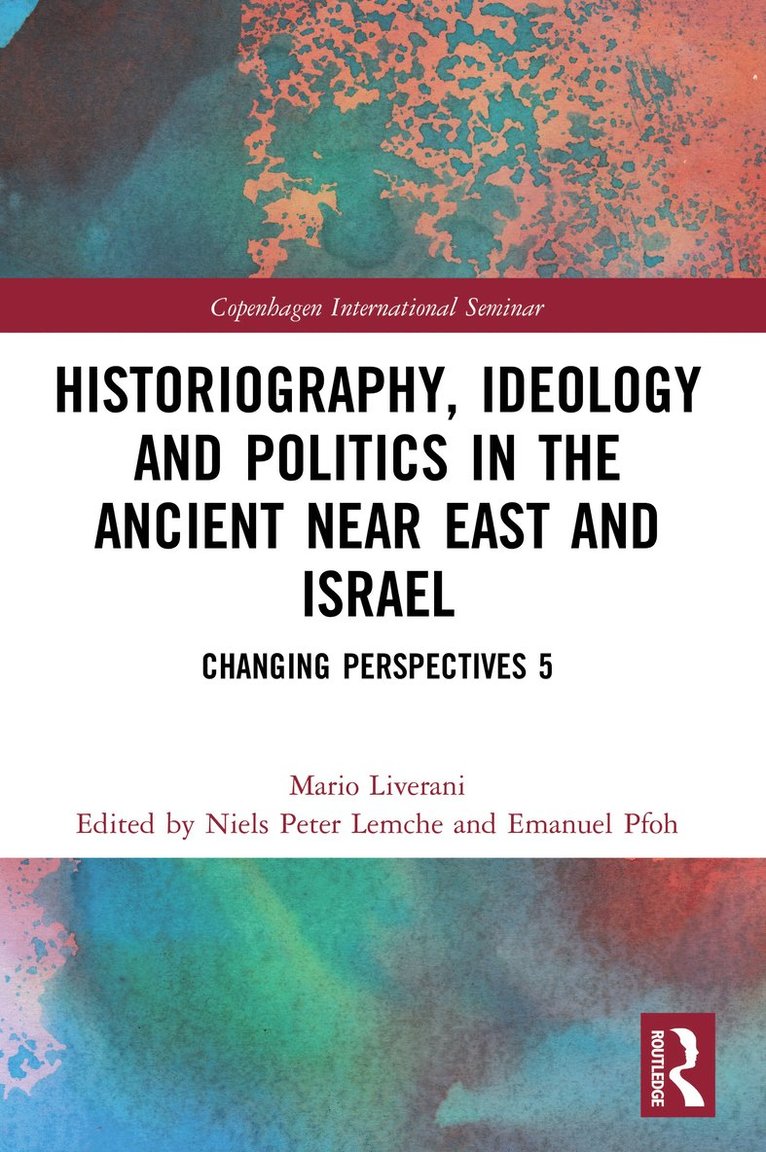
Historiography, Ideology and Politics in the Ancient Near East and Israel
Mario Liverani, Niels Peter Lemche, Emanuel Pfoh
Inbunden, 2021
3 219 kr
Historiography, Ideology and Politics in the Ancient Near East and Israel
Mario Liverani, Niels Peter Lemche, Emanuel Pfoh
Häftad, 2024
859 kr
Del 21
Del 11
Del 21
Hoppa över listan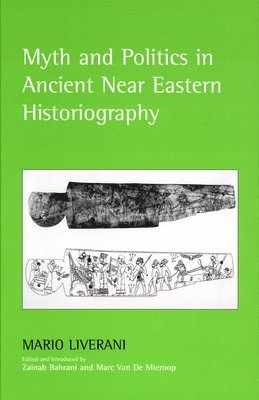

Du kanske också är intresserad av
Myth and Politics in Ancient Near Eastern Historiography
Mario Liverani, Zainab Bahrani, Marc Van De Mieroop
Häftad, 2004
449 kr
Historiography, Ideology and Politics in the Ancient Near East and Israel
Mario Liverani, Niels Peter Lemche, Emanuel Pfoh
Inbunden, 2021
3 219 kr
Historiography, Ideology and Politics in the Ancient Near East and Israel
Mario Liverani, Niels Peter Lemche, Emanuel Pfoh
Häftad, 2024
859 kr
Del 21
Del 11