
Del i serien Emerald Points
Motional Intelligence
The Power of Movement in Leadership
Inbunden, Engelska, 2026
849 kr
Beställningsvara. Skickas inom 5-8 vardagar. Fri frakt för medlemmar vid köp för minst 249 kr.
Leadership studies are increasingly emphasizing embodied communication, nonverbal influence, and the physical presence of leaders—especially in diverse, hybrid, and high-stakes social environments. Motional Intelligence advances this shift by introducing a bold new framework for understanding how posture, gesture, rhythm, and bodily timing shape influence, trust, attraction, and power. Drawing on psychology, neuroscience, evolutionary theory, leadership research, film, and everyday social life, the book shows that long before words are processed, people evaluate leaders through movement—reading confidence, warmth, dominance, or threat in the body itself.Across domains ranging from leadership and romance to classrooms, boardrooms, athletics, and popular culture, the authors demonstrate how movement operates as a deeply social form of intelligence—one that is expressive (how leaders signal), perceptive (how they read others), and regulative (how they adapt in real time). The book also reveals how identical movements can be interpreted differently depending on gender, status, and context, shaping credibility and opportunity in subtle but powerful ways.Accessible yet rigorous, Motional Intelligence reframes leadership as an embodied practice and argues that ethical responsibility begins not only with what leaders think or say, but with how they move.
Produktinformation
- Utgivningsdatum2026-06-15
- Mått152 x 229 x 11 mm
- Vikt300 g
- FormatInbunden
- SpråkEngelska
- SerieEmerald Points
- Antal sidor136
- FörlagEmerald Publishing Limited
- ISBN9781837420629
Tillhör följande kategorier
Hoppa över listan







Mer från samma författare
The Hazards of Great Leadership
James K. Beggan, Scott T. Allison, George R. Goethals
Häftad, 2023
529 kr
The SAGE Encyclopedia of Leadership Studies
George R. Goethals, Scott T Allison, Georgia J. Sorenson
Inbunden, 2023
6 349 kr
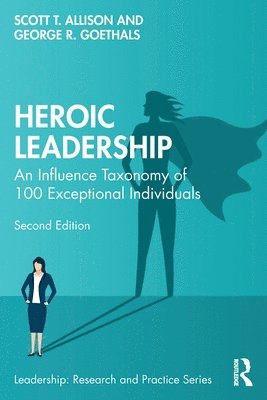
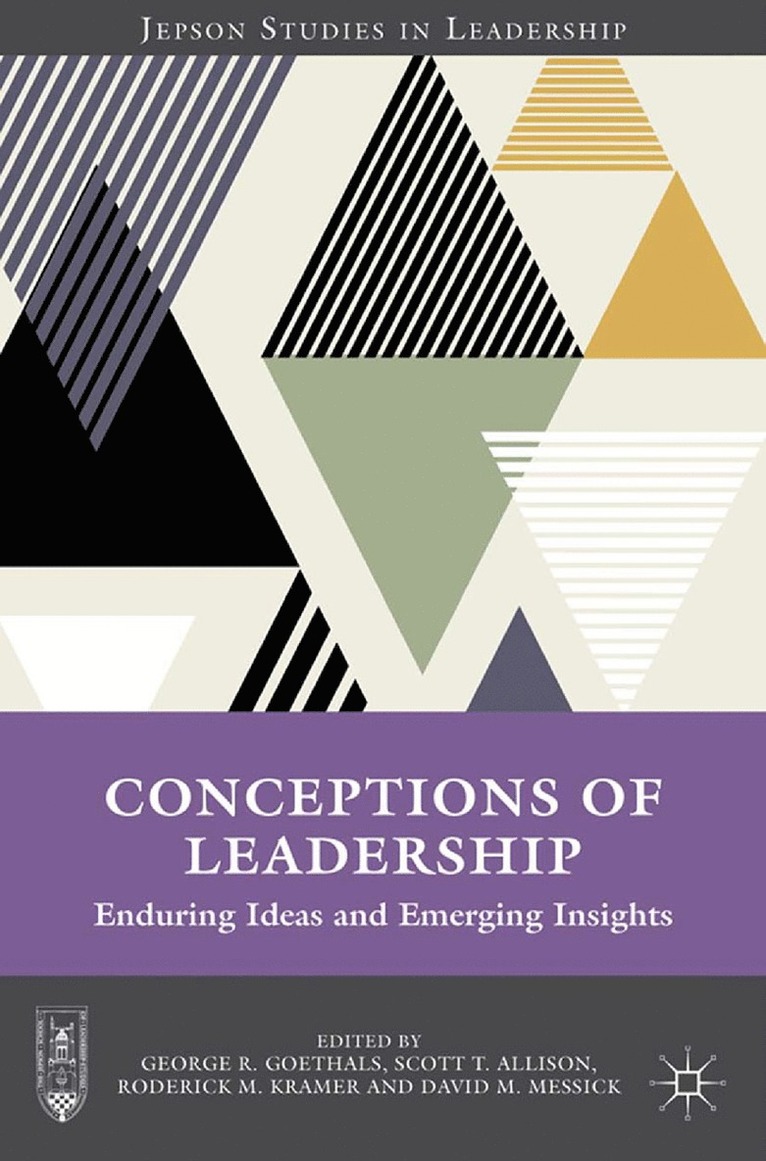
Conceptions of Leadership
Scott T. Allison, David M. Messick, G. Goethals, R. Kramer
Inbunden, 2014
1 479 kr
Conceptions of Leadership
Scott T. Allison, David M. Messick, G. Goethals, R. Kramer
Häftad, 2014
1 629 kr
Hoppa över listan









Mer från samma serie
Education at the End of Time
Stefan Bengtsson, Jonas Andreasen Lysgaard, Dylan McGarry
Inbunden, 2025
1 009 kr
Hoppa över listan



Du kanske också är intresserad av
The Hazards of Great Leadership
James K. Beggan, Scott T. Allison, George R. Goethals
Häftad, 2023
529 kr
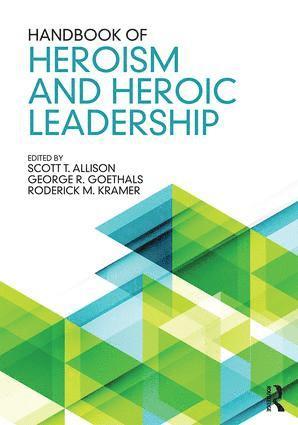
Handbook of Heroism and Heroic Leadership
Scott T. Allison, George R. Goethals, Roderick M. Kramer
Häftad, 2016
2 559 kr
Handbook of Heroism and Heroic Leadership
Scott T. Allison, George R. Goethals, Roderick M. Kramer
Inbunden, 2016
4 719 kr
Frontiers in Spiritual Leadership
Scott T. Allison, Craig T. Kocher, George R. Goethals
Häftad, 2019
1 439 kr
Frontiers in Spiritual Leadership
Scott T. Allison, Craig T. Kocher, George R. Goethals
Inbunden, 2016
1 439 kr