
Del i serien Worlds of Memory
Mobility of Memory
Migrations and Diasporas across European Borders
Häftad, Engelska, 2024
679 kr
Beställningsvara. Skickas inom 5-8 vardagar. Fri frakt för medlemmar vid köp för minst 249 kr.
Migration is most concretely defined by the movement of human bodies, but it leaves indelible traces on everything from individual psychology to major social movements. Drawing on extensive field research, and with a special focus on Italy and the Netherlands, this interdisciplinary volume explores the interrelationship of migration and memory at scales both large and small, ranging across topics that include oral and visual forms of memory, archives, and artistic innovations. By engaging with the complex tensions between roots and routes, minds and bodies, The Mobility of Memory offers an incisive and empirically grounded perspective on a social phenomenon that continues to reshape both Europe and the world.
Produktinformation
- Utgivningsdatum2024-05-03
- Mått152 x 229 x 14 mm
- Vikt374 g
- FormatHäftad
- SpråkEngelska
- SerieWorlds of Memory
- Antal sidor252
- FörlagBerghahn Books
- ISBN9781805393238
Tillhör följande kategorier
Hoppa över listan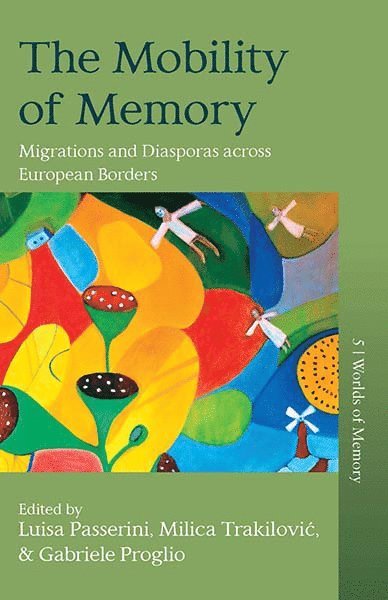









Du kanske också är intresserad av
Black Mediterranean
Gabriele Proglio, Camilla Hawthorne, Ida Danewid, P. Khalil Saucier, Giuseppe Grimaldi, Angelica Pesarini, Timothy Raeymaekers, Giulia Grechi, Vivian Gerrand
Inbunden, 2021
2 069 kr
Black Mediterranean
Gabriele Proglio, Camilla Hawthorne, Ida Danewid, P. Khalil Saucier, Giuseppe Grimaldi, Angelica Pesarini, Timothy Raeymaekers, Giulia Grechi, Vivian Gerrand
Häftad, 2022
2 069 kr
Debordering Europe
Livio Amigoni, Silvia Aru, Ivan Bonnin, Gabriele Proglio, Cecilia Vergnano
Häftad, 2021
1 439 kr
Debordering Europe
Livio Amigoni, Silvia Aru, Ivan Bonnin, Gabriele Proglio, Cecilia Vergnano
Inbunden, 2020
1 439 kr