
Del i serien Studies in Asian Security
Minimum Deterrence and India's Nuclear Security
Inbunden, Engelska, 2005
2 029 kr
Beställningsvara. Skickas inom 10-15 vardagar. Fri frakt för medlemmar vid köp för minst 249 kr.
Finns i fler format (1)
In this book, a leading authority on India's nuclear program offers an informed and thoughtful assessment of India's nuclear strategy. He shows that the country's nuclear-strategic culture is generally in accord with the principle of minimum deterrence, but is sometimes inconsistent and has a tendency to drift into a more open-ended process. He addresses areas of concern, notably the relationship between minimum deterrence and subnuclear conflict, the threat from nuclear terrorism, and the special challenges nuclear weapons pose for a democratic society.
Produktinformation
- Utgivningsdatum2005-11-15
- Mått152 x 229 x 20 mm
- Vikt925 g
- FormatInbunden
- SpråkEngelska
- SerieStudies in Asian Security
- Antal sidor264
- FörlagStanford University Press
- ISBN9780804752558
Tillhör följande kategorier
Hoppa över listan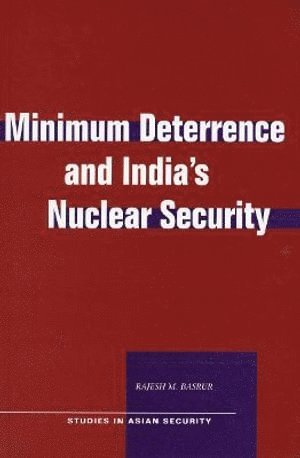






Du kanske också är intresserad av
- Nyhet
Del 3
- Nyhet
Del 11
- Nyhet
Del 6
- Nyhet
Del 4
Del 3
Del 1
Del 2