
Del 15
Del 30 i serien Postcolonialism Across the Disciplines
Middlebrow 2.0 and the Digital Affect
Online Reading Communities of the New Nigerian Novel
Häftad, Engelska, 2025
709 kr
Beställningsvara. Skickas inom 5-8 vardagar. Fri frakt för medlemmar vid köp för minst 249 kr.
Finns i fler format (1)
An Open Access edition of this book is available on the Liverpool University Press website and the OAPEN library.Middlebrow 2.0 and the Digital Affect investigates the material conditions of producing, distributing and consuming the postcolonial in the Internet era. Bridging the gap between postcolonial and middlebrow studies, the digital humanities and the history of emotions, it employs corpus linguistics software to scrutinise more than 15,000 online responses to 20 new Nigerian novels, unearthing the patterns of affect that characterise the contemporary digital milieu of literary transmission. Building on materialist, social constructionist and linguistic approaches to community and emotion, the study illustrates how Amazon, Goodreads and YouTube capitalise on socially oriented cross-border reading practices by creating empathic communities of ethnically diverse yet socially balanced readers who use social media to fashion themselves as emotionally receptive members of a globalising middle-class formation. Offering a reproducible method for exploring new forms of postcolonial reader engagement that strengthens the postcolonial analysis of inclusion and exclusion, the book shows that the digital mediation of postcolonial literatures functions to appropriate various markers of identity and difference to the standards of bourgeois literary culture. The results highlight that the digital literary economy proves inclusive of the postcolonial Other, but only with full reserve to middle-class norms and values.
Produktinformation
- Utgivningsdatum2025-10-03
- Mått156 x 234 x undefined mm
- FormatHäftad
- SpråkEngelska
- SeriePostcolonialism Across the Disciplines
- Antal sidor232
- FörlagLiverpool University Press
- ISBN9781836245568
Tillhör följande kategorier
Hoppa över listan
Mer från samma serie
Del 11
Del 16
Del 17
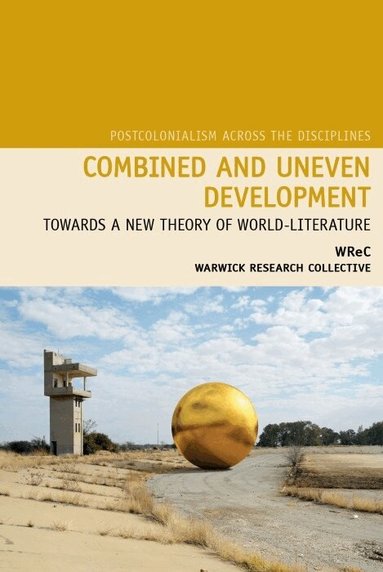
Combined and Uneven Development
Sharae Deckard, Nicholas Lawrence, Neil Lazarus, Graeme Macdonald, Upamanyu Pablo Mukherjee, Benita Parry, Stephen Shapiro
Inbunden, 2015
3 099 kr
Del 17
Combined and Uneven Development
Sharae Deckard, Nicholas Lawrence, Neil Lazarus, Graeme Macdonald, Upamanyu Pablo Mukherjee, Benita Parry, Stephen Shapiro
Häftad, 2015
759 kr
Del 18
Del 19
Del 20
Del 21
Del 5
Hoppa över listan



Du kanske också är intresserad av
Del 30
- Nyhet
Del 7
Del 24
Del 7
Del 4
Del 18
- Nyhet
Del 3
Del 17
Combined and Uneven Development
Sharae Deckard, Nicholas Lawrence, Neil Lazarus, Graeme Macdonald, Upamanyu Pablo Mukherjee, Benita Parry, Stephen Shapiro
Inbunden, 2015
3 099 kr
Del 29
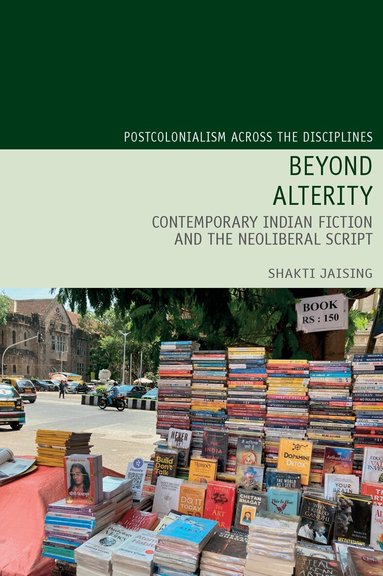
Beyond Alterity: Contemporary Indian Fiction and the Neoliberal Script
Shakti Jaising
Häftad, 2025
639 kr
Del 29
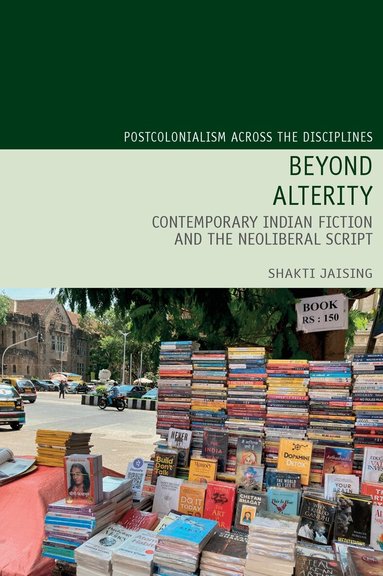
Beyond Alterity: Contemporary Indian Fiction and the Neoliberal Script
Shakti Jaising
Inbunden, 2023
2 729 kr