
Del 7 i serien Postcolonialism Across the Disciplines
Cultured Violence
Narrative, Social Suffering, and Engendering Human Rights in Contemporary South Africa
Häftad, Engelska, 2013
609 kr
Beställningsvara. Skickas inom 5-8 vardagar. Fri frakt för medlemmar vid köp för minst 249 kr.
Finns i fler format (1)
Cultured Violence explores contemporary South African culture as a test case for the achievement of democracy by constitutional means in the wake of prolonged and violent conflict. The book addresses key ethical issues, normally addressed from within the discourses of law, the social sciences, and health sciences, through narrative analysis. The book draws from and juxtaposes narratives of profoundly different kinds to make its point: fictional narratives, such as the work of Nobel laureate J.M. Coetzee; public testimony, such as that of the Truth and Reconciliation Commission, and Jacob Zuma’s (the former Deputy President’s) 2006 trial on charges of rape; and personal testimony, drawn from interviews undertaken by the author over the past ten years in South Africa. These narratives are analysed in order to demonstrate the different ways in which they illuminate the cultural “state of the nation”: ways that elude descriptions of South African subjects undertaken from within discourses that have a historical tendency to ignore cultural dimensions of lived experience and their material particularity. The implications of these lived experiences of culture are underlined by the book’s focus on the violation of human rights as comprising practices that are simultaneously discursive and material. Cases of such violations, all drawn from the South African context, include humans’ use of non-human animals as instruments of violence against other humans; the constructed marginalization and vulnerability of women and children; and the practice of stigma in the context of the HIV/AIDS epidemic.
Produktinformation
- Utgivningsdatum2013-09-02
- Mått156 x 234 x undefined mm
- FormatHäftad
- SpråkEngelska
- SeriePostcolonialism Across the Disciplines
- Antal sidor192
- FörlagLiverpool University Press
- ISBN9781846318733
Tillhör följande kategorier
Hoppa över listan




Mer från samma serie
Del 15
Del 11
Del 16
Del 17
Combined and Uneven Development
Sharae Deckard, Nicholas Lawrence, Neil Lazarus, Graeme Macdonald, Upamanyu Pablo Mukherjee, Benita Parry, Stephen Shapiro
Inbunden, 2015
3 069 kr
Del 17
Combined and Uneven Development
Sharae Deckard, Nicholas Lawrence, Neil Lazarus, Graeme Macdonald, Upamanyu Pablo Mukherjee, Benita Parry, Stephen Shapiro
Häftad, 2015
749 kr
Del 18
Del 19
Del 20
Del 21
Del 5
Hoppa över listan

Du kanske också är intresserad av
Del 7
Del 24
Del 4
Del 18
Del 17
Combined and Uneven Development
Sharae Deckard, Nicholas Lawrence, Neil Lazarus, Graeme Macdonald, Upamanyu Pablo Mukherjee, Benita Parry, Stephen Shapiro
Inbunden, 2015
3 069 kr
Del 29
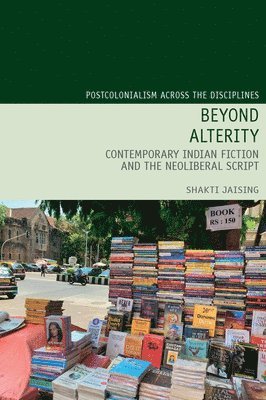
Beyond Alterity: Contemporary Indian Fiction and the Neoliberal Script
Shakti Jaising
Häftad, 2025
639 kr
- Nyhet
Del 3
Del 29
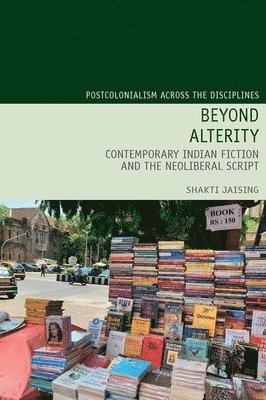
Beyond Alterity: Contemporary Indian Fiction and the Neoliberal Script
Shakti Jaising
Inbunden, 2023
2 699 kr