
Del i serien AK Peters/CRC Recreational Mathematics Series
Magic Theorem
A Greatly-Expanded, Much-Abridged Edition of The Symmetries of Things
Inbunden, Engelska, 2025
2 729 kr
Beställningsvara. Skickas inom 10-15 vardagar. Fri frakt för medlemmar vid köp för minst 249 kr.
Finns i fler format (1)
The Magic Theorem: a Greatly-Expanded, Much-Abridged Edition of The Symmetries of Things presents a wonder- fully unique re-imagining of the classic book, The Symmetries of Things. Begun as a standard second edition by the original author team, it changed in scope following the passing of John Conway. This version of the book fulfills the original vision for the project: an elementary introduction to the orbifold signature notation and the theory behind it.The Magic Theorem features all the material contained in Part I of The Symmetries of Things, now redesigned and even more lavishly illustrated, along with new and engaging material suitable for a novice audience. This new book includes hands-on symmetry activities for the home or classroom and an online repository of teaching materials avaialble at themagictheorem.com
Produktinformation
- Utgivningsdatum2025-07-10
- Mått215 x 254 x 15 mm
- Vikt520 g
- FormatInbunden
- SpråkEngelska
- SerieAK Peters/CRC Recreational Mathematics Series
- Antal sidor190
- FörlagTaylor & Francis Ltd
- ISBN9781032182735
Tillhör följande kategorier
Hoppa över listan
Mer från samma författare
Winning Ways for Your Mathematical Plays, Volume 4
Elwyn R. Berlekamp, John H. Conway, Richard K. Guy
Inbunden, 2017
4 399 kr
Winning Ways for Your Mathematical Plays, Volume 3
Elwyn R. Berlekamp, John H. Conway, Richard K. Guy
Inbunden, 2020
3 929 kr
Winning Ways for Your Mathematical Plays, Volume 2
Elwyn R. Berlekamp, John H. Conway, Richard K. Guy
Inbunden, 2018
4 659 kr
Winning Ways for Your Mathematical Plays
Elwyn R. Berlekamp, John H. Conway, Richard K. Guy
Inbunden, 2018
4 399 kr
Winning Ways for Your Mathematical Plays, Volume 2
Elwyn R. Berlekamp, John H. Conway, Richard K. Guy
Häftad, 2003
1 289 kr
Winning Ways for Your Mathematical Plays, Volume 3
Elwyn R. Berlekamp, John H. Conway, Richard K. Guy
Häftad, 2003
1 499 kr
Hoppa över listan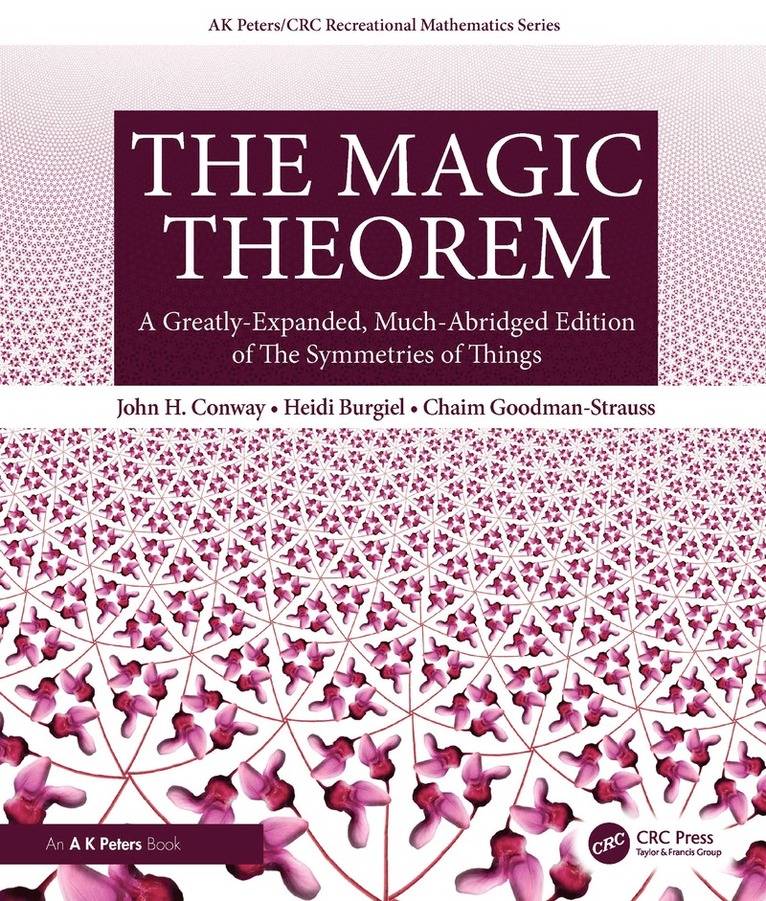
Du kanske också är intresserad av
Gewinnen Strategien für mathematische Spiele
Elwyn R. Berlekamp, John H. Conway, Richard K. Guy
Häftad, 1986
739 kr
Winning Ways for Your Mathematical Plays, Volume 4
Elwyn R. Berlekamp, John H. Conway, Richard K. Guy
Häftad, 2004
1 289 kr
Gewinnen Strategien für mathematische Spiele
Elwyn R. Berlekamp, John H. Conway, Richard K. Guy, Elwyn R. Berlekamp, John H. Conway
Häftad, 1985
609 kr
Gewinnen Strategien für mathematische Spiele
Elwyn R. Berlekamp, John H. Conway, Richard K. Guy, Elwyn R. Berlekamp, John H. Conway
Häftad, 1986
739 kr
Winning Ways for Your Mathematical Plays, Volume 4
Elwyn R. Berlekamp, John H. Conway, Richard K. Guy
Inbunden, 2017
4 399 kr
Winning Ways for Your Mathematical Plays, Volume 3
Elwyn R. Berlekamp, John H. Conway, Richard K. Guy
Häftad, 2003
1 499 kr