
Del i serien Cambridge Studies in Law and Society
Law, Violence and Sovereignty Among West Bank Palestinians
Häftad, Engelska, 2009
709 kr
Beställningsvara. Skickas inom 7-10 vardagar. Fri frakt för medlemmar vid köp för minst 249 kr.
Finns i fler format (1)
As the Oslo Peace Process has given way to the violence of the second intifada, this book explores the continuing legacy of Oslo in the everyday life of the Israeli-Palestinian conflict. Taking a perspective that sees the Israeli-Palestinian conflict as a conflict over the distribution of legal rights, it focuses on the daily concerns of West Bank Palestinians, and explores the meanings, limitations and potential of legal claims in the context of the region's structures of governance. Kelly argues that fundamental contradictions in the process through which the West Bank has been ruled and misruled have resulted in an unstable mixture of legality, fear and uncertainty. Based on long term ethnographic fieldwork, this book provides an insight into how the wider Middle East conflict manifests itself through the daily encounters of ordinary Israelis and Palestinians, offering an evocative and theoretically informed account of the relationship between law, peace-building and violence.
Produktinformation
- Utgivningsdatum2009-08-27
- Mått154 x 228 x 12 mm
- Vikt360 g
- FormatHäftad
- SpråkEngelska
- SerieCambridge Studies in Law and Society
- Antal sidor218
- FörlagCambridge University Press
- ISBN9780521687478
Tillhör följande kategorier
Hoppa över listan


Mer från samma författare
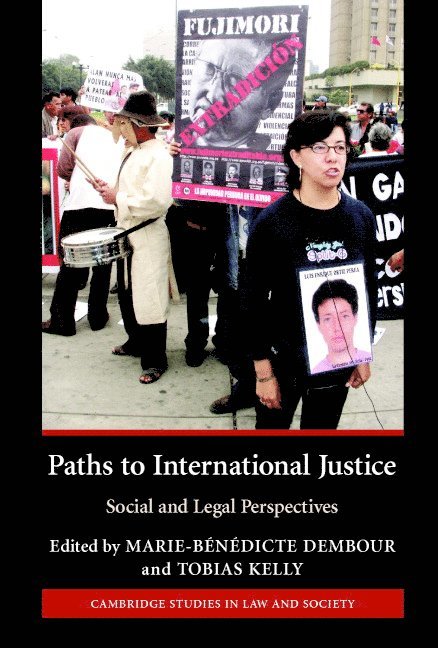
Paths to International Justice
Marie-Benedicte Dembour, Marie-Bénédicte Dembour, Tobias Kelly
Inbunden, 2007
1 699 kr
Intimate Life of Dissent
Harini Amarasuriya, Tobias Kelly, Sidharthan Maunaguru, Galina Oustinova-Stjepanovic, Jonathan Spencer
Häftad, 2020
979 kr
Hoppa över listan

Mer från samma serie
The Politics of Truth and Reconciliation in South Africa
Richard A. Wilson, Chris Arup
Häftad, 2001
679 kr
The Gacaca Courts, Post-Genocide Justice and Reconciliation in Rwanda
Phil Clark
Inbunden, 2010
1 259 kr
Social Citizenship and Workfare in the United States and Western Europe
Joel F. Handler
Häftad, 2004
829 kr
Hoppa över listan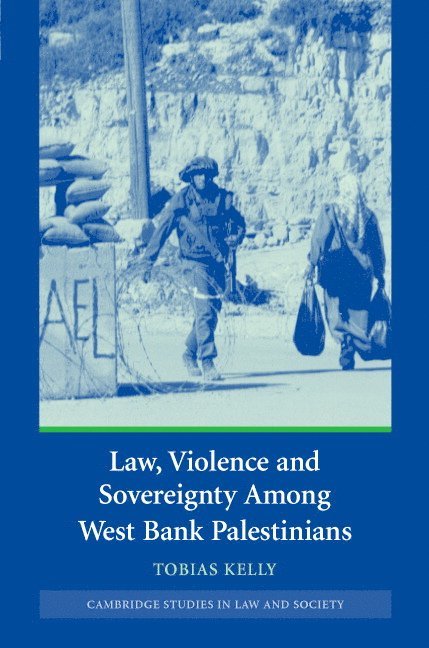

Du kanske också är intresserad av
Paths to International Justice
Marie-Benedicte Dembour, Marie-Bénédicte Dembour, Tobias Kelly
Inbunden, 2007
1 699 kr
Intimate Life of Dissent
Harini Amarasuriya, Tobias Kelly, Sidharthan Maunaguru, Galina Oustinova-Stjepanovic, Jonathan Spencer
Häftad, 2020
979 kr
Del 1
