
Del i serien Lines of the Symbolic in Psychoanalysis Series
Lacan and Critical Feminism
Subjectivity, Sexuation, and Discourse
Häftad, Engelska, 2020
699 kr
Beställningsvara. Skickas inom 10-15 vardagar. Fri frakt för medlemmar vid köp för minst 249 kr.
Finns i fler format (1)
This book takes a critical feminist approach to Lacan’s fundamental concepts, merging discourse and sexuation theories in a novel way for both psychoanalysis and feminism, and exploring the possibility of a feminist subject within a non-masculine logic. In Lacan and Critical Feminism, Carusi merges Lacan’s theories of discourse and sexuation, not only from a gender/sexuality angle, but also from a literary, feminist, and women’s studies framework. By drawing examples from literature, film, art, and socio-political movements to focus on discourse and sexuation, the text examines how tropes impact the subject’s positionality within any discourse mode. The book also uses women’s collective experience and action to illustrate ways that women have repositioned dominant narratives discursively. This text represents essential reading for researchers interested in the relationship between Lacan and feminist theory.
Produktinformation
- Utgivningsdatum2020-12-30
- Mått156 x 234 x 18 mm
- Vikt350 g
- FormatHäftad
- SpråkEngelska
- SerieLines of the Symbolic in Psychoanalysis Series
- Antal sidor178
- FörlagTaylor & Francis Ltd
- ISBN9780367197094
Tillhör följande kategorier
Hoppa över listan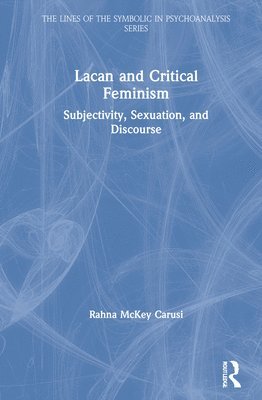








Du kanske också är intresserad av
- Nyhet
Del 3
- Nyhet
Del 11
- Nyhet
Domino : Dåren, domaren och den välkammade mannen från pirayaministeriet
Håkan Nesser
Inbunden, 2026
289 kr329 kr
- Nyhet
Del 6
- Nyhet
Del 4
Del 3
Del 1
Del 2
Del 7