
Del i serien Modern European Thinkers
Jacques Lacan
A Critical Introduction
Häftad, Engelska, 2015
369 kr
Beställningsvara. Skickas inom 5-8 vardagar. Fri frakt för medlemmar vid köp för minst 249 kr.
Finns i fler format (1)
*Winner of the CHOICE Outstanding Academic Book Prize, 2016*The wide-ranging and brilliant ideas of the French psychoanalyst Jacques Lacan (1901-1981) have had a major influence on modern thought. His 'followers' are loyal and legion. Yet his ideas are complex and densely conveyed. Lacan's detractors have accused him of obscurantism, pretentiousness and even incoherence, his psychoanalytic practice and his personal life were complicated - he was famous and contentious in equal measure. Martin Murray provides a lucid account of Lacan's key concepts, including the mirror stage, and his relationship to Freud's ideas, amongst many others. Tracing their origins in his diverse interests: art, psychiatry, philosophy, anthropology, linguistics and psychoanalysis. Murray also investigates Lacan's professional life, personal life and institutional influence in an attempt to understand the charismatic and controversial person he became.
Produktinformation
- Utgivningsdatum2015-12-20
- Mått135 x 215 x 18 mm
- Vikt278 g
- FormatHäftad
- SpråkEngelska
- SerieModern European Thinkers
- Antal sidor224
- FörlagPluto Press
- ISBN9780745315904
- UtmärkelserWinner of CHOICE Outstanding Academic Book Prize 2016
Tillhör följande kategorier
Hoppa över listan





Mer från samma författare
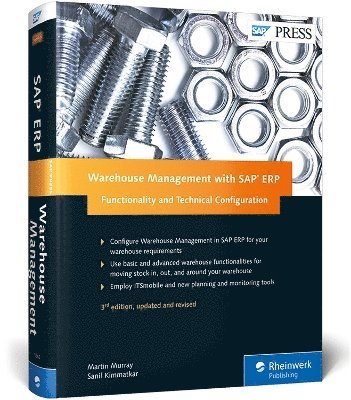
Warehouse Management with SAP ERP: Functionality and Technical Configuration
Martin Murray, Sanil Kimmatkar
Inbunden, 2016
1 019 kr
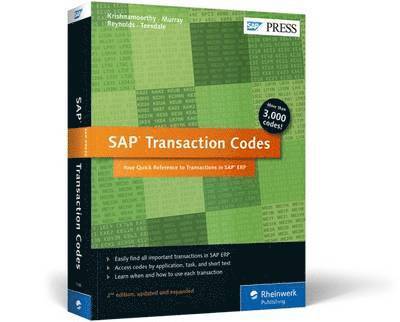
SAP Transaction Codes
Venki Krishnamoorthy, Martin Murray, Norman Reynolds, Peter Teesdale
Häftad, 2016
849 kr
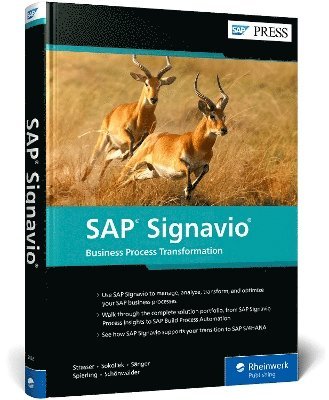
SAP Signavio
Johannes Strasser, Michael Sokollek, Manuel Sanger, Maike Spierling, Marvin Schoenwalder, Martin Murray
Inbunden, 2024
1 499 kr
Hoppa över listan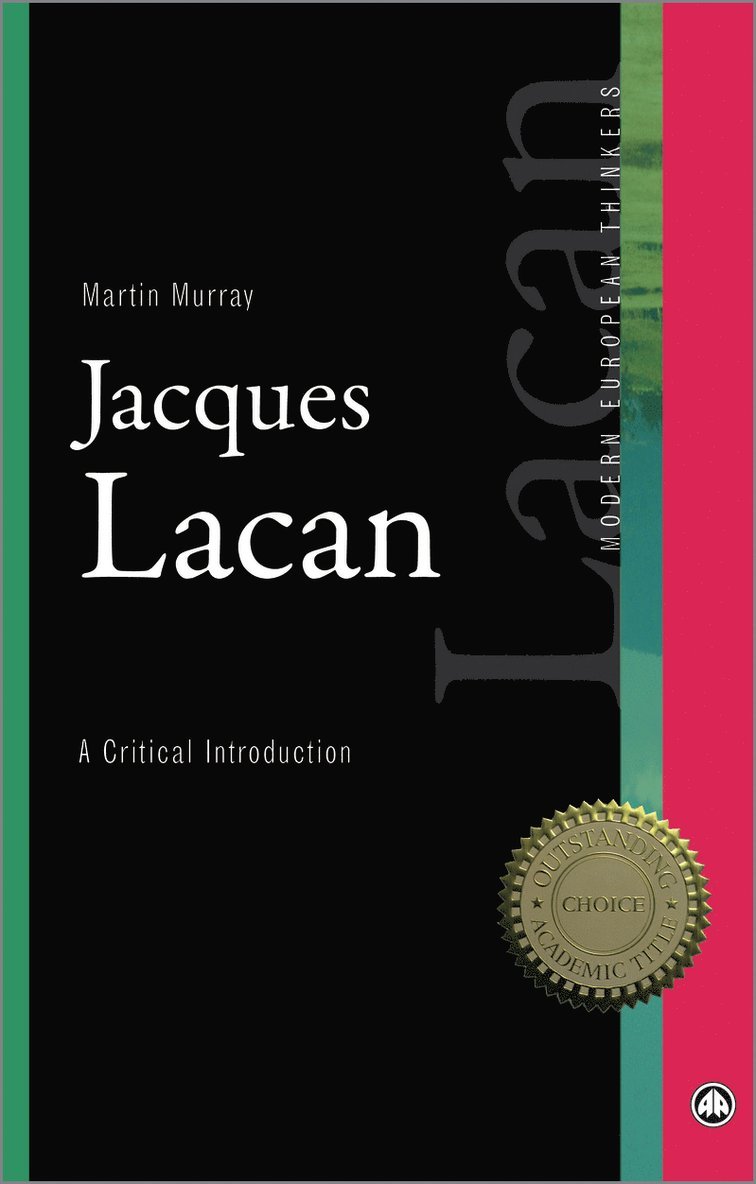
Du kanske också är intresserad av
SAP Transaction Codes
Venki Krishnamoorthy, Martin Murray, Norman Reynolds, Peter Teesdale
Häftad, 2016
849 kr
SAP Signavio
Johannes Strasser, Michael Sokollek, Manuel Sanger, Maike Spierling, Marvin Schoenwalder, Martin Murray
Inbunden, 2024
1 499 kr
Warehouse Management with SAP ERP: Functionality and Technical Configuration
Martin Murray, Sanil Kimmatkar
Inbunden, 2016
1 019 kr