
Del i serien African Perspectives
Infrastructures of Security
Technologies of Risk Management in Johannesburg
Häftad, Engelska, 2022
659 kr
Beställningsvara. Skickas inom 5-8 vardagar. Fri frakt för medlemmar vid köp för minst 249 kr.
Finns i fler format (1)
Much of the South African government’s response to crime—especially in Johannesburg—has been to rely increasingly on technology. This includes the widespread use of video cameras, Artificial Intelligence, machine-learning, and automated systems, effectively replacing human watchers with machine watchers. The aggregate effect of such steps is to determine who is, and isn’t, allowed to be in public spaces—essentially another way to continue segregation.In The Infrastructures of Security, author Martin J. Murray concentrates on not only the turn toward technological solutions to managing the risk of crime through digital (and software-based) surveillance and automated information systems, but also the introduction of somewhat bizarre and fly-by-night experimental “answers” to perceived risk and danger. Digitalized surveillance is significant for two reasons: first, it enables monitoring to take place across wide "geographical distances with little time delay"; and second, it allows for the active sorting, identification, and "tracking of bodies, behaviors, and characteristics of subject populations on a continuous, real-time basis." These new software-based surveillance technologies represent monitoring, tracking, and information gathering without walls, towers, or guards.
Produktinformation
- Utgivningsdatum2022-08-15
- Mått152 x 229 x 34 mm
- Vikt958 g
- FormatHäftad
- SpråkEngelska
- SerieAfrican Perspectives
- Antal sidor478
- FörlagThe University of Michigan Press
- ISBN9780472055470
Tillhör följande kategorier
Hoppa över listan





Mer från samma författare
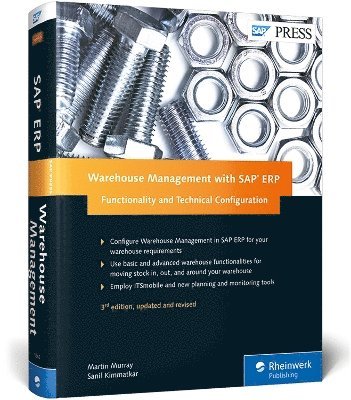
Warehouse Management with SAP ERP: Functionality and Technical Configuration
Martin Murray, Sanil Kimmatkar
Inbunden, 2016
1 019 kr
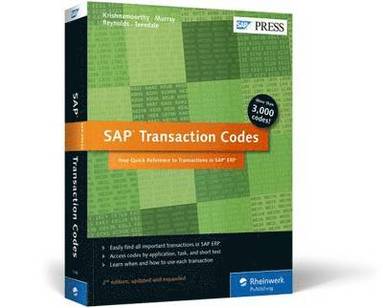
SAP Transaction Codes
Venki Krishnamoorthy, Martin Murray, Norman Reynolds, Peter Teesdale
Häftad, 2016
849 kr
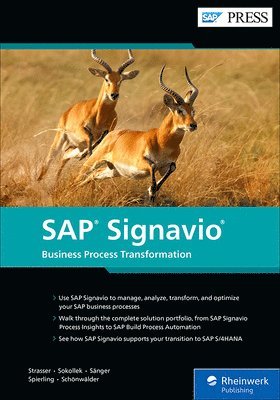
SAP Signavio
Johannes Strasser, Michael Sokollek, Manuel Sanger, Maike Spierling, Marvin Schoenwalder, Martin Murray
Inbunden, 2024
1 499 kr
Hoppa över listan
Du kanske också är intresserad av
SAP Transaction Codes
Venki Krishnamoorthy, Martin Murray, Norman Reynolds, Peter Teesdale
Häftad, 2016
849 kr
SAP Signavio
Johannes Strasser, Michael Sokollek, Manuel Sanger, Maike Spierling, Marvin Schoenwalder, Martin Murray
Inbunden, 2024
1 499 kr
Warehouse Management with SAP ERP: Functionality and Technical Configuration
Martin Murray, Sanil Kimmatkar
Inbunden, 2016
1 019 kr