
Del i serien Bloomsbury Advances in Translation
Intercultural Crisis Communication
Translation, Interpreting and Languages in Local Crises
Häftad, Engelska, 2021
609 kr
Beställningsvara. Skickas inom 10-15 vardagar. Fri frakt för medlemmar vid köp för minst 249 kr.
Intercultural Crisis Communication poses pertinent questions and provides powerful responses to crises that have characterised the modern world since 2010. Language mediation in situations of disaster, emergency and conflict is an under-developed area of scholarship in Translation Studies. This book responds to a clear need for research drawn from practical experiences in the field and explores the crucial role of translation, interpretation and mediation in contexts of crises.Particular consideration is given to situations where rare or minority languages represent a substantial obstacle to humanitarian operations. Contemporary case studies from the USA, Africa, Europe, and Armenia provide major examples of crisis communication that call for more efficient language mediation. Such examples include Syrian displacement, the refugee crisis in Croatia and Italy, international terrorism and national public administration, interpreting in conflict and for Médecins sans Frontières, as well as the integration of refugee doctors for employment in the UK.With contributions from experts in the field, this volume is of international relevance and provides a multifaceted overview of intercultural communication issues and remedies during crises.
Produktinformation
- Utgivningsdatum2021-05-20
- Mått154 x 232 x 16 mm
- Vikt420 g
- FormatHäftad
- SpråkEngelska
- SerieBloomsbury Advances in Translation
- Antal sidor280
- FörlagBloomsbury Publishing PLC
- ISBN9781350261006
Tillhör följande kategorier
Hoppa över listan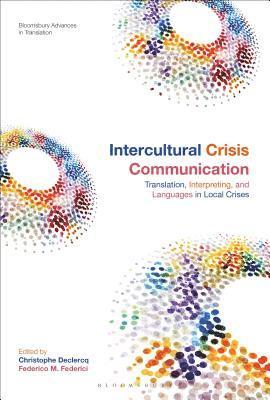

Du kanske också är intresserad av
Languages and the First World War: Communicating in a Transnational War
Julian Walker, Christophe Declercq
Inbunden, 2016
1 919 kr
Languages and the First World War: Representation and Memory
Christophe Declercq, Julian Walker
Häftad, 2017
739 kr
Languages and the First World War: Representation and Memory
Christophe Declercq, Julian Walker
Inbunden, 2016
749 kr
Routledge Handbook of Translation, Interpreting and Crisis
Christophe Declercq, Koen Kerremans
Inbunden, 2023
4 999 kr