
Del 101
Del i serien SUNY series in Environmental Philosophy and Ethics
Incarnality of Being
The Earth, Animals, and the Body in Heidegger's Thought
Inbunden, Engelska, 2006
1 409 kr
Tillfälligt slut
A groundbreaking exploration of Heidegger and embodiment, from which a radical ethical perspective emerges.The Incarnality of Being addresses Martin Heidegger's tendency to neglect the problem of the body, an omission that is further reflected in the field of Heidegger scholarship. By addressing the corporeal dimension of human existence, author Frank Schalow uncovers Heidegger's concern for the materiality of the world. This allows for the ecological implications of Heidegger's thought to emerge, specifically, the kinship between humans and animals and the mutual interest each has for preserving the environment and the earth. By advancing the theme of the "incarnality of being," Schalow brings Heidegger's thinking to bear on various provocative questions concerning contemporary philosophy: sexuality, the intersection of human and animal life, the precarious future of the earth we inhabit, and the significance that reclaiming our embodiment has upon ethics and politics.
Produktinformation
- Utgivningsdatum2006-07-03
- Mått152 x 229 x 19 mm
- Vikt431 g
- FormatInbunden
- SpråkEngelska
- SerieSUNY series in Environmental Philosophy and Ethics
- Antal sidor222
- FörlagState University of New York Press
- ISBN9780791467350
Tillhör följande kategorier
Hoppa över listan







Mer från samma författare
Del 112
Del 93
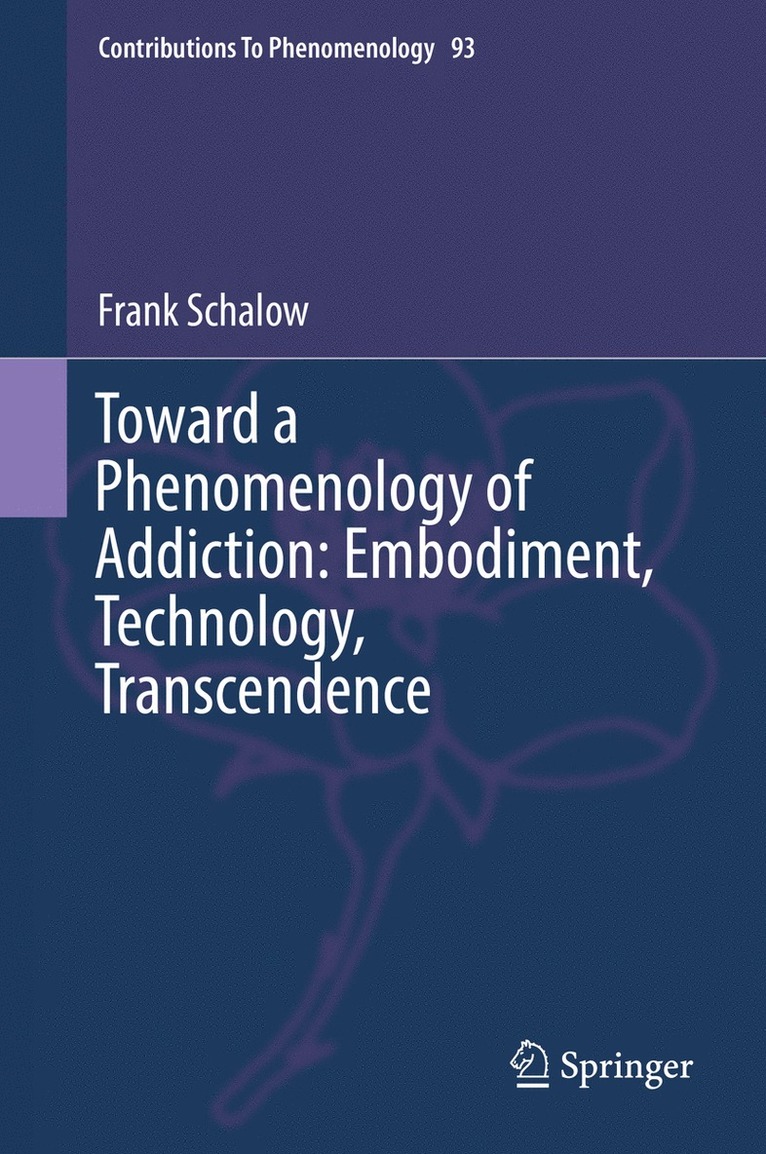
Toward a Phenomenology of Addiction: Embodiment, Technology, Transcendence
Frank Schalow
Inbunden, 2017
1 439 kr
Del 93
Toward a Phenomenology of Addiction: Embodiment, Technology, Transcendence
Frank Schalow
Häftad, 2018
1 439 kr
Hoppa över listan

Du kanske också är intresserad av
Del 112
Del 93
Toward a Phenomenology of Addiction: Embodiment, Technology, Transcendence
Frank Schalow
Inbunden, 2017
1 439 kr
Del 93
Toward a Phenomenology of Addiction: Embodiment, Technology, Transcendence
Frank Schalow
Häftad, 2018
1 439 kr
Del 101