
Del i serien Routledge Studies in Crime, Security and Justice
How Crime Governance Defines the Urban Experience
The Maze of Security
Inbunden, Engelska, 2026
3 019 kr
Beställningsvara. Skickas inom 10-15 vardagar. Fri frakt för medlemmar vid köp för minst 249 kr.
The book explores the complex links between war and order, presenting a well-founded and fresh view on how crime is governed in modern societies. It challenges existing analyses of the relationship between space and social control, offering an original theoretical perspective and a new analytical tool that paves the way for several lines of research examining how dynamic spaces of social control are designed across different spatiotemporal contexts.The author shows how the uneven distribution of violence and security worldwide is key to understanding how our ideas of order are formed and how we perceive and inhabit cities. This uneven spread of violence and security grants a particular privilege in modern societies: the right to live in less violent areas. Such a privilege affects how crime is regulated and how security issues are addressed.Fernando uses the case of Bogotá to illustrate how war influences crime governance, even in societies and periods that seem peaceful, and how crime governance affects people's interactions within the city. Consequently, the author offers a compelling explanation of the structure, functioning, and fluidity of social control in modern societies, challenging common explanations of crime governance's social effects, opening multiple avenues for research, and proposing new theoretical foundations for understanding and connecting the experiences of the Global North and South.Both theoretically rich and accessibly written, this book will appeal to academics and general readers alike, especially those interested in understanding contemporary urban life.
Produktinformation
- Utgivningsdatum2026-06-12
- Mått156 x 234 x 17 mm
- Vikt420 g
- FormatInbunden
- SpråkEngelska
- SerieRoutledge Studies in Crime, Security and Justice
- Antal sidor116
- FörlagTaylor & Francis Ltd
- ISBN9781041145189
Tillhör följande kategorier
Hoppa över listan

Mer från samma serie
Integrated Offender Management and the Policing of Prolific Offenders
Frederick Cram
Inbunden, 2023
3 009 kr
Intimate Partner Violence, Risk and Security
Kate Fitz-Gibbon, Sandra Walklate, Jude McCulloch, JaneMaree Maher
Häftad, 2021
939 kr
Hoppa över listan

Du kanske också är intresserad av
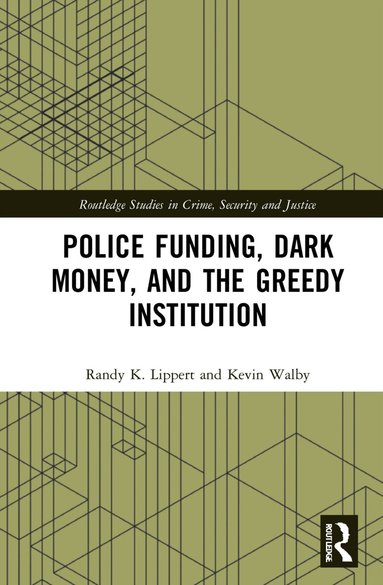
Police Funding, Dark Money, and the Greedy Institution
Randy K. Lippert, Kevin Walby
Inbunden, 2022
3 019 kr
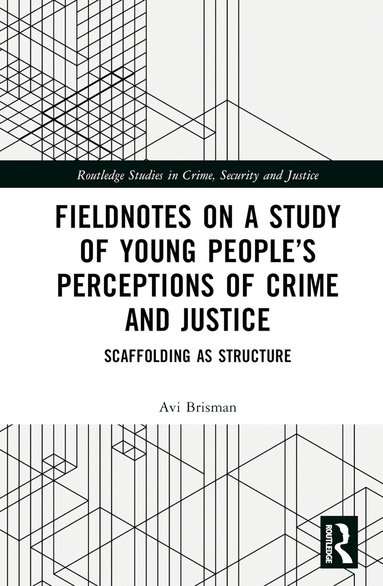
Fieldnotes on a Study of Young People’s Perceptions of Crime and Justice
Avi Brisman
Häftad, 2024
759 kr
Fieldnotes on a Study of Young People’s Perceptions of Crime and Justice
Avi Brisman
Inbunden, 2022
3 019 kr
Intimate Partner Violence, Risk and Security
Kate Fitz-Gibbon, Sandra Walklate, Jude McCulloch, JaneMaree Maher
Inbunden, 2018
3 249 kr
Police Funding, Dark Money, and the Greedy Institution
Randy K. Lippert, Kevin Walby
Häftad, 2024
849 kr