
Francis Picabia Catalogue Raisonné
Volume II (1915-1927)
Inbunden, Engelska, 2017
2 089 kr
Beställningsvara. Skickas inom 5-8 vardagar. Fri frakt för medlemmar vid köp för minst 249 kr.
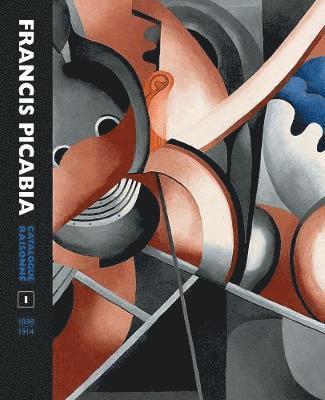
The second of an important multi-volume catalogue project, this publication features work by Francis Picabia (1879-1953) that dates from 1915 into mid-1927. Beginning with Picabia’s elaboration of a personal machinist aesthetic, the book continues by looking at the artist’s central role in the formulation of the Paris Dada movement. That irreverent movement included Picabia’s increasingly provocative mechanomorphic compositions, complemented by his unorthodox writings and graphic designs as well as socially powerful performances. In the 1920s, Picabia turned to striking geometrical abstractions, subversive figurative art, and a collaboration in 1924 with the Swedish Ballet. The volume finishes with a look at Picabia’s creations of the mid-1920s, which included memorable collages and flamboyant figurative compositions known as the "monsters.” Distributed for Mercatorfonds
Produktinformation
- Utgivningsdatum2017-01-03
- Mått248 x 292 x 45 mm
- Vikt3 447 g
- FormatInbunden
- SpråkEngelska
- Antal sidor550
- FörlagYale University Press
- ISBN9780300222463
Tillhör följande kategorier
Hoppa över listan



Du kanske också är intresserad av
Christian Bérard
Célia Bernasconi, Pierre Passebon, Jérôme Hanover, Tirza True Latimer, Nick Mauss, Aurélie Verdier, Marika Genty
Inbunden, 2022
719 kr
- Nyhet
- Nyhet
- Nyhet
Del 6