
Del i serien Performance Philosophy
Ethics of Alterity
Aisthetics of Existence
Inbunden, Engelska, 2023
1 579 kr
Beställningsvara. Skickas inom 10-15 vardagar. Fri frakt för medlemmar vid köp för minst 249 kr.
Finns i fler format (1)
Providing a solid media-philosophical groundwork, the book contributes to the theory of alterity in Performance Philosophy, while stimulating and inspiring future inquiries where studies in media, art, and literature intersect with philosophy. It collects a selective as well as productive diversity of philosophical, literary, and artistic figures of thought, attaining an exacting framework as a result of a clearly elaborated ethics of alterity, innovatively opened up by way of an aisthetics of existence: Touching upon the Aristotelian concept of aisthesis, the material, perceptual and sensory dimensions of everyday bodily existence are highlighted to move beyond what aesthetics in Modern Philosophy just specializes in, namely art and the beautiful. The notion of existence is therefore borrowed from Maurice Merleau-Ponty, who understands it as something concrete and richly interrelated, so as to avoid the dualisms both of psychological processes of consciousness and of physiological mechanisms. It is thus made explicit such that the unity of body and soul is not any arbitrarily arranged connection between “subject” and “object” but, rather, that it is enacted at every instant in the movement of existence. Imaginatively then, the book puts into writing how alterity not only can be treated theoretically but can be also made accessible through writing as well as rendered relatable through reading. That is why it deals with exemplary interpersonal encounters in the lifeworld, in the arts, and in the media, which are initially thematized as intercorporeal experiences, so as to enable an approach for an ethics of alterity by way of, in particular, sites located within a phenomenology of perception oriented towards the lived body.
Produktinformation
- Utgivningsdatum2023-04-17
- Mått161 x 230 x 22 mm
- Vikt540 g
- FormatInbunden
- SpråkEngelska
- SeriePerformance Philosophy
- Antal sidor276
- FörlagBloomsbury Publishing Plc
- MedarbetareTony McCaffrey
- ISBN9781538178409
- ÖversättareJohn R. J. Eyck
Tillhör följande kategorier
Hoppa över listan



Mer från samma författare
- Nyhet
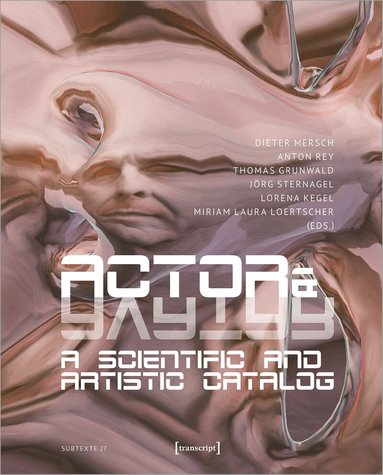
Actor & Avatar
Dieter Mersch, Anton Rey, Thomas Grunwald, Jörg Sternagel, Lorena Kegel, Miriam Laura Loertscher
Inbunden, 2023
749 kr
Hoppa över listan



Du kanske också är intresserad av
- Nyhet
Actor & Avatar
Dieter Mersch, Anton Rey, Thomas Grunwald, Jörg Sternagel, Lorena Kegel, Miriam Laura Loertscher
Inbunden, 2023
749 kr
- Nyhet