
Del 4
Del 23 i serien Texts and Studies on the Qurʾān
Ethics in the Qurʾān and the Tafsīr Tradition
From the Polynoia of Scripture to the Homonoia of Exegesis
Inbunden, Engelska, 2024
1 909 kr
Beställningsvara. Skickas inom 5-8 vardagar. Fri frakt för medlemmar vid köp för minst 249 kr.
This book is about the articulation of ethics in the Qurʾān and the tafsīr tradition. Based on an examination of several apparently problematic Qurʾānic narrative pericopes and how the exegetes grappled with them, the book demonstrates that the moral world of the Qurʾān is polyvalent and non-linear, owing, above all, to its intrinsic ethical antinomies and textual ambiguities. That is, the book contends that paradox and uncertainty are both constituents of the Qurʾān’s ethical architectonics, and that through these constituents the Qurʾān charts a system of ethics that seeks to tread in the midst of a non-ideal world rife with uncertainty. The book also argues that the tafsīr tradition tends to erode the hermeneutical openness of the Qurʾān and, thereby, limits the Qurʾān’s ethical potential. The book, thus, advances our understanding of Qurʾānic ethics and contributes to the field of tafsīr studies and to the scholarship on Qurʾānic hermeneutics.
Produktinformation
- Utgivningsdatum2024-06-27
- Mått155 x 235 x 21 mm
- Vikt538 g
- FormatInbunden
- SpråkEngelska
- SerieTexts and Studies on the Qurʾān
- Antal sidor230
- FörlagBrill
- ISBN9789004696464
Tillhör följande kategorier
Hoppa över listan


Mer från samma serie
Del 5
Del 7
Del 8
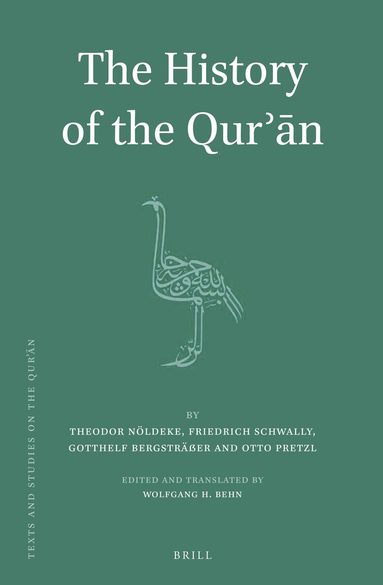
History of the Qurʾān
Theodor Nöldeke, Friedrich Schwally, Gotthelf Bergsträßer, Otto Pretzl
Inbunden, 2013
5 259 kr
Del 9
Del 10
Qurʾān Commentary by Ibn Barrajān of Seville (d. 536/1141)
Gerhard Böwering, Yousef Casewit
Inbunden, 2015
6 929 kr
Del 11
Del 12
Del 14
Tafsir as Mystical Experience: Intimacy and Ecstasy in Quran Commentary
Todd Lawson
Inbunden, 2018
2 819 kr
Del 16
Hoppa över listan
Du kanske också är intresserad av
Del 11
Del 8
History of the Qurʾān
Theodor Nöldeke, Friedrich Schwally, Gotthelf Bergsträßer, Otto Pretzl
Inbunden, 2013
5 259 kr
- Nyhet
Del 7
Del 27
Del 10
Qurʾān Commentary by Ibn Barrajān of Seville (d. 536/1141)
Gerhard Böwering, Yousef Casewit
Inbunden, 2015
6 929 kr
Del 9
Del 18
Del 12
Del 5
Del 28