
Del i serien Social Psychology Research Progress
Emotions and the Anthropocene
Inbunden, Engelska, 2026
2 329 kr
Skickas . Fri frakt för medlemmar vid köp för minst 249 kr.
Emotions and the Anthropocene demonstrates that the Anthropocene is not only an ecological crisis but also a transformation of the politics of sensibilities: how bodies are disciplined, emotions mobilised, and futures imagined. From disrupted mobilities and apocalyptic affects to decolonial genealogies of climate emotions, acts of resistance, and utopian care, each of the seven contributions from renowned researchers reveal emotions as key infrastructures of power and possibility. The challenge ahead is to understand, contest, and reconfigure these sensibilities—to politicise them—so that care, reciprocity, and justice can guide collective life amid planetary disruption. In these scenarios, the Anthropocene emerges not merely as an environmental condition but as a profound reconfiguration of the politics of sensibilities. Taken together, these contributions call for future inquiries that interrogate how sensibilities are shaped, governed, and resisted in the Anthropocene, and how alternative emotional infrastructures—rooted in care, reciprocity, and decolonial justice—can be nurtured to confront the intersecting crises of our time.
Produktinformation
- Utgivningsdatum2026-03-02
- Mått152 x 229 x 9 mm
- Vikt500 g
- FormatInbunden
- SpråkEngelska
- SerieSocial Psychology Research Progress
- Antal sidor179
- FörlagNova Science Publishers Inc
- ISBN9798901341803
Tillhör följande kategorier
Hoppa över listan





Du kanske också är intresserad av
Digital Labour, Society and the Politics of Sensibilities
Adrian Scribano, Pedro Lisdero
Inbunden
1 249 kr
Neoliberalism in Multi-Disciplinary Perspective
Adrian Scribano, Freddy Timmermann Lopez, Maximiliano E. Korstanje
Inbunden
1 669 kr
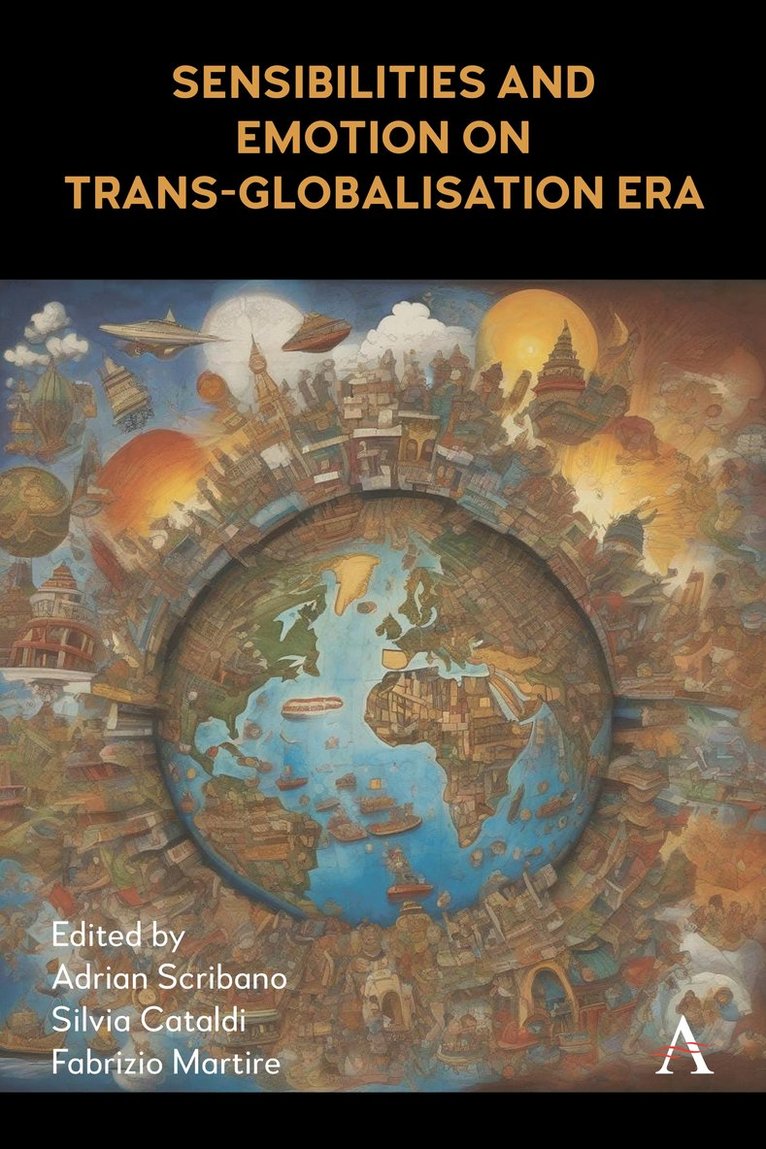
Sensibilities and Emotion on Trans-Globalisation Era
Adrian Scribano, Silvia Cataldi, Fabrizio Martire
Inbunden
1 629 kr