
Del i serien Economists of the Twentieth Century series
EMERGENCE OF ECONOMIC IDEAS
Essays in the History of Economics
Inbunden, Engelska, 1994
2 409 kr
Beställningsvara. Skickas inom 5-8 vardagar. Fri frakt för medlemmar vid köp för minst 249 kr.
The most persistent theme of Nathan Rosenberg's work is a concern with the emergence and diffusion of economic ideas. Bringing together Professor Rosenberg's many contributions to the history of economic thought, this volume offers a series of important insights on how economics itself emerged as a distinct discipline.The Emergence of Economic Ideas extends our understanding of the development of capitalist institutions and the manner in which these institutions have contributed to the unique technological dynamism of capitalist societies. The book also - and necessarily - focuses upon the emergence of ideas about capitalism. That is to say, the discipline of economics is itself a body of ideas, and analytical techniques, that have been developed over the past two centuries in order to explain how capitalist economies have developed and how they work. Professor Rosenberg examines the key contributions - from Mandeville, Adam Smith, Babbage, Marx, Schumpeter and Stigler - in the growth of this critical collection of ideas.Economists interested in the emergence of their discipline and historians of ideas will welcome this collection which will make Professor Rosenberg's many substantial contributions more widely accessible to teachers, students and researchers.
Produktinformation
- Utgivningsdatum1994-01-01
- Mått156 x 234 x undefined mm
- FormatInbunden
- SpråkEngelska
- SerieEconomists of the Twentieth Century series
- FörlagEdward Elgar Publishing Ltd
- ISBN9781858980478
Tillhör följande kategorier
Hoppa över listan



Mer från samma författare
Positive Sum Strategy
National Academy of Sciences, Nathan Rosenberg, Ralph Landau
Häftad, 1986
3 689 kr
Del 1
Del 2
Chemicals and Long-Term Economic Growth
Ashish Arora, Ralph Landau, Nathan Rosenberg
Häftad, 2000
1 639 kr
Hoppa över listan
Du kanske också är intresserad av
Del 1
Del 2
Positive Sum Strategy
National Academy of Sciences, Nathan Rosenberg, Ralph Landau
Häftad, 1986
3 689 kr
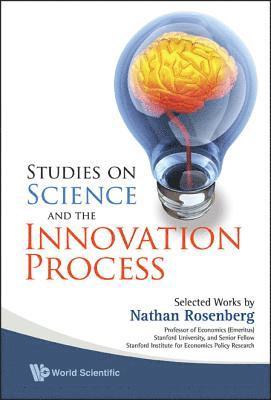
STUDIES ON SCIENCE AND THE INNOVATION PROCESS: SELECTED WORKS BY NATHAN ROSENBERG
ROSENBERG NATHAN, Nathan Rosenberg
Inbunden, 2009
3 129 kr