
Del 6
Del i serien Royal Musical Association Monographs
Disinformation in Mass Media
Gluck, Piccinni and the Journal de Paris
Inbunden, Engelska, 2020
1 319 kr
Beställningsvara. Skickas inom 10-15 vardagar. Fri frakt för medlemmar vid köp för minst 249 kr.
Finns i fler format (1)
The founding in 1777 of the Journal de Paris, France’s first daily and distinctly commercial paper, represents an early use of disinformation as a tool for political gain, profit, and societal division. To attract a large readership and bar competition for C.W. Gluck’s works at the Paris Opéra, it launched a prolonged campaign of anonymous lies, mockery, and defamation against two prominent members of the Académie Française who wished the Opéra to be open to all deserving composers but lacked a comparable daily forum with which to defend themselves. In this unique episode, music served as a smokescreen for nefarious activity. No musical knowledge is necessary to follow this purely political drama.
Produktinformation
- Utgivningsdatum2020-10-28
- Mått138 x 216 x 15 mm
- Vikt280 g
- FormatInbunden
- SpråkEngelska
- SerieRoyal Musical Association Monographs
- Antal sidor134
- FörlagTaylor & Francis Ltd
- ISBN9780367350178
Tillhör följande kategorier
Hoppa över listan



Mer från samma serie
Felice Giardini and Professional Music Culture in Mid-Eighteenth-Century London
Cheryll Duncan
Inbunden, 2019
1 179 kr
Upper-Voice Structures and Compositional Process in the Ars Nova Motet
Anna Zayaruznaya
Häftad, 2020
839 kr
'Ars musica' Attributed to Magister Lambertus/Aristoteles
Christian Meyer, translated by Karen Desmond
Häftad, 2020
939 kr
Johann Mattheson’s Pièces de clavecin and Das neu-eröffnete Orchestre
Margaret Seares
Häftad, 2020
939 kr
Hoppa över listan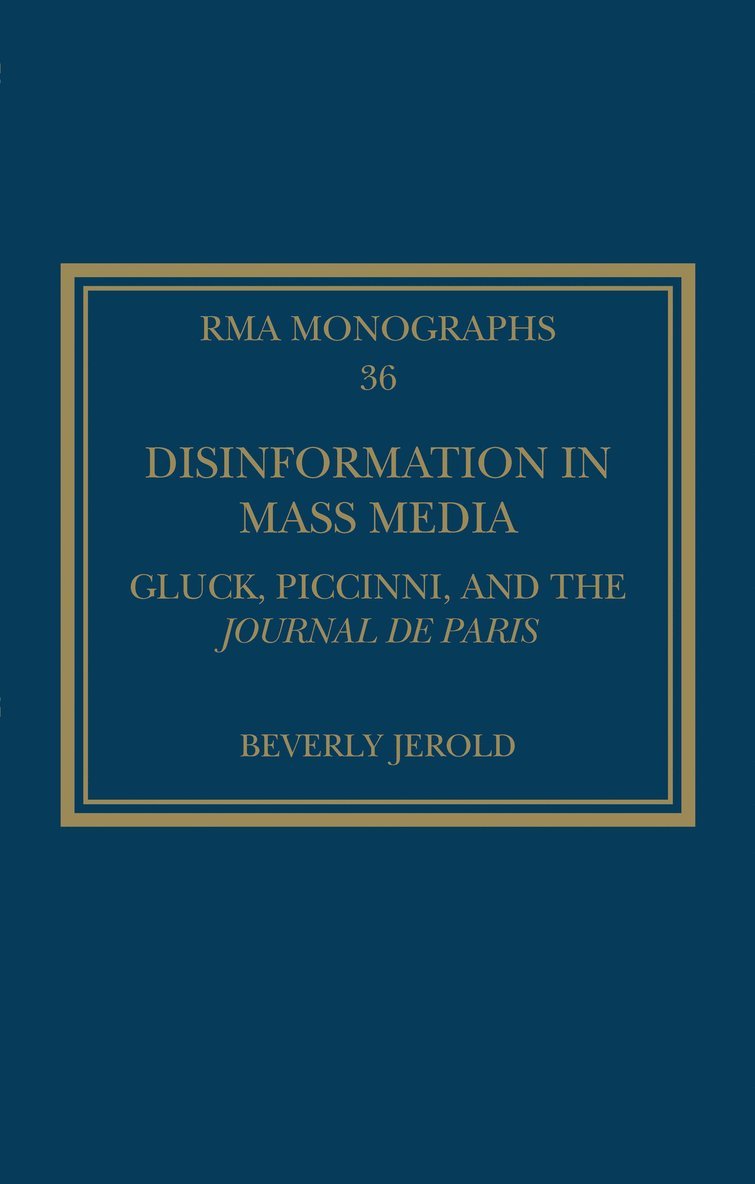





Du kanske också är intresserad av
Del 6
Del 3
- Nyhet
Del 4
- Nyhet
- Nyhet
Del 1
- Nyhet
Del 6
Del 7