
Del i serien Trends and Perspectives in International Politics
Disaster Displacement and International Protection in the EU
Challenges, Misconceptions, and the Way Forward
Inbunden, Engelska, 2026
3 209 kr
Beställningsvara. Skickas inom 10-15 vardagar. Fri frakt för medlemmar vid köp för minst 249 kr.
This book investigates the reasons behind the absence of consolidated protection concerning disaster displacement in the EU.It identifies three key reasons for this gap:The way disaster displacement – along with its causes, dynamics, actors, and the nature of harm – is conceptualized at both EU and national levelsThe interpretation and application of international protection statuses by asylum authorities and decision-makers, particularly in the context of disaster displacementThe restrictive asylum policies increasingly implemented by the EU and its Member States, which prioritize deterrence and create significant barriers to accessing protectionThrough a comprehensive and detailed analysis, it sheds light on the challenges and misconceptions faced by individuals displaced across borders in the context of disasters. It offers a thorough examination of existing legislation, policies, and case law at both the national and EU levels, with a particular focus on Italy. By addressing these issues, it provides a valuable insight for academics, policymakers, and decision-makers, advocating for an evolutive approach to protection claims related to disaster displacement. It calls for the dismantling of State-led barriers to asylum, arguing that such measures are neither effective nor human rights compliant.
Produktinformation
- Utgivningsdatum2026-07-15
- Mått156 x 234 x 14 mm
- Vikt570 g
- FormatInbunden
- SpråkEngelska
- SerieTrends and Perspectives in International Politics
- Antal sidor204
- FörlagTaylor & Francis Ltd
- ISBN9781041029298
Tillhör följande kategorier
Hoppa över listan






Mer från samma serie
Conflict Management and the Future of EU Foreign and Security Policy
Riccardo Alcaro, Pol Bargués
Inbunden, 2025
1 279 kr
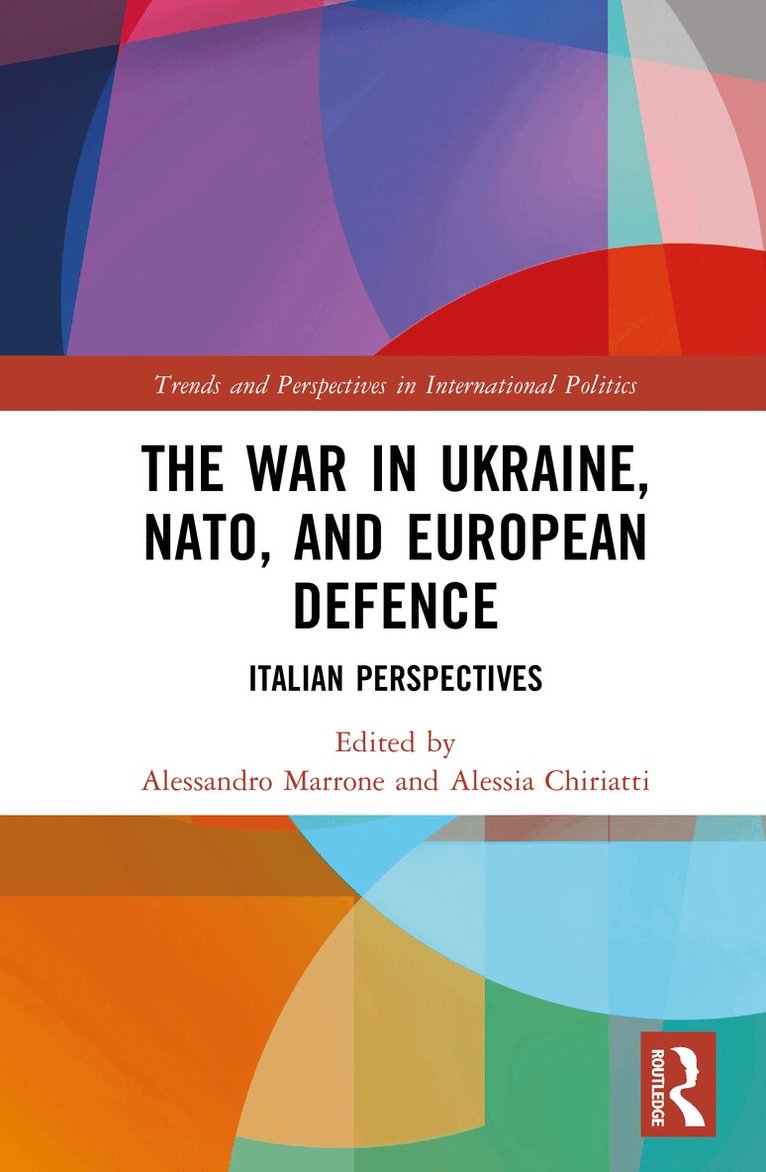
War in Ukraine, NATO, and European Defence
Alessandro Marrone, Alessia Chiriatti
Inbunden, 2026
3 209 kr
Conflict Management and the Future of EU Foreign and Security Policy
Riccardo Alcaro, Pol Bargués
Häftad, 2026
479 kr
Hoppa över listan

Du kanske också är intresserad av
Conflict Management and the Future of EU Foreign and Security Policy
Riccardo Alcaro, Pol Bargués
Inbunden, 2025
1 279 kr
Conflict Management and the Future of EU Foreign and Security Policy
Riccardo Alcaro, Pol Bargués
Häftad, 2026
479 kr
War in Ukraine, NATO, and European Defence
Alessandro Marrone, Alessia Chiriatti
Inbunden, 2026
3 209 kr
- Nyhet
Del 3
- Nyhet
Del 11