Del 12 - Worlds of Memory
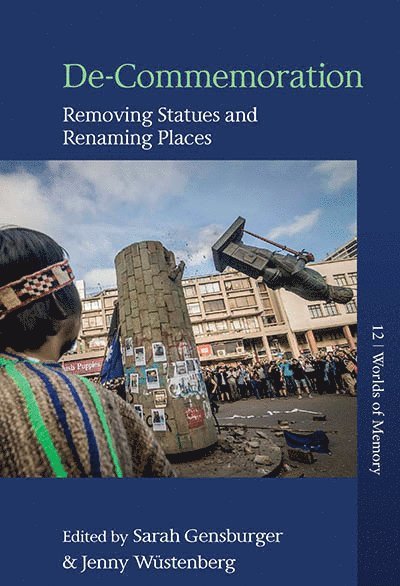
De-Commemoration
- Nyhet
Removing Statues and Renaming Places
419 kr
Kommande
Produktinformation
- Utgivningsdatum2026-07-01
- Mått152 x 229 x undefined mm
- FormatHäftad
- SpråkEngelska
- SerieWorlds of Memory
- Antal sidor399
- FörlagBerghahn Books
- ISBN9781807580346
Tillhör följande kategorier
Sarah Gensburger is Professor of sociology and political science at the French National Centre for Scientific Research and Sciences Po-Paris and President of the international Memory Studies Association since 2021. She is the author of Beyond Memory: Can We Really Learn from the Past? (with Sandrine Lefranc, Palgrave, 2020), and Memory on my Doorstep: Chronicles of the Bataclan Neighborhood, Paris, 2015-2016 (Leuven University Press, 2019) as well as co-editor of Administrations of Memory (with Sara Dybris McQuaid(Springer, 2022).
- List of IllustrationsAcknowledgmentsIntroduction: Making Sense of De-CommemorationSarah Gensburger and Jenny WüstenbergPart I: De-Commemoration after Regime ChangeChapter 1. Baptizing and Unbaptizing in Algeria: From French Colonization to National IndependenceAmar Mohand-AmerChapter 2. Street Renaming in Postsocialist Romania: A Quantitative Analysis of Toponymic ChangeMihai Stelian RusuChapter 3. “The First Bolshevik Leaves Riga”: The De-Commemoration of Vladimir I. Lenin in Riga, Latvia (1987–1991)Dmitrijs AndrejevsChapter 4. “In Memory of the Fallen…” But for How Long? The De-Commemoration of German War Memorials in Poland after 1945Karolina Cwiek-RogalskaChapter 5. Naming to Erase, Renaming to Restore: (Re)Indigenizing the LandscapeKerri J. MalloyChapter 6. Removing Rhodes from His Pedestal: De-Commemoration in Postcolonial South AfricaGary BainesChapter 7. Contrasting Fates of Lenin Statues in Ukraine and RussiaDominique ColasChapter 8. Beyond the Monument: Unmaking the Valley of the Fallen in Contemporary SpainFrancisco FerrándizPart II: De-Commemoration and Societal TransformationChapter 9. Renaming and the Relationship between Colonized and Colonizer: The Role of Commemoration within Dual Place Names in New ZealandTaylor AnnabellChapter 10. De-Canonization of the Soviet Past: Abject, Kitsch, and MemoryYuliya YurchukChapter 11. Diversifying Public Commemorations in Cape Town and CopenhagenVibe NielsenChapter 12. De-Commemoration as Healing and Conflict: Canada and Its Colonial Past and PresentKate KoryckiChapter 13. Killing Pedro de Valdivia Again: De-Commemoration of the Past and De-Neoliberalization of the Present during the 2019–2020 Chilean RevoltManuela Badilla and Carolina AguileraChapter 14. De-Commemorating Sound: Controversies about the Reestablishment of the National Anthem in South Korea and BeyondBae Myo-JungChapter 15. Do Commemorations Have an “Expiration Date”? A Case Study from BelgiumNicolas MollPart III: De-Commemoration to Propel ChangeChapter 16. De-Commemorating Australian Settler ColonialismSarah MaddisonChapter 17. The Present Is All That Matters: De-Commemoration Practices in IsraelTracy Adams and Yinon Guttel-KleinChapter 18. De-Commemorations and the Unsettled Past in Contemporary BrazilRicardo SanthiagoChapter 19. Decolonizing Colonial Monuments: Counter-Memory Activism in Madrid and BarcelonaFabiola Arellano CruzChapter 20. Transnational Memory Struggles: Guerrilla Remembrances in Colombia and Venezuela in the 2000sJimena PerryChapter 21. “Next Stop Anton-Wilhelm-Amo Strasse”: Place Names, De-Commemoration, and Memory Activism in BerlinDuane Jethro and Samuel MerrillChapter 22. From Decapitation to Destruction: Making Sense of Toppling Statues in Contemporary MartiniqueAudrey Célestine, Valérie-Ann Edmond-Mariette, and Zaka TotoChapter 23. De-Commemoration in Great BritainStephen SmallChapter 24. The Role of Nonprofits in De-Commemoration: The Southern Poverty Law Center’s Whose Heritage? ReportSeth Levi and Kimberly ProbulusPart IV: De-Commemoration as Smoke ScreenChapter 25. De-Commemoration without Decolonization? The Peculiar Case of the PhilippinesLila Ramos ShahaniChapter 26. Twice Removed: The Mystery of Manila’s Missing Comfort Woman MonumentCatherine Lianza Aquino and Jocelyn S. MartinChapter 27. Counter-Memory and State De-Commemoration: The Khavaran Mass Grave in IranChowra MakaremiChapter 28. The Toppling of the Equestrian Statue and the Future of Colonial-Era Memorials in NamibiaVilho Amukwaya ShigwedhaChapter 29. An Unmarked Rebellion: The Politics of Forgetting Denmark VeseyVanessa Lynn Lovelace and Jamie HuffChapter 30. Exploring the Scope of De-Commemoration: Touring Trafalgar Square in London and BeyondStuart BurchPart V: De-Commemoration to Challenge MemoryChapter 31. From De-Commemoration of Names to Reparative Namescapes: Geographical Case Studies in the United StatesJordan P. Brasher and Derek AldermanChapter 32. De-Commemoration under the Law: The Removal of Statues in France and the United StatesThomas HochmannChapter 33. Human Rights and Toppled Statues: Can the European Convention on Human Rights Provide Solutions to De-Commemoration Disputes?Tom LewisChapter 34. Re-Commemoration: What Other Stories Can We Tell? Observing Ordinary People Engaging with Monuments in Public SpaceAlison Atkinson-PhillipsChapter 35. Who Cares about Old Statues and Street Names? Resisting Change and the Protracted Decommunization of Public Space in PolandEwa OchmanChapter 36. Keeping the Past from Freezing: Augmented Reality and Memories in the Public SpaceMykola Makhortykh and Anna MenyhértChapter 37. De-Commemorating White Supremacy through the Act of VotingLorena ChambersIndex
“This impressive collection of essays addresses a very timely issue from a badly-needed comparative perspective. Set to become a benchmark, it covers a huge range of examples from across the world while creating common ground between them. The result is a wealth of insights into the role of public monuments in working through the toxic legacies of colonialism and dictatorship. Highly recommended.” • Ann Rigney, Utrecht University“De-Commemoration is an inspirational collection of diverse approaches, practices, methods, and perspectives of de-commemoration of forgoing heroes and activities, set in various cultural and geographical contexts. This is an exceedingly rare and truly global contribution.” • Mariusz Czepczyński, University of Gdańsk
Betyg & recensioner
Du kanske också är intresserad av
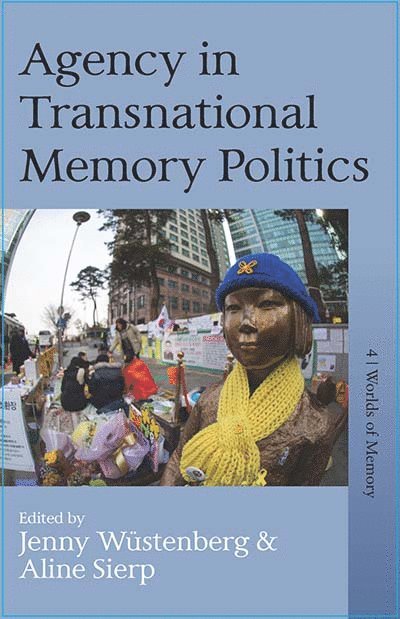
Agency in Transnational Memory Politics
Jenny Wüstenberg, Aline Sierp, Jenny Wustenberg, Wüstenberg
2 759 kr
Agency in Transnational Memory Politics
<a>Jenny Wüstenberg</a>, Aline Sierp, <a>Jenny Wustenberg</a>, Wüstenberg, Jenny Wüstenberg
799 kr
Mobility of Memory
Luisa Passerini, Milica Trakilović, Gabriele Proglio, Milica Trakilovic, Milica Trakilovi¿
2 489 kr
Mobility of Memory
Luisa Passerini, Milica Trakilović, Gabriele Proglio, Milica Trakilovic, Milica Trakilovi¿
709 kr
- Nyhet
Reading War, Making Memory
Tea Sindbæk Andersen, Jessica Ortner, Fedja Wierød Borčak, Fedja Wierød Borcak, Fedja Wierød Bor¿ak
2 779 kr