
Del i serien Bloomsbury Visual Arts
Cultural Appropriation in Fashion and Entertainment
Häftad, Engelska, 2022
429 kr
Skickas . Fri frakt för medlemmar vid köp för minst 249 kr.
Finns i fler format (1)
Is it ever acceptable to “borrow” culturally inspired ideas? Who has ownership over intangible culture? What role does power inequality play? These questions are often at the center of heated public debates around cultural appropriation, with new controversies breaking seemingly every day.Cultural Appropriation in Fashion and Entertainment offers a sociological perspective on the appropriation of race, ethnicity, class, sexuality, and religion embedded in clothing, textiles, jewelry, accessories, hairstyles and tattoos, as well as in entertainment, such as K-pop, Bhangra, and hip-hop.By providing a range of global perspectives on the adoption, adaptation, and application of both tangible and intangible cultural objects, Kawamura and de Jong help move the conversation beyond simply criticizing designers and creators to encourage nuanced discussion and raise awareness of diverse cultures in the creative industries.
Produktinformation
- Utgivningsdatum2022-07-14
- Mått154 x 234 x 14 mm
- Vikt520 g
- FormatHäftad
- SpråkEngelska
- SerieBloomsbury Visual Arts
- Antal sidor240
- FörlagBloomsbury Publishing PLC
- ISBN9781350170551
Tillhör följande kategorier
Hoppa över listan






Mer från samma serie
Knitting in Scotland
Lynn Abrams, Sally Tuckett, Marina Moskowitz, Roslyn Chapman, Lin Gardner
Inbunden, 2026
1 569 kr
Hoppa över listan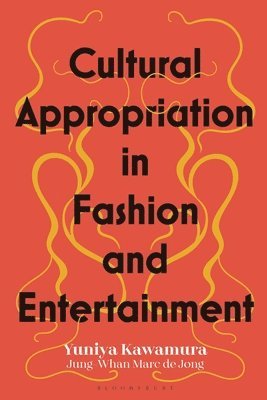




Du kanske också är intresserad av
Cultural Appropriation in Fashion and Entertainment
Yuniya Kawamura, Jung-Whan Marc de Jong
Inbunden, 2022
1 409 kr
Del 1