
Del 35 i serien Eastern Africa Series
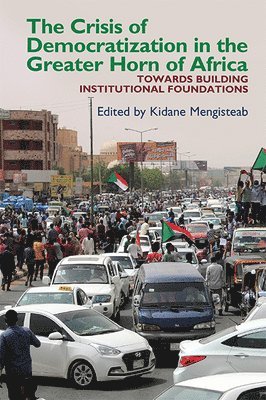
Crisis of Democratization in the Greater Horn of Africa
An Alternative Approach to Institutional Order in Transitional Societies
Inbunden, Engelska, 2020
1 599 kr
Beställningsvara. Skickas inom 5-8 vardagar. Fri frakt för medlemmar vid köp för minst 249 kr.
Analyses the structural and institutional obstacles to democratization in transitional societies - fractured societies, fragmented economies and institutions of governance, weak or deformed state structures - and how to overcome these.In the early 1990s, a wave of democratization swept through many African countries, but its prevailing election-centred liberal approach failed to result in sustainable democracies. Why should this be and what can be done about it? This multi-disciplinary work on the Greater Horn investigates the impact on the efforts to bring greater democratization of the characteristically complex socio-economic state structures of the countries of the Greater Horn of Africa and, importantly, suggests an alternative, more effective, approach.Detailed studies of Ethiopia, Somaliland, Djibouti, Eritrea, Kenya, Somalia, South Sudan, Sudan and Uganda reveal the difficulties posed by institutional structures that are often weak and lack accountability; fragmented economies - which range from modern capitalist to subsistence farming and pastoral systems; and governance marked by differing conceptions of property rights and conflict adjudication practices and varied resource allocation systems. Chronic violent ethnic-based civil wars and social conflicts and deep-rooted ethnic divisions only exacerbate the states' ability to foster democratic governance, or even to manage diversity properly. The contributors examine why the countries of the Horn have been unable to overcome these obstacles to democratization and explore how and why an alternative approach is more likely tobe compatible with the socioeconomic realities and cultural values in transitional societies.Kidane Mengisteab is Professor of African Studies and Political Science at Pennsylvania State University. He is co-editor ofRegional Integration, Identity and Citizenship in the Greater Horn of Africa (James Currey, 2012) and, most recently, Traditional Institutions in Contemporary African Governance (2017).
Produktinformation
- Utgivningsdatum2020-05-15
- Mått156 x 234 x 25 mm
- Vikt492 g
- FormatInbunden
- SpråkEngelska
- SerieEastern Africa Series
- Antal sidor280
- FörlagJames Currey
- ISBN9781847012470
Tillhör följande kategorier
Hoppa över listan


Du kanske också är intresserad av
Traditional Institutions in Contemporary African Governance
Kidane Mengisteab, Gerard Hagg
Inbunden, 2017
3 219 kr
Traditional Institutions in Contemporary African Governance
Kidane Mengisteab, Gerard Hagg
Häftad, 2019
889 kr
Del 35
Del 14
Regional Integration, Identity and Citizenship in the Greater Horn of Africa
Kidane Mengisteab, Redie Bereketeab
Inbunden, 2012
1 569 kr
State Building and Democratization in Africa
Cyril K. Daddieh, Kidane Mengisteab, Kidane Mengisteab, Cyril Daddieh
Inbunden, 1999
1 369 kr
- Nyhet
Del 11