
Creative States of Mind
Psychoanalysis and the Artist’s Process
Inbunden, Engelska, 2019
2 869 kr
Beställningsvara. Skickas inom 10-15 vardagar. Fri frakt för medlemmar vid köp för minst 249 kr.
Finns i fler format (1)
What is it like to be an artist? Drawing on interviews with professional artists, this book takes the reader inside the creative process. The author, an artist and a psychotherapist, uses psychoanalytic theory to shed light on fundamental questions such as the origin of new ideas and the artist’s state of mind while working.Based on interviews with 33 professional artists, who reflect on their experiences of creating new works of art, as well as her own artistic practice, Patricia Townsend traces the trajectory of the creative process from the artist’s first inkling or ‘pre-sense’, through to the completion of a work, and its release to the public. Drawing on psychoanalytic theory, particularly the work of Donald Winnicott, Marion Milner and Christopher Bollas, the book presents the artist’s process as a series of interconnected and overlapping stages, in which there is a movement between the artist’s inner world, the outer world of shared ‘reality’, and the spaces in-between.Creative States of Mind: Psychoanalysis and the Artist’s Process fills an important gap in the psychoanalytic theory of art by offering an account of the full trajectory of the artist’s process based on the evidence of artists themselves. It will be useful to artists who want to understand more about their own processes, to psychoanalysts and psychotherapists in their clinical work, and to anyone who studies the creative process.
Produktinformation
- Utgivningsdatum2019-02-26
- Mått156 x 234 x 13 mm
- Vikt453 g
- FormatInbunden
- SpråkEngelska
- Antal sidor136
- FörlagTaylor & Francis Ltd
- ISBN9780367146146
Tillhör följande kategorier
Hoppa över listan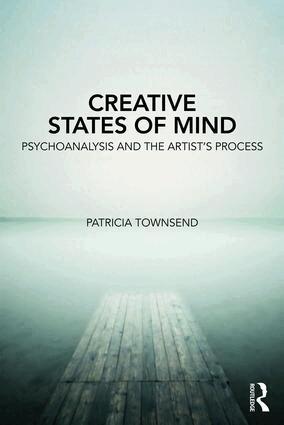


Du kanske också är intresserad av
- Nyhet
Del 7
- Nyhet
Del 11
- Nyhet
Del 4
- Nyhet
Del 6
- Nyhet
Del 3
- Nyhet
- Nyhet