
Del i serien Law, Courts and Politics
Creating the Law
State Supreme Court Opinions and The Effect of Audiences
Inbunden, Engelska, 2019
2 509 kr
Beställningsvara. Skickas inom 10-15 vardagar. Fri frakt för medlemmar vid köp för minst 249 kr.
Finns i fler format (1)
Written opinions are the primary means by which judges communicate with external actors. These sentiments include the parties to the case itself, but also more broadly journalists, public officials, lawyers, other judges, and increasingly, the mass public. In Creating the Law, Michael K. Romano and Todd A. Curry examine the extent to which judges tailor their language in order to avoid retribution during their retention, and how institutional variations involving intra-chamber dynamics may influence the written word of a legal opinion. Using an extensive dataset that includes the text of all death penalty and education decisions issued by state supreme courts from 1995–2010, Romano and Curry are the first to examine the connection between retention incentives and language choices. They utilize text analysis techniques developed in the field of communications and apply them to the text of judicial decisions. In doing so, they find that judges write with their audience in mind, and emphasize duelling strategies of justification and persuasion in order to please diverse audiences that may be paying attention. Furthermore, the process of drafting a majority opinion is a team exercise, and when more individuals are involved in its crafting, the product will reflect this complexity.This book gives students the tools for understanding how institutional variation affects judicial outcomes and shows how language relates to decision-making in the judiciary more specifically.
Produktinformation
- Utgivningsdatum2019-09-18
- Mått152 x 229 x 15 mm
- Vikt453 g
- FormatInbunden
- SpråkEngelska
- SerieLaw, Courts and Politics
- Antal sidor198
- FörlagTaylor & Francis Ltd
- ISBN9781138616837
Tillhör följande kategorier
Hoppa över listan

Mer från samma serie
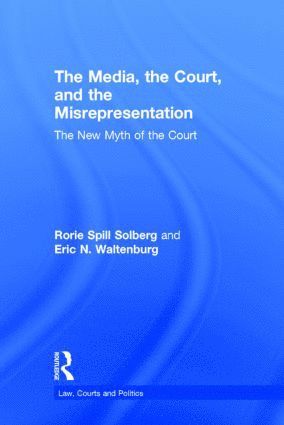
Media, the Court, and the Misrepresentation
Rorie Spill Solberg, Eric N. Waltenburg
Inbunden, 2014
2 959 kr
Hoppa över listan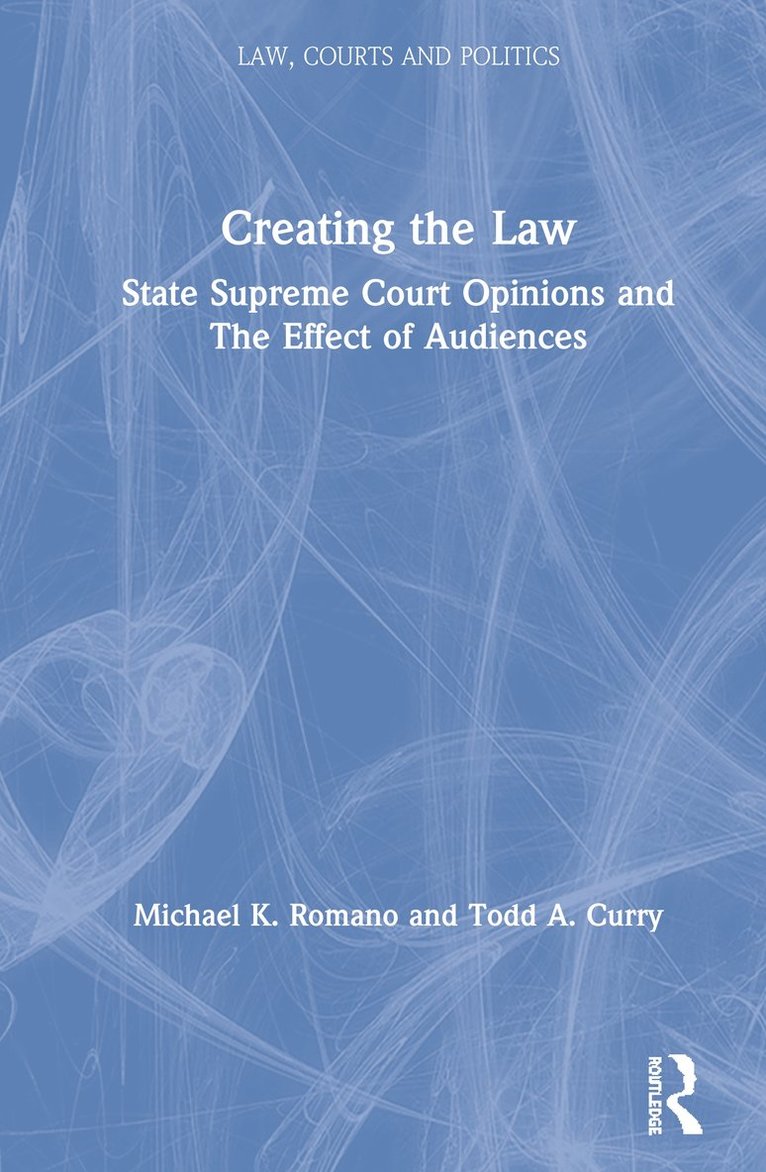
Du kanske också är intresserad av
EU Treaties and the Judicial Politics of National Courts
Pablo José Castillo Ortiz
Inbunden, 2015
3 239 kr
Media, the Court, and the Misrepresentation
Rorie Spill Solberg, Eric N. Waltenburg
Häftad, 2014
969 kr