
Del i serien Law, Courts and Politics
Judicial Politics in Mexico
The Supreme Court and the Transition to Democracy
Inbunden, Engelska, 2016
3 229 kr
Beställningsvara. Skickas inom 10-15 vardagar. Fri frakt för medlemmar vid köp för minst 249 kr.
After more than seventy years of uninterrupted authoritarian government headed by the Partido Revolucionario Institucional (PRI), Mexico formally began the transition to democracy in 2000. Unlike most other new democracies in Latin America, no special Constitutional Court was set up, nor was there any designated bench of the Supreme Court for constitutional adjudication. Instead, the judiciary saw its powers expand incrementally. Under this new context inevitable questions emerged: How have the justices interpreted the constitution? What is the relation of the court with the other political institutions? How much autonomy do justices display in their decisions? Has the court considered the necessary adjustments to face the challenges of democracy?It has become essential in studying the new role of the Supreme Court to obtain a more accurate and detailed diagnosis of the performances of its justices in this new political environment. Through critical review of relevant debates and using original data sets to empirically analyze the way justices voted on the three main means of constitutional control from 2000 through 2011, leading legal scholars provide a thoughtful and much needed new interpretation of the role the judiciary plays in a country’s transition to democracyThis book is designed for graduate courses in law and courts, judicial politics, comparative judicial politics, Latin American institutions, and transitions to democracy. This book will equip scholars and students with the knowledge required to understand the importance of the independence of the judiciary in the transition to democracy.
Produktinformation
- Utgivningsdatum2016-12-08
- Mått152 x 229 x 14 mm
- Vikt408 g
- FormatInbunden
- SpråkEngelska
- SerieLaw, Courts and Politics
- Antal sidor190
- FörlagTaylor & Francis Ltd
- ISBN9781138697812
Tillhör följande kategorier
Hoppa över listan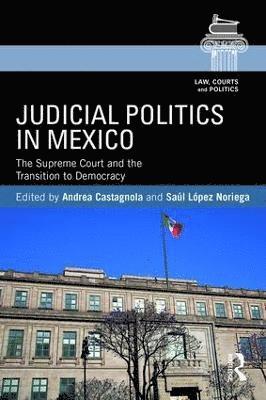


Du kanske också är intresserad av
EU Treaties and the Judicial Politics of National Courts
Pablo José Castillo Ortiz
Inbunden, 2015
3 239 kr
Media, the Court, and the Misrepresentation
Rorie Spill Solberg, Eric N. Waltenburg
Häftad, 2014
969 kr