
Countering Violent Extremism
The International Deradicalization Agenda
Inbunden, Engelska, 2021
969 kr
Skickas . Fri frakt för medlemmar vid köp för minst 249 kr.
Finns i fler format (1)
Terrorism, radicalization and violent extremism dominate sociological, political and cultural concerns in today’s polarized social and political world. However, the role of governments and issues relating to state terrorism and the counter-terror state remain important considerations. This book presents an understanding of the concept of Countering Violent Extremism from a critical terrorism studies perspective using case studies from different countries while examining the issues it raises. Extremism and violence do not emerge in a vacuum – nor do the policies that counter these concerns. There are no simple solutions to violent extremism but the fixation on ideology can do more harm than good.
Produktinformation
- Utgivningsdatum2021-05-20
- Mått138 x 216 x 19 mm
- Vikt413 g
- FormatInbunden
- SpråkEngelska
- Antal sidor232
- FörlagBloomsbury Publishing PLC
- ISBN9781838607227
Tillhör följande kategorier
Hoppa över listan




Mer från samma författare
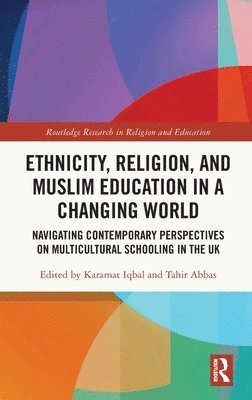
Ethnicity, Religion, and Muslim Education in a Changing World
Karamat Iqbal, Tahir Abbas
Inbunden, 2024
3 119 kr
Ethnicity, Religion, and Muslim Education in a Changing World
Karamat Iqbal, Tahir Abbas
Häftad, 2025
889 kr
Routledge International Handbook on Social Exclusion and Radicalisation
Tahir Abbas, Lianne Vostermans, Richard McNeil-Willson
Inbunden, 2026
4 849 kr
Hoppa över listan
Du kanske också är intresserad av
- Nyhet
Ethnicity, Religion, and Muslim Education in a Changing World
Karamat Iqbal, Tahir Abbas
Häftad, 2025
889 kr