
Del 10
Del 31 i serien International Comparative Social Studies
Conflict and Peace in Central Eurasia
Towards Explanations and Understandings
Inbunden, Engelska, 2014
3 779 kr
Beställningsvara. Skickas inom 5-8 vardagar. Fri frakt för medlemmar vid köp för minst 249 kr.
Conflict and Peace in Central Eurasia combines theory with in-depth description and systematic analyses of ethnoterritorial conflict and coexistence in Central Eurasia. Central Eurasia is at the heart of the Eurasian continent around the Caspian Sea. Much of this macro-region is made up of the post-Soviet republics in Central Asia and the Caucasus, but it also covers other areas, such as parts of Russia and Iran. Central Eurasia is subject to a number of ethnoterritorial conflicts. Yet at the same time, a large number of ethnic groups, speaking different languages and following different religions, coexist peacefully in this macro-region. Babak Rezvani explains ethno-territorial conflicts not only by focusing on these conflicts but also by comparing all cases of conflict and coexistence in (post-)Soviet Central Asia, the Caucasus and Fereydan, the so-called Iranian little Caucasus. Aiming at formulating new theories, this book makes use of qualitative comparative analysis (QCA), as well as case studies and statistical analyses. It provides an innovative and interesting contribution to Eurasian Studies and Conflict Analysis, and at the same time demonstrates a detailed knowledge of the relevant literature. Based on thorough research, the study offers a deep and insightful history of the areas and conflicts concerned.
Produktinformation
- Utgivningsdatum2014-12-19
- Mått155 x 235 x 27 mm
- Vikt700 g
- FormatInbunden
- SpråkEngelska
- SerieInternational Comparative Social Studies
- Antal sidor362
- FörlagBrill
- ISBN9789004276352
Tillhör följande kategorier
Hoppa över listan




Du kanske också är intresserad av
Del 32
- Nyhet
Del 7
Del 34
- Nyhet
Del 6
Del 55
Del 39
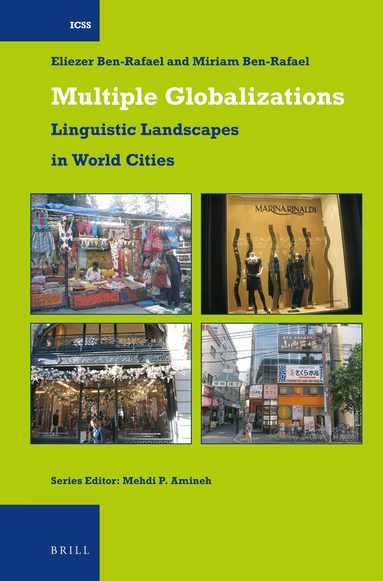
Multiple Globalizations: Linguistic Landscapes in World-Cities
Eliezer Ben-Rafael, Miriam Ben-Rafael
Inbunden, 2018
3 339 kr
Del 60
Del 17
Del 44
“Comfort Stations” as Remembered by Okinawans during World War II
Yunshin Hong, Robert Ricketts
Häftad, 2023
1 729 kr
- Nyhet
Del 4