
Del i serien SUNY series in Chinese Philosophy and Culture
Chinese Theories of Fiction
A Non-Western Narrative System
Inbunden, Engelska, 2006
1 629 kr
Tillfälligt slut
An ambitious, innovative work that proposes a distinctly Chinese theory of fiction.In this innovative work, Ming Dong Gu examines Chinese literature and traditional Chinese criticism to construct a distinctly Chinese theory of fiction and places it within the context of international fiction theory. He argues that because Chinese fiction, or xiaoshuo, was produced in a tradition very different from that of the West, it has formed a system of fiction theory that cannot be adequately accounted for by Western fiction theory grounded in mimesis and realism. Through an inquiry into the macrocosm of Chinese fiction, the art of formative works, and theoretical data in fiction commentaries and intellectual thought, Gu explores the conceptual and historical conditions of Chinese fiction in relation to European and world fiction. In the process, Gu critiques and challenges some accepted views of Chinese fiction and provides a theoretical basis for fresh approaches to fiction study in general and Chinese fiction in particular. Such masterpieces as the Jin Ping Mei (The Plum in the Golden Vase) and the Hongloumeng (The Story of the Stone) are discussed at length to advance his notion of fiction and fiction theory.
Produktinformation
- Utgivningsdatum2006-07-13
- Mått155 x 229 x 23 mm
- Vikt522 g
- FormatInbunden
- SpråkEngelska
- SerieSUNY series in Chinese Philosophy and Culture
- Antal sidor302
- FörlagState University of New York Press
- ISBN9780791468159
Tillhör följande kategorier
Hoppa över listan
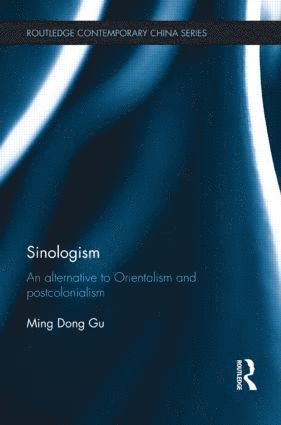

Mer från samma författare
Visual Subjectivity in Chinese and American Thought and Literature
Guozhong Duan, Ming Dong Gu
Inbunden, 2025
3 699 kr
Hoppa över listan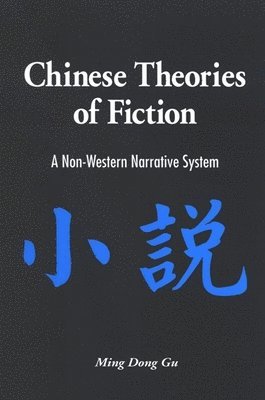
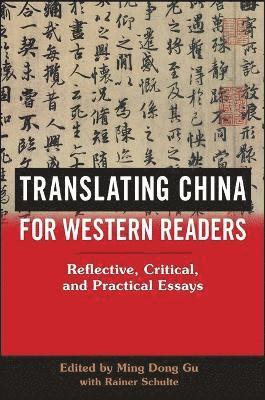
Du kanske också är intresserad av
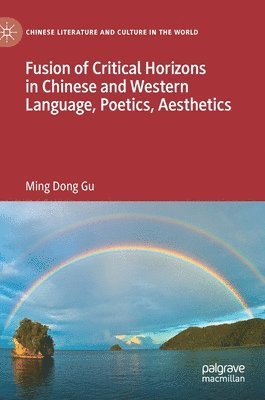
Fusion of Critical Horizons in Chinese and Western Language, Poetics, Aesthetics
Ming Dong Gu
Inbunden, 2021
2 049 kr