
Del i serien Advances in Mental Health Research
Challenges of Integrating Religion and Spirituality into Psychotherapy
Integrity, Competence, and Cultural Pluralism in Clinical Practice
Inbunden, Engelska, 2024
3 119 kr
Beställningsvara. Skickas inom 10-15 vardagar. Fri frakt för medlemmar vid köp för minst 249 kr.
Finns i fler format (1)
This book examines personal and professional understandings of religion in psychotherapy and advocates for integrity, competency, and cultural pluralism in clinical practice.A major feature of this book is that it confirms the massive proliferation of religion-oriented approaches to counseling and therapy in recent years. It attributes this rise to opportunism and exaggerated individualism among therapists and to the frequent failures of professional associations, clinical preparation programs, and other influences. In response to these influences, it identifies the need for guiding principles for integrating religion into therapy, discusses the religious issues that clients bring to therapy, and advocates for major changes in clinical practice, with emphasis on integrity and competence. Building on a large volume of research and using evidence-based conclusions, it clarifies how these two major features of contemporary life can be integrated with integrity and competence. The author maintains that religion should be a feature of the practice of counseling and therapy, so long as it addresses the clinically relevant needs of clients. However, it also explores how the religion of counselors and therapists often expresses the needs of counselors and therapists, instead of addressing the needs of their clients.In the context of these questions and discussion of contentious challenges, this book provides guidelines for relating religion with clinical practice and recommends needed actions by clinical preparation programs, professional associations, individual therapists, state legislatures, licensing boards, social service agencies, and corporations. All of this stands on the conspicuous need for professional accountability in the delivery of mental health care.
Produktinformation
- Utgivningsdatum2024-04-23
- Mått152 x 229 x 19 mm
- Vikt670 g
- FormatInbunden
- SpråkEngelska
- SerieAdvances in Mental Health Research
- Antal sidor266
- FörlagTaylor & Francis Ltd
- ISBN9781032714578
Tillhör följande kategorier
Hoppa över listan






Mer från samma serie
Group Therapy for Adults with Severe Mental Illness
Diana Semmelhack, Larry Ende, Clive Hazell
Inbunden, 2013
3 039 kr
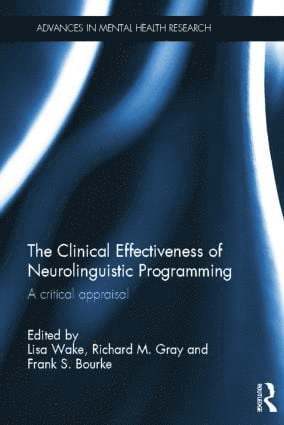
Clinical Effectiveness of Neurolinguistic Programming
Lisa Wake, Richard Gray, Frank Bourke
Inbunden, 2012
3 039 kr
Neurolinguistic Programming in Clinical Settings
Lisa de Rijk, Richard Gray, Frank Bourke
Häftad, 2023
829 kr
Neurolinguistic Programming in Clinical Settings
Lisa de Rijk, Richard Gray, Frank Bourke
Inbunden, 2022
3 219 kr
Hoppa över listan






Du kanske också är intresserad av
Challenges of Integrating Religion and Spirituality into Psychotherapy
Francis A. Martin
Häftad, 2026
1 059 kr
- Nyhet
Counseling and the Resolution of Religious and Spiritual Struggles
Mentanna Campbell
Häftad, 2026
859 kr
Clinical Effectiveness of Neurolinguistic Programming
Lisa Wake, Richard Gray, Frank Bourke
Häftad, 2014
889 kr
Video and Filmmaking as Psychotherapy
Joshua L. Cohen, J. Lauren Johnson, Penny Orr
Häftad, 2016
829 kr