Beställningsvara. Skickas inom 7-10 vardagar. Fri frakt för medlemmar vid köp för minst 249 kr.
The essays in this volume, including a new piece by Badiou himself, reflect the formative traditions that shape the background of his political thought. They intervene critically and evaluate the present state of Badiou's work, while also breaking new ground and creating new thresholds of political thought. It includes a range of established scholars and rising theorists of the Badiou-effect, each engaging with the critical question of 'how to transmit the exception' politically, at the intersection of contemporary anti-imperial polemics and debates that strike at the heart of the post-modern condition (Lyotard), deconstruction (Derrida), psychoanalysis (Lacan-Zizek), biopolitics (Hardt and Negri) and pedagogy (Ranciere).
Marios Constantinou received his PhD from The New School for Social Research in New York. He is currently an independent researcher. He has edited 2 journal special issues, Space and Event (special issue on Badiou), for the journal Environment and Planning, Pion Publications, 2009 and Imperial Affect for Parallax (Routledge, 2012). He has also contributed numerous chapters in books on the work of Alain Badiou.
Introduction; Forcing Politics: Badiou’s Anabasis In the Age of Empire, Marios Constantinou; Part I: The Crisis of Negation And The Political Condition; 1. From Logic to Anthropology: Affirmative Dialectics, Alain Badiou; 2. Conditioning Communism: Badiou, Plato and Philosophy as Meta-Critical Anamnesis, Frank Ruda; 3. The Narrative Politics of Active Number, Ed Pluth; 4. The Pascalian Wager of Politics: Remarks on Badiou and Lacan, Dominiek Hoens; 5. Contra Opinionem: Politics as an Anti-Imperialist Procedure, Marios Constantinou; Part II: Compossibilities: Conditions of Philosophy in the Wake of Politics; 6. Reversing and Affirming the Avant-Gardes: A New Paradigm for Politics, Jan Voelker; 7. Badiou on Inaesthetics and Transitory Ontology: The Case of Political Song, Christopher Norris; 8. Love in the Time of the Communist Hypothesis, Norman Madarasz; 9. The Politics of Comradeship: Philosophical Commitment and Construction in Alain Badiou and Slavoj Žižek, Sean Homer; 10. Not Solvable by Radicals: Lacan, Topology, Politics, A. J. Bartlett & Justin Clemens; Bibliography; Index.
These essays explicate, critique, and extend key ideas in the political thought of Alain Badiou. That achievement alone makes the collection important. The breadth and clarity of the contributions – which take up art, music, psychoanalysis, and love as well as biopolitics, miltancy, revolution, and communism – make it necessary.
Sean Bowden, Simon Duffy, Deakin University) Bowden, Sean (Alfred Deakin Postdoctoral Research Fellow, University of Sydney) Duffy, Simon (Research Associate
Marcelo Svirsky, Simone Bignall, University of Wollongong) Svirsky, Marcelo (Lecturer and Marie Curie Fellow, Sydney) Bignall, Simone (Adjunct Senior Lecturer, University of Technology
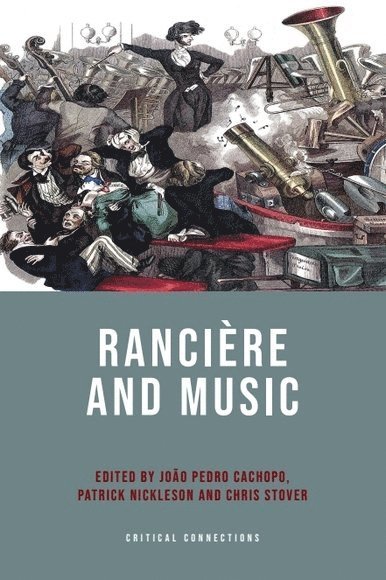
João Pedro Cachopo, Patrick Nickleson, Chris Stover, the Universidade Nova de Lisboa and the University of Chicago) Cachopo, Joao Pedro (Marie Sklodowska-Curie Fellow, Queen's University at Kingston) Nickleson, Patrick (Postdoctoral Researcher, University of Oslo) Stover, Chris (Research Fellow, Joao Pedro Cachopo
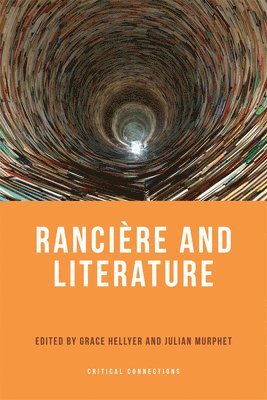
Grace Hellyer, Julian Murphet, University of New South Wales) Hellyer, Grace (teacher, University of Adelaide) Murphet, Julian (Jury Professor of English Language and Literature
John Mullarkey, Anthony Paul Smith, London) Mullarkey, John (Professor of Film and Television, Kingston University, La Salle University) Smith, Anthony Paul (Assistant Professor in Religion