
Del 2 i serien Roman and Late Antique Mediterranean Pottery
Ancient Mediterranean Trade in Ceramic Building Materials: A Case Study in Carthage and Beirut
Häftad, Engelska, 2013
619 kr
Skickas . Fri frakt för medlemmar vid köp för minst 249 kr.
This study (the second volume in the Archaeopress series devoted to the publication of ceramics in the Roman Mediterranean and outlying territories from the late Republic to late Antiquity) addresses the level of interregional trade of ceramic building material (CBM), traditionally seen as a high bulk low value commodity, within the ancient Mediterranean between the third century BC and the seventh century AD. It examines the impact of different modes of production, distribution and consumption of CBM and how archaeological assemblages differ from what is predicted by current models of the ancient economy. It also explores how CBM can be used to investigate cultural identity and urban form. CBM has great potential in investigating these topics. It survives in large quantities in the archaeological record; it is transported as a commodity in its own right, not as a container for other products like amphorae. The amount of CBM used in a building can be estimated, and this can be extrapolated to urban centres to model consumption in ways that are not possible for other goods. This allows the potential derivation of economic information to a higher level of precision than is the case for other materials. The material used in this study derives from stratified assemblages from two major ports of the ancient Mediterranean: Carthage and Beirut. CBM as a material is comparable to pottery, only it does not exhibit the same range of forms. This leaves fabric as a major means of analysing CBM samples. For this reason a programme of petrological thin sectioning has been carried out on these assemblages. These data have been combined with the taphonomic and dating evidence from the excavations. The results showed that the levels of imports of CBM into these two cities were much higher than would normally be expected from the orthodox model of the consumer city. They also suggest that CBM can be used as a tool to investigate cultural identity.
Produktinformation
- Utgivningsdatum2013-02-15
- Mått210 x 297 x 8 mm
- Vikt1 050 g
- FormatHäftad
- SpråkEngelska
- SerieRoman and Late Antique Mediterranean Pottery
- Antal sidor144
- FörlagArchaeopress
- ISBN9781905739608
Tillhör följande kategorier
Hoppa över listan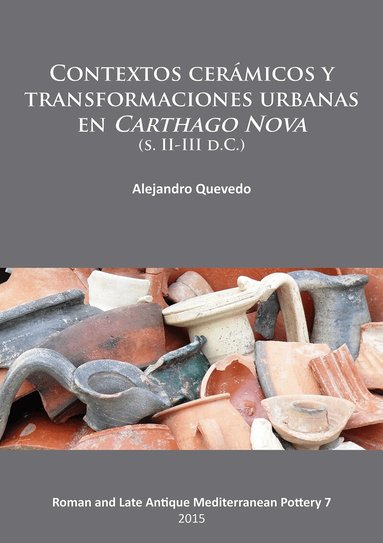
Mer från samma serie
Del 7
Contextos cerámicos y transformaciones urbanas en Carthago Nova (s. II-III d.C.)
Alejandro Quevedo
Häftad, 2015
1 479 kr
Del 6
Del 8
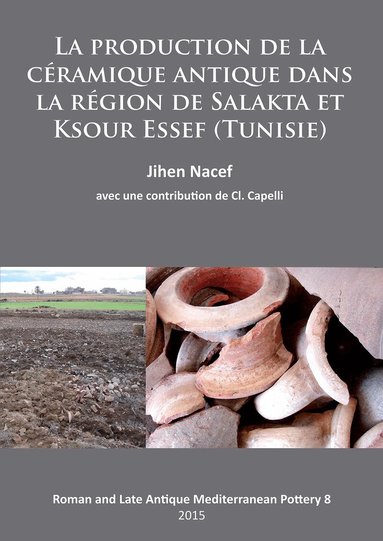
production de la céramique antique dans la région de Salakta et Ksour Essef (Tunisie)
Jihen Nacef
Häftad, 2015
929 kr
Del 9
Del 10
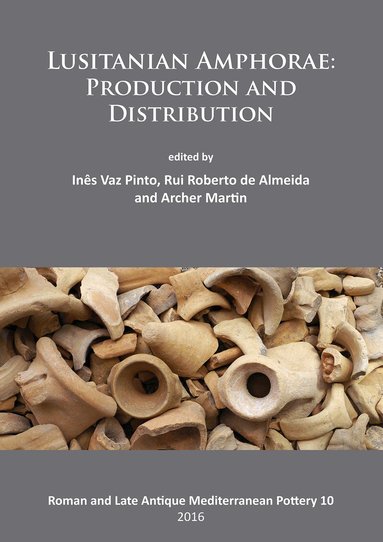
Lusitanian Amphorae: Production and Distribution
Inês Vaz Pinto, Rui Roberto de Almeida, Archer Martin
Häftad, 2016
1 339 kr
Del 12
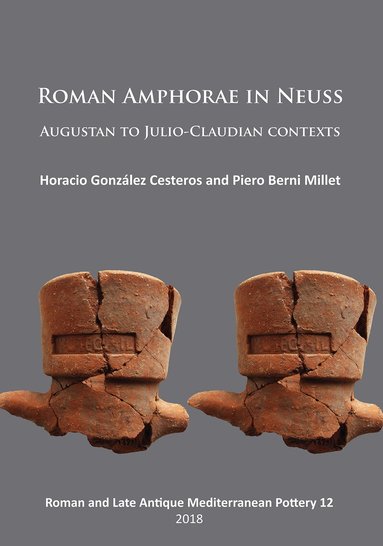
Roman Amphorae in Neuss: Augustan to Julio-Claudian Contexts
Horacio González Cesteros, Piero Berni Millet
Häftad, 2018
709 kr
Del 13
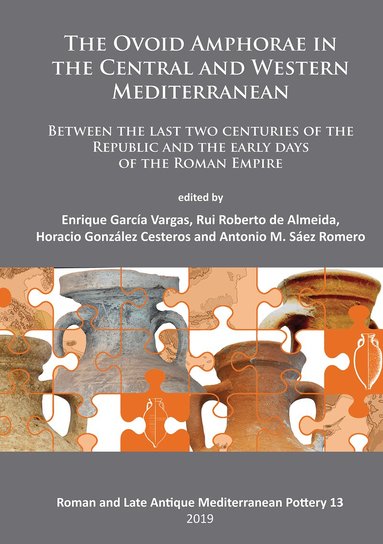
Ovoid Amphorae in the Central and Western Mediterranean
Enrique García Vargas, Rui Roberto de Almeida, Horacio González Cesteros, Antonio Sáez Romero
Häftad, 2019
1 309 kr
Del 15
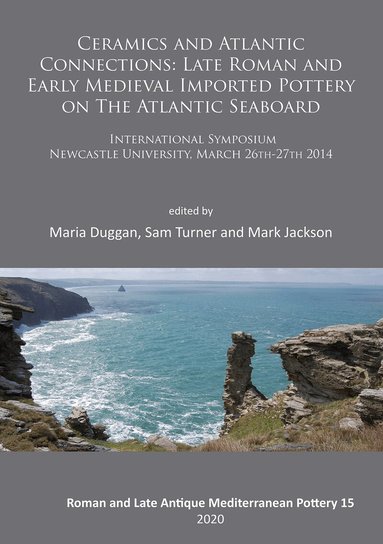
Ceramics and Atlantic Connections: Late Roman and Early Medieval Imported Pottery on the Atlantic Seaboard
Maria Duggan, Mark Jackson, Sam Turner
Häftad, 2020
599 kr
Del 16
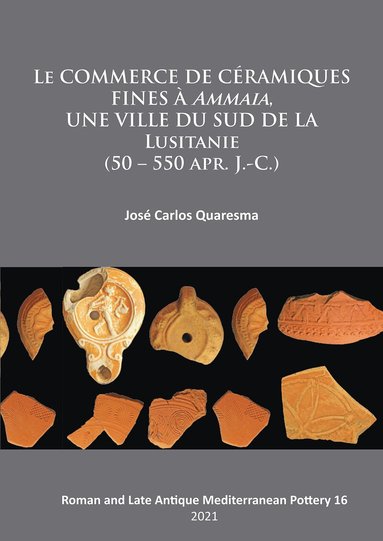
commerce de céramiques fines à ammaia, une ville du sud de la Lusitanie (50 – 550 apr. J.-c.)
José Carlos Quaresma
Häftad, 2021
729 kr
Del 17
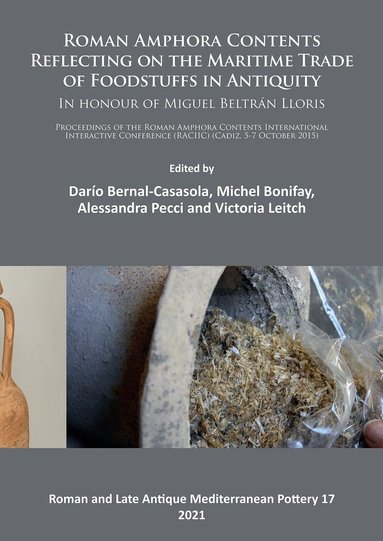
Roman Amphora Contents: Reflecting on the Maritime Trade of Foodstuffs in Antiquity (In honour of Miguel Beltrán Lloris)
Darío Bernal-Casasola, Michel Bonifay, Alessandra Pecci, Victoria Leitch
Häftad, 2021
1 399 kr
Hoppa över listan

Du kanske också är intresserad av
- Nyhet
Del 3
Del 15
Ceramics and Atlantic Connections: Late Roman and Early Medieval Imported Pottery on the Atlantic Seaboard
Maria Duggan, Mark Jackson, Sam Turner
Häftad, 2020
599 kr
Del 6
- Nyhet
Del 6
Del 19
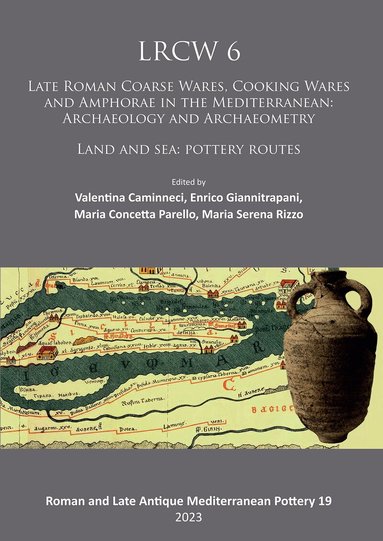
Lrcw 6
Valentina Caminneci, Enrico Giannitrapani, Maria Concetta Parello, Maria Serena Rizzo
Häftad, 2023
2 409 kr
Del 13
Ovoid Amphorae in the Central and Western Mediterranean
Enrique García Vargas, Rui Roberto de Almeida, Horacio González Cesteros, Antonio Sáez Romero
Häftad, 2019
1 309 kr