
Del i serien American Philosophy Series
Aesthetic Transcendentalism in Emerson, Peirce, and Nineteenth-Century American Landscape Painting
Häftad, Engelska, 2018
679 kr
Beställningsvara. Skickas inom 10-15 vardagar. Fri frakt för medlemmar vid köp för minst 249 kr.
Aesthetic Transcendentalism is a philosophy endorsing the qualitative and creative aspects of nature. Theoretically it argues for a metaphysical dimension of nature that is aesthetically real, pluralistic, and prolific. It directs our attention to the rich complexity of immediate experience, the possibility of discovering new aesthetic features about the world, and the transformative potential of art as an organic expression. This book presents the philosophy in its relationship to its historical roots in the philosophic and artistic traditions of nineteenth-century North America. In this multidisciplinary study, Nicholas L. Guardiano brings together a philosophic and literary figure in Ralph Waldo Emerson, the scientifically minded philosopher Charles S. Peirce, and the plastic arts in the form of American landscape painting. Guardiano evaluates this constellation of philosophers and artists in global perspective as it relates to other historical theories of metaphysics and aesthetics, while simultaneously performing a cultural analysis that identifies an essential feature of the American mind. Aesthetic Transcendentalism thus possesses abiding significance for our vital interactions with nature, daily experiences, and contemplations of great works of art.Aesthetic Transcendentalism in Emerson, Peirce, and Nineteenth-Century American Landscape Painting will be of interest to scholars of American philosophy and American art history, especially specialists of Charles S. Peirce, Ralph Waldo Emerson, and the Hudson River School painters. It will also appeal to philosophers working on systematic metaphysical theories of nature.
Produktinformation
- Utgivningsdatum2018-11-19
- Mått151 x 232 x 14 mm
- Vikt308 g
- FormatHäftad
- SpråkEngelska
- SerieAmerican Philosophy Series
- Antal sidor184
- FörlagBloomsbury Publishing Plc
- ISBN9781498524551
Tillhör följande kategorier
Hoppa över listan


Mer från samma serie
Values, Valuations, and Axiological Norms in Richard Rorty's Neopragmatism
Krzysztof Piotr Skowronski
Inbunden, 2015
1 549 kr
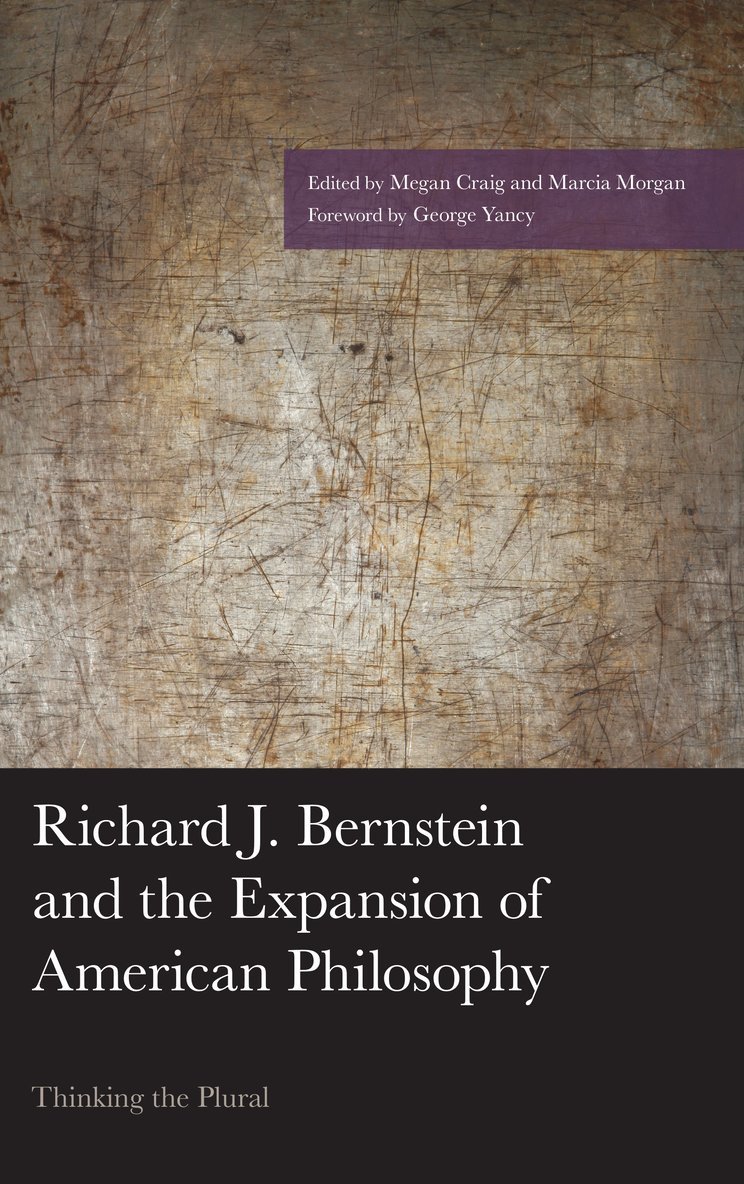
Richard J. Bernstein and the Expansion of American Philosophy
Marcia Morgan, Megan Craig
Inbunden, 2016
1 729 kr
Richard J. Bernstein and the Expansion of American Philosophy
Marcia Morgan, Megan Craig
Häftad, 2019
789 kr
Hoppa över listan

Du kanske också är intresserad av
Richard J. Bernstein and the Expansion of American Philosophy
Marcia Morgan, Megan Craig
Inbunden, 2016
1 729 kr
Values, Valuations, and Axiological Norms in Richard Rorty's Neopragmatism
Krzysztof Piotr Skowronski
Inbunden, 2015
1 549 kr