
Del 7
Del i serien Theory and Decision Library D:
Advances in Computer-Based Human Assessment
Häftad, Engelska, 2012
2 779 kr
Beställningsvara. Skickas inom 10-15 vardagar. Fri frakt för medlemmar vid köp för minst 249 kr.
Produktinformation
- Utgivningsdatum2012-09-27
- Mått160 x 240 x 26 mm
- Vikt754 g
- FormatHäftad
- SpråkEngelska
- SerieTheory and Decision Library D:
- Antal sidor463
- FörlagSpringer
- ISBN9789401054676
Tillhör följande kategorier
Hoppa över listan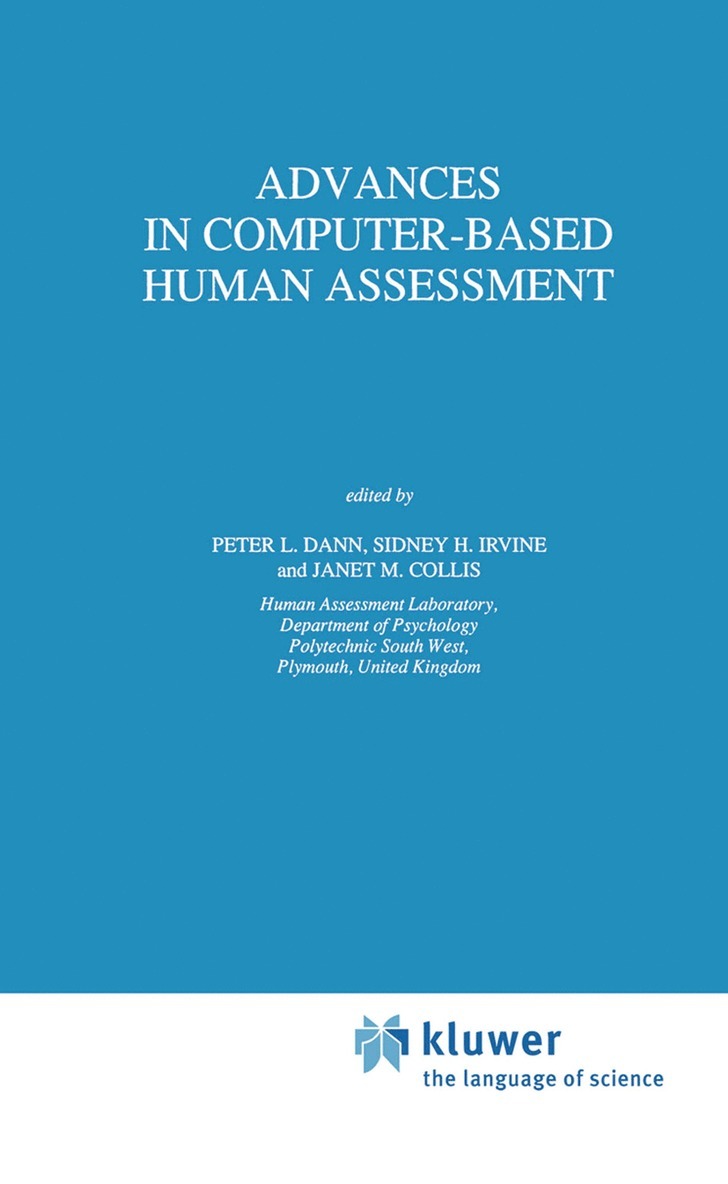
Du kanske också är intresserad av
Human Assessment: Cognition and Motivation
S.K. Newstead, S.H Irvine, P.L. Dann
Inbunden, 1986
4 169 kr
Indigenous Cognition: Functioning in Cultural Context
J.W. Berry, S.H Irvine, E.G. Hunt
Häftad, 2012
2 779 kr
Del 38
Intelligence and Cognition: Contemporary Frames of Reference
S.H Irvine, S.K. Newstead
Häftad, 1987
699 kr
Indigenous Cognition: Functioning in Cultural Context
J.W. Berry, S.H Irvine, E.G. Hunt
Inbunden, 1988
2 779 kr
Del 3
Fuzzy Relation Equations and Their Applications to Knowledge Engineering
Antonio Di Nola, S. Sessa, Witold Pedrycz, E. Sanchez
Inbunden, 1989
2 149 kr