
Adultism
A Critical Introduction to Discrimination Against Children
Häftad, Engelska, 2026
599 kr
Skickas . Fri frakt för medlemmar vid köp för minst 249 kr.
Finns i fler format (1)
Despite global advances in children’s rights, young people are routinely disregarded, overpowered and excluded. This persistent discrimination – known as adultism – permeates family life, education, urban design, legal systems and political discourse. In this groundbreaking book, the authors provide a comprehensive introduction to adultism from an academic perspective while also emphasising its practical implications. Drawing on rich, real-world examples and research, they analyse it as a systemic form of discrimination, exploring how it evolved and is reproduced through language, institutions and everyday practices. Timely, accessible and urgent, this book offers a vision for resistance and transformation, outlining how adultism can be challenged – by both adults and young people – to co-create a more equitable future.
Produktinformation
- Utgivningsdatum2026-03-10
- Mått156 x 234 x 23 mm
- Vikt498 g
- FormatHäftad
- SpråkEngelska
- Antal sidor332
- FörlagBristol University Press
- ISBN9781447378136
Tillhör följande kategorier
Hoppa över listan

Mer från samma författare
Del 15
‘Children Out of Place’ and Human Rights
Antonella Invernizzi, Manfred Liebel, Brian Milne, Rebecca Budde
Inbunden, 2016
1 439 kr
Del 15
‘Children Out of Place’ and Human Rights
Antonella Invernizzi, Manfred Liebel, Brian Milne, Rebecca Budde
Häftad, 2018
1 329 kr
Hoppa över listan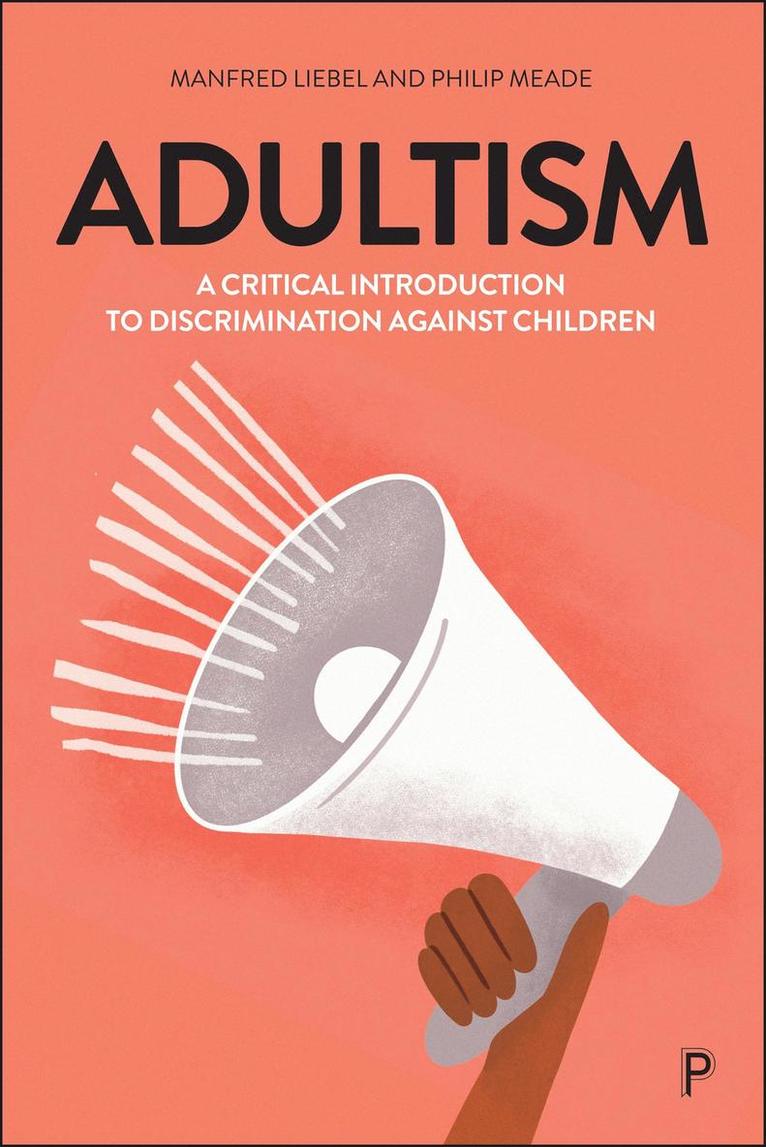


Du kanske också är intresserad av
- Nyhet
Del 4
Del 15
‘Children Out of Place’ and Human Rights
Antonella Invernizzi, Manfred Liebel, Brian Milne, Rebecca Budde
Inbunden, 2016
1 439 kr
Del 15
‘Children Out of Place’ and Human Rights
Antonella Invernizzi, Manfred Liebel, Brian Milne, Rebecca Budde
Häftad, 2018
1 329 kr
Working to Be Someone
Beatrice Hungerland, Manfred Liebel, Brian Milne, Anne Wihstutz
Häftad, 2007
469 kr