
Del i serien Bloomsbury Studies in Contemporary Rhetoric
World War I, Mass Death, and the Birth of the Modern US Soldier
A Rhetorical History
Häftad, Engelska, 2020
789 kr
Beställningsvara. Skickas inom 10-15 vardagar. Fri frakt för medlemmar vid köp för minst 249 kr.
World War I, Mass Death, and the Birth of the Modern US Soldier: A Rhetorical History examines the United States government’s postwar ideological and rhetorical project in establishing permanent national military cemeteries abroad. Constructed throughout Europe where citizen-soldiers had fought and perished, and sacralized as American sites, these burial grounds simultaneously linked the nation’s war dead back to American soil and the national purpose rooted there, expressed the nation’s emerging prominent role on the world’s stage, and advanced the burgeoning icon of the “sacrificial, universal” US soldier. It draws upon untapped archival and historical materials from the WWI and interwar periods, as well as original on-site research, to show how the cemeteries came to display and advance the vision of the modern US soldier as “a global force for good.” Ultimately, within the visual display of overseas cemeteries we can detect the birth of “the modern US soldier”—a potent icon in which divergent emotions, memories, beliefs, and arguments of Americans and non-Americans have been expressed for a century.
Produktinformation
- Utgivningsdatum2020-09-29
- Mått152 x 232 x 21 mm
- Vikt544 g
- FormatHäftad
- SpråkEngelska
- SerieBloomsbury Studies in Contemporary Rhetoric
- Antal sidor342
- FörlagBloomsbury Publishing Plc
- ISBN9781498546898
Tillhör följande kategorier
Hoppa över listan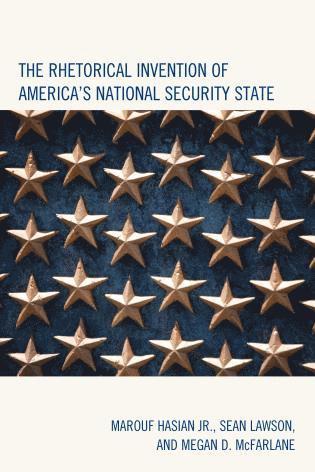



Mer från samma serie
Rhetorical Invention of America's National Security State
Marouf Hasian Jr., Sean Lawson, Megan D. McFarlane
Inbunden, 2015
1 999 kr
Rhetoric and Governance under Trump
Bernd Kaussler, Lars J. Kristiansen, Jeffrey Delbert
Inbunden, 2020
1 999 kr
Rhetoric and Governance under Trump
Bernd Kaussler, Lars J. Kristiansen, Jeffrey Delbert
Häftad, 2022
659 kr
Hoppa över listan






Du kanske också är intresserad av
- Nyhet
Del 3
Rhetoric and Governance under Trump
Bernd Kaussler, Lars J. Kristiansen, Jeffrey Delbert
Inbunden, 2020
1 999 kr