
Women Will Vote
Winning Suffrage in New York State
Inbunden, Engelska, 2017
469 kr
Beställningsvara. Skickas inom 3-6 vardagar. Fri frakt för medlemmar vid köp för minst 249 kr.
Finns i fler format (1)
Women Will Vote celebrates the 1917 victory of the women's suffrage movement in New York State. Susan Goodier and Karen Pastorello highlight the activism of rural, urban, African American, Jewish, immigrant, and European American women, as well as male suffragists, both upstate and downstate, who helped secure the 1917 referendum. They contend that this win energized the national suffrage battle, escalating the momentum for the passage of the Nineteenth Amendment.Goodier and Pastorello reveal how thousands of New York's suffrage advocates sparked a major political, social, and legal shift. Diverse women groups collectively built a powerful coalition that extended well beyond New York City's elite white leadership.Women Will Vote convincingly argues that the organization and agitation led to what one prominent suffrage leader called the "very greatest victory." New York suffragists' 1917 success helped change the course of American history.
Produktinformation
- Utgivningsdatum2017-09-15
- Mått152 x 229 x 28 mm
- Vikt907 g
- FormatInbunden
- SpråkEngelska
- Antal sidor316
- FörlagCornell University Press
- ISBN9781501705557
- UtmärkelserWinner of American Association for State and Local History Leadership in History Award, Publications Category 2019 (United States)
Tillhör följande kategorier
Hoppa över listan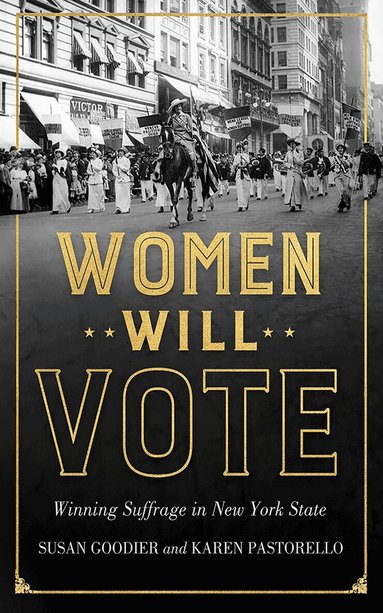




Du kanske också är intresserad av
- Nyhet
Del 7
- Nyhet
Del 11
- Nyhet
Del 4
- Nyhet
- Nyhet
Del 6
- Nyhet
Del 3