
Del i serien Routledge Studies in Gender and Global Politics
Women, Peace and Security in Canada and the United States
- Nyhet
A Fragmented Peace
Häftad, Engelska, 2026
849 kr
Beställningsvara. Skickas inom 10-15 vardagar. Fri frakt för medlemmar vid köp för minst 249 kr.
Finns i fler format (1)
Women, Peace and Security in Canada and the United States critically examines the challenges and contradictions of implementing the Women, Peace and Security (WPS) agenda within the highly polarised political landscapes of Canada and the United States. In an era marked by democratic strain and shifting security priorities, A Fragmented Peace brings together leading scholars, policymakers, and civil society actors to explore how WPS is being implemented, challenged, and reimagined across diverse contexts—from defence institutions and legislative frameworks to grassroots activism and transnational partnerships.The book interrogates the limits of state-centric and multilateral approaches while foregrounding the central role of civil society in sustaining and advancing the agenda. Spanning themes such as militarisation, digital threats, settler colonial legacies, youth leadership, masculinities, LGBTQI+ inclusion, and climate security, the book provides a nuanced and intersectional analysis of WPS in North America. Grounded in both empirical case studies and critical reflection, it not only diagnoses the fractures shaping contemporary WPS efforts but also identifies pathways for more inclusive, accountable, and contextually rooted feminist peacebuilding.Women, Peace and Security in Canada and the United States will appeal to those working on foreign policy, defence, peacebuilding, and civil society advocacy, particularly where the WPS agenda is being implemented or contested.
Produktinformation
- Utgivningsdatum2026-09-16
- Mått156 x 234 x 19 mm
- Vikt540 g
- FormatHäftad
- SpråkEngelska
- SerieRoutledge Studies in Gender and Global Politics
- Antal sidor272
- FörlagTaylor & Francis Ltd
- ISBN9781041173182
Tillhör följande kategorier
Hoppa över listan



Mer från samma serie
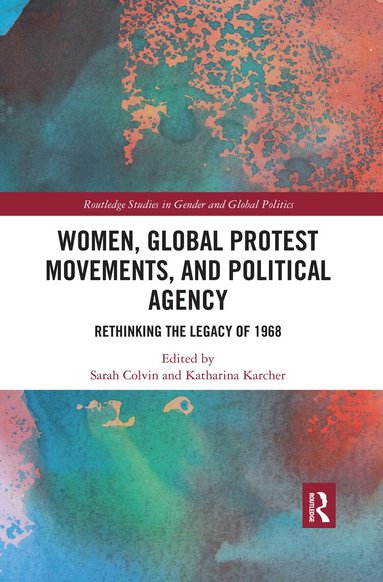
Women, Global Protest Movements, and Political Agency
Sarah Colvin, Katharina Karcher
Häftad, 2020
939 kr
Hoppa över listan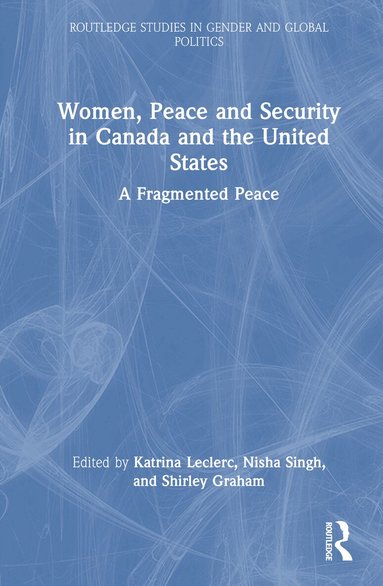
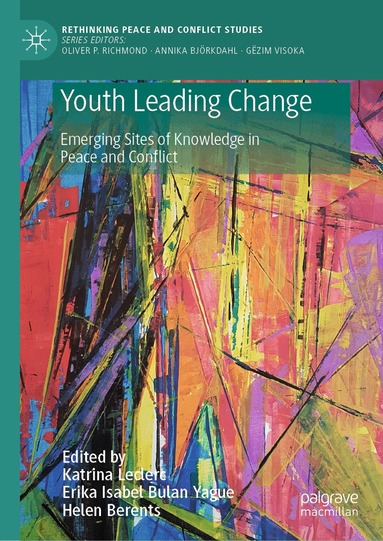








Du kanske också är intresserad av
- Nyhet
Women, Peace and Security in Canada and the United States
Katrina Leclerc, Nisha Singh, Shirley Graham
Inbunden, 2026
3 279 kr