
Del i serien New Southern Studies
Whole Machinery
The Rural Modern in Cultures of the U.S. South, 1890-1946
Inbunden, Engelska, 2019
1 429 kr
Beställningsvara. Skickas inom 3-6 vardagar. Fri frakt för medlemmar vid köp för minst 249 kr.
Finns i fler format (1)
A familiar story holds that modernization radiates outward from metropolitan origins. Expanding on Walter Benjamin’s notion of die Moderne, The Whole Machinery explores representations of people and places, objects and occasions, that reverse that trajectory, demonstrating how modernizing agents move in a contrary direction as well—from the country to the city. In a crucial reconsideration, these figures aren’t pulled by or into urban modernity so much as they bring alternate—and transformative—iterations of the modern to the urban world.Upending the U.S. South’s reputation as either retrograde or unresponsive to modernity, Benjamin S. Child shows how the effects of national and transnational exchange, emergent technologies, and industrialization animate environments and bodies associated with, or performing, versions of the rural. To this end, he also exposes the shadow side of the cosmopolitan modern by investigating the rural sources—the laboring bodies and raw materials—that made such urban spaces possible, thus taking a broader survey of landscapes created by the Atlantic world’s histories of uneven development.In this investigation of the rural modern that considers multiple media and forms of technology, Child’s sources range widely, encompassing a spectrum of texts and their networks of transmission, reception, and signification. These include novels, poems, and short stories but also radio broadcasts, sound recordings, political pamphlets, photographs, magazine articles, newspaper reports, and agricultural bulletins. Folding such expressive artifacts into his larger arguments, Child considers how they both reflect and form modern(ist) culture. The result is a geography of southern modernism that includes an unexpected combination of landmarks, both actual and imagined: Twisted Oak, Arkansas, and Tukabahchee County, Alabama; Manhattan, Manchester, and Moscow; Tuskegee and Gobbler’s Knob, North Carolina.
Produktinformation
- Utgivningsdatum2019-11-01
- Mått152 x 229 x 22 mm
- Vikt637 g
- FormatInbunden
- SpråkEngelska
- SerieNew Southern Studies
- Antal sidor298
- FörlagUniversity of Georgia Press
- ISBN9780820356013
Tillhör följande kategorier
Hoppa över listan




Mer från samma serie
American Cinema and the Southern Imaginary
Kathryn McKee, Deborah Barker, Kathryn McKee
Häftad, 2011
749 kr
Hoppa över listan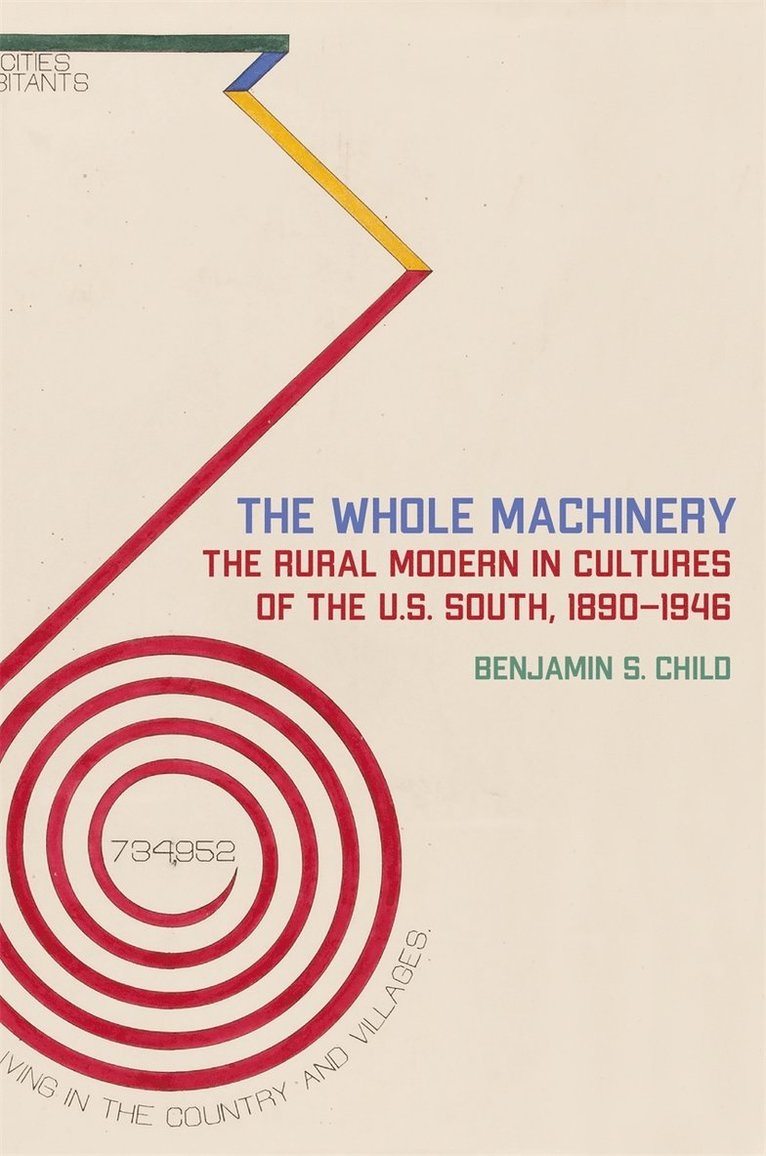



Du kanske också är intresserad av
- Nyhet
Del 3
- Nyhet
Del 11
- Nyhet
Del 6
Jim Crow, Literature, and the Legacy of Sutton E. Griggs
Tess Chakkalakal, Kenneth W. Warren
Inbunden, 2013
1 969 kr