
Del i serien Research in Urban Sociology
Visual and Multimodal Urban Sociology
Exploring the Urban Everyday
Inbunden, Engelska, 2023
1 549 kr
Beställningsvara. Skickas inom 5-8 vardagar. Fri frakt för medlemmar vid köp för minst 249 kr.
Finns i fler format (1)
More extensive methodology is required to study the complexities of everyday life in the rapidly expanding urban areas around the globe, as well as to gain a better understanding of life in established urban areas. Presented over two volumes, Visual and Multimodal Urban Sociology A and B explore the use and potential of visual materials and methodologies that expand the level of analysis and ways of seeing in urban sociology.Both volumes comprise examinations of sources, tools, and methods to capture, analyze, and communicate the visual dimension of urban environments, using existing visual sources as well as visual media as tools to both produce data and communicate insights and views on the contemporary urban condition and experience. Visual and Multimodal Urban Sociology Part B explores the urban every day in globalizing cities, considering utilizing perception in motion, the visual component of neighbourhoods, smoking in the city, resignifying urban traces of colonialism, visual/sensory ethnography and co-living with death, and isolated buildings as indicators of social change.Yielding empirical data and insights regarding the visually observable impact of urban planners, designers, advertisers, commercial forces, cultural institutions, local authorities, artists, protesters as social agents in the (re)production of urban cultural processes, both volumes are a novel and wide-ranging contribution that advances the contours and potential of a more ‘visual’ urban sociology.
Produktinformation
- Utgivningsdatum2023-07-24
- Mått152 x 229 x 16 mm
- Vikt360 g
- FormatInbunden
- SpråkEngelska
- SerieResearch in Urban Sociology
- Antal sidor208
- FörlagEmerald Publishing Limited
- ISBN9781804556337
Tillhör följande kategorier
Hoppa över listan






Mer från samma serie
Del 5
Del 6
Del 7
Del 8
Del 9
Del 10
Del 3
Del 4
Del 11
Everyday Life in the Segmented City
Camilla Perrone, Gabriele Manella, Lorenzo Tripodi
Inbunden, 2011
1 889 kr
Del 12
Hoppa över listan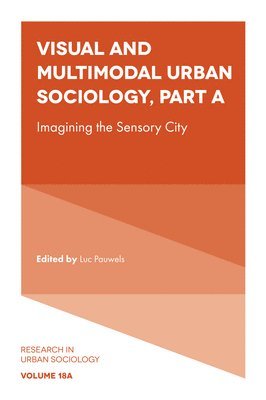


Du kanske också är intresserad av
Del 11
Everyday Life in the Segmented City
Camilla Perrone, Gabriele Manella, Lorenzo Tripodi
Inbunden, 2011
1 889 kr
Del 5
Del 3
Del 8
Del 4
- Nyhet