
Violence, Power, and Society in the Dead Sea Scrolls
Inbunden, Engelska, 2025
1 889 kr
Beställningsvara. Skickas inom 5-8 vardagar. Fri frakt för medlemmar vid köp för minst 249 kr.
Violence is one of the key themes in the Dead Sea Scrolls. It captured the imagination of the Sectarians who wrote these scrolls, and who saw themselves as victims of persecution. Their vision for the end of days included fantasies of revenge against their enemies. In this volume, Alex P. Jassen explores the intersection of violence and power in the Dead Sea Scrolls and the ancient sectarian movement which generated and preserved these texts. Bringing a multidisciplinary approach to this topic, he offers insights into the origins and function of violence for the people behind the Dead Sea Scrolls. He demonstrates how they positioned themselves in a world dominated by more powerful Jews and the overwhelming might of foreign empires. Jassen addresses the complex relationship between violence, power, and social groups by drawing on cross-cultural examples of sectarianism, millennial movements, and disempowered groups, with particular emphasis on New Religious movements such as the Branch Davidians.
Produktinformation
- Utgivningsdatum2025-10-16
- Mått152 x 229 x 21 mm
- Vikt541 g
- FormatInbunden
- SpråkEngelska
- Antal sidor296
- FörlagCambridge University Press
- ISBN9781009609081
Tillhör följande kategorier
Hoppa över listan
Mer från samma författare
Del 63
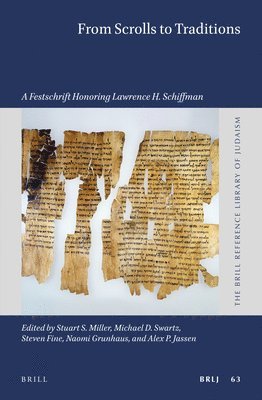
From Scrolls to Traditions
Stuart S. Miller, Michael D. Swartz, Steven Fine, Naomi Grunhaus, Alex P. Jassen
Inbunden, 2020
4 459 kr
Hoppa över listan


Du kanske också är intresserad av
Del 63
From Scrolls to Traditions
Stuart S. Miller, Michael D. Swartz, Steven Fine, Naomi Grunhaus, Alex P. Jassen
Inbunden, 2020
4 459 kr
- Nyhet
- Nyhet
Del 11
- Nyhet
- Nyhet
Del 3
- Nyhet
Del 6