
Violence against Women under International Human Rights Law
Inbunden, Engelska, 2010
2 309 kr
Beställningsvara. Skickas inom 5-8 vardagar. Fri frakt för medlemmar vid köp för minst 249 kr.
Finns i fler format (1)
Since the mid-1990s, increasing international attention has been paid to the issue of violence against women. However, there is still no explicit international human rights treaty prohibition on violence against women and the issue remains poorly defined and understood under international human rights law. Drawing on feminist theories of international law and human rights, this critical examination of the United Nations' legal approaches to violence against women analyses the merits of strategies which incorporate women's concerns of violence within existing human rights norms such as equality norms, the right to life, and the prohibition against torture. Although feminist strategies of inclusion have been necessary as well as symbolically powerful for women, the book argues that they also carry their own problems and limitations, prevent a more radical transformation of the human rights system, and ultimately reinforce the unequal position of women under international law.
Produktinformation
- Utgivningsdatum2010-12-23
- Mått152 x 229 x 24 mm
- Vikt720 g
- FormatInbunden
- SpråkEngelska
- Antal sidor410
- FörlagCambridge University Press
- ISBN9780521767132
Hoppa över listan

Mer från samma författare
Nationality and Statelessness under International Law
Alice Edwards, Laura van Waas
Inbunden, 2014
2 099 kr
In Flight from Conflict and Violence
Volker Türk, Alice Edwards, Cornelis Wouters
Inbunden, 2017
2 139 kr
Nationality and Statelessness under International Law
Alice Edwards, Laura van Waas
Häftad, 2016
669 kr
In Flight from Conflict and Violence
Volker Türk, Alice Edwards, Cornelis Wouters
Häftad, 2017
589 kr
Hoppa över listan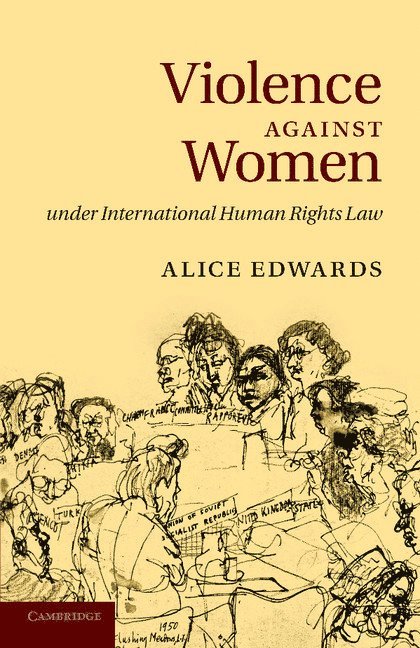


Du kanske också är intresserad av
Nationality and Statelessness under International Law
Alice Edwards, Laura van Waas
Häftad, 2016
669 kr
In Flight from Conflict and Violence
Volker Türk, Alice Edwards, Cornelis Wouters
Häftad, 2017
589 kr
In Flight from Conflict and Violence
Volker Türk, Alice Edwards, Cornelis Wouters
Inbunden, 2017
2 139 kr
Nationality and Statelessness under International Law
Alice Edwards, Laura van Waas
Inbunden, 2014
2 099 kr
- Nyhet
- Nyhet