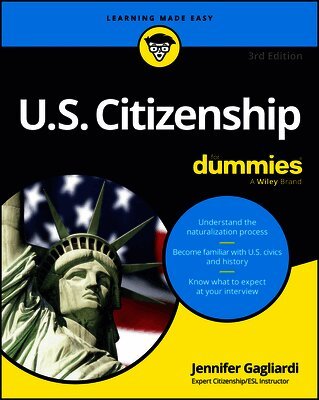
U.S. Citizenship For Dummies
Häftad, Engelska, 2022
269 kr
Beställningsvara. Skickas inom 10-15 vardagar
Fri frakt för medlemmar vid köp för minst 249 kr.Become a U.S. immigration wiz with this hands-on and practical guide to U.S. citizenshipIn U.S. Citizenship For Dummies, expert citizenship and ESL instructor Jennifer Gagliardi walks you through the ins and outs of the complicated process of obtaining citizenship in the United States. From preparing for test day to understanding the interview process and learning about recent changes to immigration laws, this book demystifies the legal process of transforming a foreign national into a citizen of the U.S.In this book, you’ll get: Up-to-date info on the various application and immigration forms you’ll need to complete to become a citizenNeeded preparation for the all-important interviewComplete coverage of the different visas and green cards available to foreign nationals and how you can qualify for themWhether you’re an immigrant-to-be who’s interested in becoming an American citizen, or you’re already a citizen but you want to bone up on U.S. history, government, and civics knowledge, U.S. Citizenship For Dummies is the perfect guide to the procedural and substantive knowledge you need to understand the American immigration system.
Produktinformation
- Utgivningsdatum2022-08-25
- Mått188 x 231 x 25 mm
- Vikt522 g
- FormatHäftad
- SpråkEngelska
- Antal sidor400
- Upplaga2
- FörlagJohn Wiley & Sons Inc
- ISBN9781119766735
Tillhör följande kategorier
Jennifer Gagliardi been teaching ESL/Citizenship at Milpitas Adult School since 2002. In 2007, she launched US Citizenship Podcast (uscitizenpod.com), which distributes citizenship resources and immigration news. She regularly presents workshops on the intersection between citizenship and technology at national, state, and regional adult education conferences.
- Introduction 1About This Book 2Foolish Assumptions 3Icons Used in This Book 3Beyond the Book 4Where to Go from Here 4Part 1: Pursuing Immigration and Citizenship 5Chapter 1: The Joys of Becoming a U.S. Citizen 7Determining Whether You Really Want to Become a U.S. Citizen 7What you lose 8What you gain 8Your rights and responsibilities as a U.S. citizen 9Mapping Your Way to America: Typical Ways People Immigrate to the U.S. 10Reuniting with your family 12Pursuing employment opportunities 13Winning the visa lottery 16Documenting Your Immigration Status 17Just visiting 17Here to stay 19Joining the club: Naturalization 20Making Sense of the Immigration Process 22Doing the paperwork 22Proving your identity 22Being Interviewed by the USCIS 23Interviewing for a green card 24Obtaining U.S. citizenship 26Recognizing Permanent and Temporary Bars to Naturalization 27Attending Your Swearing-In Ceremony 29Receiving your Certificate of Naturalization 30Chapter 2: Meeting the Officials Who Can Help You on Your Quest 33Understanding the Goals of the U.S. Immigration System 33Identifying the Major Players and Their Roles in the Immigration System 34The Department of Homeland Security (DHS) 35US Customs and Border Protection (CBP) 37US Immigration and Customs Enforcement (ICE) 37The Department of State 38State Department Bureau of Consular Affairs 38State Department Bureau of Population, Refugees, and Migration 40The Department of Labor (DOL) 41The Federal Bureau of Investigation (FBI) 41Chapter 3: Finding Out about Immigrant and Nonimmigrant Visas 43Just Visiting: Nonimmigrant Visas 44Determining whether you need a visa 44Discovering the common types of nonimmigrant visas 45Changing or adjusting your nonimmigrant status 46Gaining Permanent Resident Status (or a Green Card) 49Understanding the family preference categories 49Marrying your way to permanent residence 49Using family connections 53Identifying exceptions to the sponsorship requirements 55Working for a Green Card 56Making sense of employment preference categories 57Discovering Other Ways to Qualify for Permanent Residence 63Immigrating through asylum 63Looking for safe refuge 64Investing in the United States 65Winning the green-card lottery 69Waiting for a Visa 70Chapter 4: Filling Out the Forms 71Understanding the Process of Becoming a U.S. Citizen 71Step 1: Are you already a U.S. citizen? 72Step 2: Are you eligible to become a U.S. citizen? 72Step 3: Prepare your Form N-400, Application for Naturalization 72Step 4: Submit your Form N-400 and pay your fees 73Step 5: Go to your biometrics appointment, if applicable 74Step 6: Complete the interview 75Step 7: Receive a decision from USCIS on your Form N-400 75Step 8: Receive a notice to take the Oath of Allegiance 76Step 9: Take the Oath of Allegiance to the United States 76Step 10: Understanding US citizenship 77Using USCIS Tools and Forms 77Your citizenship tool belt 78Creating a USCIS online account 79Applying for Citizenship: Form N-400 81Some helpful info before you begin 81N-400 Parts 1 to 11: Personal Information 82N-400 Part 12: Additional Information 87N-400 Parts 13–18: Signatures 88Other Common Forms 90Submitting Your Application 93Organizing your files 96After you file 96Part 2: Doing the Interview, Getting Help, And Following the Rules 97Chapter 5: Acing Your Naturalization Interview 99Who Needs to Interview with the USCIS? 99Age exemptions 100Disability exemptions 101Passing Your Naturalization Interview 101Arriving prepared 102Giving yourself the best chance for success 103Practicing for the Big Three: Reading, writing, and speaking English 104Getting ready for the interview 106A typical citizenship interview 107Studying for the civics test 110Helping your family prepare for their interview 110Communicating with the USCIS 112Following Up: What Happens After the Interview 113Taking the Oath of Allegiance 113Taking care of a few more important tasks 115Chapter 6: Keeping on Top of Changes in Immigration Law 117Understanding the Post-9/11 Changes to the Immigration System 118Overhauling Immigration Laws in 1990 119Understanding the Significance of the 1996 Immigration Law Changes 120Getting tougher on crime 120Updates to USCIS Form N-400, Application for Naturalization 121Proving you won’t be a burden to the system 122Protecting America’s borders 123Recognizing Helpful Immigration Law Changes 123Staying Abreast of Changes in Immigration Law 125Chapter 7: Getting Help When You Need It 127Recognizing When You Need Professional Help 127Seeking Professional Help 129Knowing the warning signs to watch out for 129Consulting an immigration attorney 130Reaching for a helping hand: Nonprofit immigration organizations 131Taking advantage of free immigration help from the government 133Taking citizenship test-prep classes 133Chapter 8: Troubleshooting Immigration Glitches 135Communicating with the USCIS 135Registering changes 137Changing appointments 138Filing a complaint 138Dealing with Rejection and Appealing USCIS Decisions 139Naturalization rejections 139Demonstrating Good Moral Character 141Avoiding Removal 143Understanding the reasons for removal 143Appealing removal decisions 144Part 3: Exploring U.S History, Government, and Culture 145Chapter 9: U.S. History in a Nutshell, Part I: Pre-US to World War I 147Before We Were the United States 148Native Americans 148Migrating to the New World 148Finding out about the American colonies 149Recognizing the “lucky thirteen” 151Forming a New Country 151Understanding the events leading to the Revolutionary War 151Resisting tyranny: The colonists unite and fight 152Declaring independence from England 153Establishing the new nation 154Growing a nation 156Warring after the Revolution 159Expanding the Country’s Borders 160Engaging in Civil War 163Before the Civil War: Contributing factors and compromises 163The strengths of the North and South 165The war between the states 166Reconstruction after the Civil War 167Entering the Industrial Revolution 168The importance of immigrants to a growing nation 168The rise of labor unions 170Chapter 10: U.S. History in a Nutshell, Part II: World War I to the Present 173The World War I Years 174The causes behind World War I (The Great War) 174US participation in the Great War 175The Treaty of Versailles 176Surviving the Great Depression 178The World War II Years 180Choosing sides: The Axis and the Allies 181The United States under attack: Pearl Harbor 182“relocating” Citizens: Japanese Internment in World War Ii 183Fighting Germany and Japan 184The effects of World War II 186The Cold War Years 186Fighting communism: The Cold War between the world’s superpowers 187Battling communism in Asia: The Korean War 187The Vietnam War 188The Civil Rights Movement 190Understanding the U.S. Today 192Important recent historical events from the late 1960s to the 1990s 192Trouble in the Middle East: The Gulf War 194Historical events of the 21st Century 194Chapter 11: The Declaration of Independence and the Constitution 197Announcing the Birth of a New Nation: The Declaration of Independence 198Leading up to the Declaration: The colonists’ complaints 198What the Declaration says 199The Supreme Law of the Land: The Constitution 201What the Constitution says 201Constitutional articles 203The Bill of Rights 204Constitutional amendments 206Chapter 12: Understanding the United States Federal Government 209How the U.S. Government Works 210The Duties and Functions of the Executive Branch 211The president 211The vice president 211The Cabinet and executive departments 212Independent agencies 213The Duties and Functions of the Legislative Branch 214The United States Congress 215Congressional leadership 215How laws are passed 216Congressional committees 217Meeting your senators 217Meeting your representatives 218The Duties of the Judicial Branch 219The federal court system 220The ultimate constitutional authority: The Supreme Court 221Chapter 13: Looking at State and Local Governments 223Capitals and Capitols 224State Governments 226State government structure 227The responsibilities of state governments 230Citizens’ responsibilities to their states 231State constitutions 231Local Governments 232Chapter 14: Celebrating US Holidays and Observances 235Federal Holidays 235New Year’s Day 236Martin Luther King Jr Day 237Presidents’ Day 237Memorial Day 238Juneteenth 238Independence Day 238Labor Day 239Columbus Day / Indigenous Peoples’ Day 239Veterans’ Day 239Thanksgiving 240Christmas 240Ten More Important Civic Holidays 241Inauguration Day 241Census Day 241Income Tax Day 241Flag Day 242Women’s Equality Day 242State Admissions Day 2429/11 242Constitution and Citizenship Week 243Election Day 243Bill of Rights Day 243Heritage Months 243February: Black History Month 243March: Women’s History Month 244March: Irish-American Heritage Month 244April: Arab American Heritage Month 244May: Asian American and Pacific Islander Heritage Month 244May: Jewish American Heritage Month 244June: Immigrant Heritage Month 245June: LGBTQI+ Pride Month 245June: Caribbean American Heritage Month 245Mid-September to Mid-October: Hispanic Heritage Month 245October: Filipino American History Month 246October: German American Heritage Month 246October: Italian American Heritage Month 246November: Native American Heritage Month 246Chapter 15: Emblems of America 247The Flag: Old Glory 247The symbolism and significance of the flag 247Displaying the flag 248Half-staff rules 250Caring for the flag: Important etiquette 251The Pledge of Allegiance 253The National Anthem 254Other American Anthems 255America (My Country, ’Tis of Thee) 255America the Beautiful 255God Bless America 256This Land Is Your Land 256Lift Every Voice and Sing 256Investigating American Icons 257The Great Seal 257The national bird 258The national motto 259American Monuments 259The Statue of Liberty and Ellis Island 259The Liberty Bell and the President’s House 260The National Mall 261Chapter 16: Civic Life 263The Rights and Duties of Everyone Living in the United States 263Participating in democracy 264Volunteering 265The Rights and Duties of US Citizens 266Part 4: Practicing for the Citizenship Tests 269Chapter 17: Preparing for the English Test 271Building Your Vocabulary 271Brushing Up on Your Reading and Writing 273Working through USCIS Form N-400 274Getting familiar with the N-400 275Getting off to a good start 276What, where, and when? 276Part 12 Additional Information Subsections 277Part 12 key words and common concepts 278More Part 12 key words 280Part 12:45-50: Attachment to the Constitution 281Understanding Key Words in the Oath of Allegiance 283Chapter 18: Preparing for the Civics, Reading, and Writing Tests 287Keeping Current 287Current events 288National, state, and local governments 288Quizzing Yourself on Civics 289As easy as 1, 2, 3 289Two quizzes about the three branches 291The important Americans quiz 293The citizen responsibilities quiz 295Preparing for Your USCIS Interview: The 100 Questions! 296Two quick questions before you begin 296American Government 297American History 304Integrated Civics 307The Reading and Writing Tests 310Part 5: The Part of Tens 315Chapter 19: Ten Tips to Help You Pass Your Naturalization Interview 317Be On Time 317Present Yourself Favorably 318Listen Carefully 318Answer the Right Questions 319Know Your Application 319Be Prepared 319Know Your Stuff 320Bring What You Need 320Be Honest and Honorable 320Treat Immigration Officers with Respect 321Chapter 20: Ten Things That Can Hurt Your Naturalization Case 323Perpetrating Fraud 324Participating in Subversive Activities 324Supporting Violence, Terror, and Participating in War Crimes 324Committing a Crime 324Doing Drugs 325Behaving Poorly (Even If You’re Not Breaking a Law) 325Unlawfully Staying in the United States 325Failing to Register with the Selective Service (If You’re a Male) 326Failing to Meet Deadlines 326Abandoning Your Application 327Chapter 21: Ten Important American Heroes 329George Washington 329Benjamin Franklin 330Thomas Jefferson 331James Madison 332Alexander Hamilton 333Abraham Lincoln 334Susan B Anthony 335Woodrow Wilson 338Franklin Delano Roosevelt 338Dwight David “Ike” Eisenhower 339Martin Luther King, Jr 340Part 6: Appendixes 343Appendix A: The Declaration of Independence 345Appendix B: The United States Constitution 349Appendix C: Document Checklist 363Index 365