
Del 3268
Del i serien School for Advanced Research Advanced Seminar Series
Uruk Mesopotamia & Its Neighbors
Cross-cultural Interactions in the Era of State Formation
Häftad, Engelska, 2001
799 kr
Beställningsvara. Skickas inom 3-6 vardagar. Fri frakt för medlemmar vid köp för minst 249 kr.
In Uruk Mesopotamia and Its Neighbors, ten field and theoretical archaeologists working in the area today offer an overview and analysis of new data and interpretations for Greater Mesopotamia during the late fifth and fourth millennia B.C. They radically reassess the chronological framework for the region, assemble the basic data sets on both local and regional levels, and interpret and synthesize these data in order to put local patterns and dynamics into their widest regional context. Their contributions have applications beyond the cultural history of Mesopotamia itself, reaching into the wider fields of anthropology, history, and political science. With its thorough documentation and comprehensive scope, this volume is an indispensable reference on the state of Mesopotamian archaeology at the beginning of the twenty-first century.
Produktinformation
- Utgivningsdatum2001-12-01
- Mått153 x 227 x 30 mm
- Vikt865 g
- FormatHäftad
- SpråkEngelska
- SerieSchool for Advanced Research Advanced Seminar Series
- Antal sidor594
- FörlagSAR Press
- ISBN9781930618039
Tillhör följande kategorier
Hoppa över listan
Mer från samma författare
Del 112
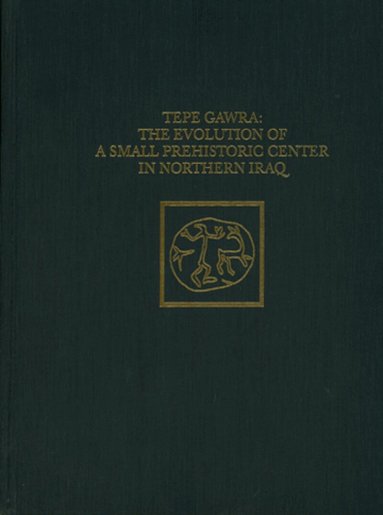
Tepe Gawra – The Evolution of a Small, Prehistoric Center in Northern Iraq
Mitchell S. Rothman
Inbunden, 2001
1 529 kr
Hoppa över listan


Mer från samma serie
Negotiating Structural Vulnerability in Cancer Control
Julie Armin, Nancy J. Burke, Laura Eichelberger
Häftad, 2019
1 029 kr
Psychology of Women Under Patriarchy
Holly F. Mathews, Holly F. Mathews, Adriana M. Manago
Häftad, 2019
899 kr
Trumpism, Mexican America, and the Struggle for Latinx Citizenship
Phillip B. Gonzales, Phillip B. Gonzales, Renato Rosaldo, Mary Louise Pratt
Häftad, 2021
689 kr
Hoppa över listan



Du kanske också är intresserad av
Del 112
Tepe Gawra – The Evolution of a Small, Prehistoric Center in Northern Iraq
Mitchell S. Rothman
Inbunden, 2001
1 529 kr
Del 3268
- Nyhet
Del 7
- Nyhet
Del 11
- Nyhet
Del 4
- Nyhet
Del 6
- Nyhet
Del 3
- Nyhet
- Nyhet