
Del i serien Oxford Studies on the Roman Economy
Urban Craftsmen and Traders in the Roman World
Häftad, Engelska, 2020
689 kr
Beställningsvara. Skickas inom 7-10 vardagar. Fri frakt för medlemmar vid köp för minst 249 kr.
Finns i fler format (1)
This volume, featuring sixteen contributions from leading Roman historians and archaeologists, sheds new light on approaches to the economic history of urban craftsmen and traders in the Roman world, with a particular emphasis on the imperial period. Combining a wide range of research traditions from all over Europe and utilizing evidence from Italy, the western provinces, and the Greek-speaking east, this edited collection is divided into four parts. It first considers the scholarly history of Roman crafts and trade in the nineteenth and twentieth centuries, focusing on Germany and the Anglo-Saxon world, and on Italy and France. Chapters discuss how scholarly thinking about Roman craftsmen and traders was influenced by historical and intellectual developments in the modern world, and how different (national) research traditions followed different trajectories throughout the nineteenth and twentieth centuries. The second part highlights the economic strategies of craftsmen and traders, examining strategies of long-distance traders and the phenomenon of specialization, and presenting case studies of leather-working and bread-baking. In the third part, the human factor in urban crafts and trade--including the role of apprenticeship, gender, freedmen, and professional associations--is analysed, and the volume ends by exploring the position of crafts in urban space, considering the evidence for artisanal clustering in the archaeological and papyrological record, and providing case studies of the development of commercial landscapes at Aquincum on the Danube and at Sagalassos in Pisidia.
Produktinformation
- Utgivningsdatum2020-06-01
- Mått155 x 232 x 21 mm
- Vikt668 g
- FormatHäftad
- SpråkEngelska
- SerieOxford Studies on the Roman Economy
- Antal sidor432
- FörlagOUP OXFORD
- ISBN9780198852902
Tillhör följande kategorier
Hoppa över listan




Mer från samma författare
The Economy of Roman Religion
Andrew Wilson, Andrew Wilson, Nick Ray, Angela Trentacoste
Inbunden, 2023
1 729 kr
Hoppa över listan

Mer från samma serie
The Economy of Roman Religion
Andrew Wilson, Andrew Wilson, Nick Ray, Angela Trentacoste
Inbunden, 2023
1 729 kr
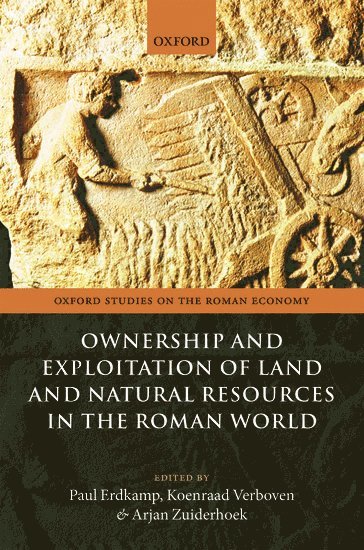
Ownership and Exploitation of Land and Natural Resources in the Roman World
ERDKAMP ET AL, Paul Erdkamp, Koenraad Verboven, Arjan Zuiderhoek
Inbunden, 2015
3 919 kr
Trade, Commerce, and the State in the Roman World
BOWMAN WILSON, Andrew Wilson, Alan Bowman
Inbunden, 2017
4 119 kr
Hoppa över listan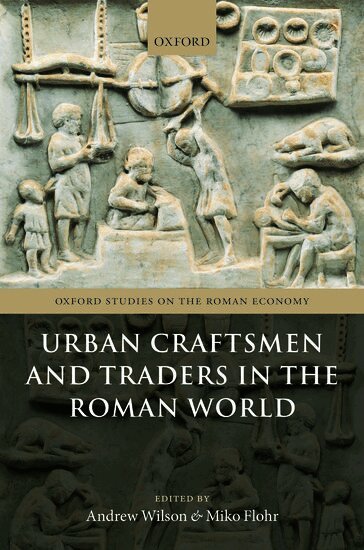
Du kanske också är intresserad av
Del 481
Companion to Cities in the Greco-Roman World
Miko Flohr, Miko Flohr, Arjan Zuiderhoek
Inbunden, 2024
2 729 kr
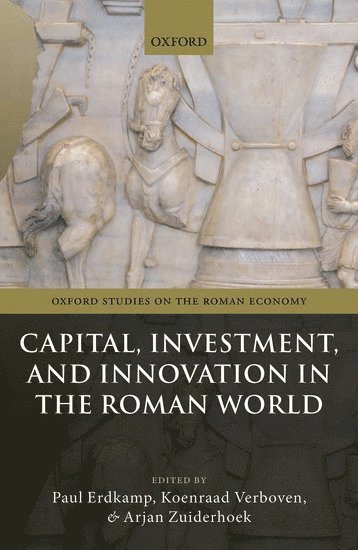
Capital, Investment, and Innovation in the Roman World
Paul Erdkamp, Koenraad Verboven, Arjan Zuiderhoek
Inbunden, 2020
3 739 kr