
Del i serien Relational Perspectives Book Series
Understanding and Treating Dissociative Identity Disorder
A Relational Approach
Inbunden, Engelska, 2011
2 499 kr
Beställningsvara. Skickas inom 10-15 vardagar. Fri frakt för medlemmar vid köp för minst 249 kr.
Finns i fler format (1)
Building on the comprehensive theoretical model of dissociation elegantly developed in The Dissociative Mind, Elizabeth Howell makes another invaluable contribution to the clinical understanding of dissociative states with Understanding and Treating Dissociative Identity Disorder. Howell, working within the realm of relational psychoanalysis, explicates a multifaceted approach to the treatment of this fascinating yet often misunderstood condition, which involves the partitioning of the personality into part-selves that remain unaware of one another, usually the result of severely traumatic experiences.Howell begins with an explication of dissociation theory and research that includes the dynamic unconscious, trauma theory, attachment, and neuroscience. She then discusses the identification and diagnosis of Dissociative Identity Disorder (DID) before moving on to outline a phase-oriented treatment plan, which includes facilitating a multileveled co-constructed therapeutic relationship, emphasizing the multiplicity of transferences, countertransferences, and kinds of potential enactments. She then expands the treatment possibilities to include dreamwork, before moving on to discuss the risks involved in the treatment of DID and how to mitigate them. All concepts and technical approaches are permeated with rich clinical examples.
Produktinformation
- Utgivningsdatum2011-05-02
- Mått152 x 229 x 23 mm
- Vikt780 g
- FormatInbunden
- SpråkEngelska
- SerieRelational Perspectives Book Series
- Antal sidor336
- FörlagTaylor & Francis Ltd
- ISBN9780415994965
Tillhör följande kategorier
Hoppa över listan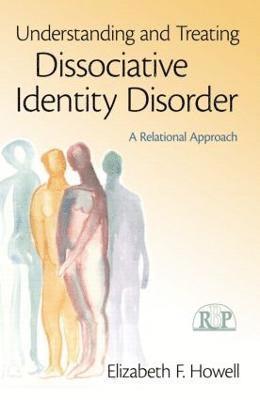







Du kanske också är intresserad av
- Nyhet
Hjärnans akilleshälar : hur din hjärna lurar dig, och vad du kan göra åt det
Anders Hansen
Inbunden

279 kr329 kr
- Nyhet
- Nyhet
- Nyhet
Del 1
- Nyhet
- Nyhet