
Del i serien OUP Oxford
Understanding and Representing Space
Theory and Evidence from Studies with Blind and Sighted Children
Inbunden, Engelska, 1994
2 569 kr
Beställningsvara. Skickas inom 5-8 vardagar. Fri frakt för medlemmar vid köp för minst 249 kr.
This book breaks new ground in our understanding of how we perceive and represent the space around us - one of the central topics in cognitive psychology. It presents a new view of development and spatial cognition by reversing the usual focus on vision and examining the evidence on representation in the total absence of vision without specific brain damage. Findings from the author's work with congenitally totally blind and with sighted children, together with studies from a wide variety of other areas, are set in the context of intersensory and spatial development. Touch and movement are considered as converging sources of reference information with and without vision. The findings have important implications for future work in many fields, particularly developmental pscychology; cognition, cognitive neuroscience and visual handicap, and make this new work essential reading for students and researchers in these fields.
Produktinformation
- Utgivningsdatum1994-10-27
- Mått160 x 241 x 23 mm
- Vikt623 g
- FormatInbunden
- SpråkEngelska
- SerieOUP Oxford
- Antal sidor324
- Upplaga1998
- FörlagClarendon Press
- ISBN9780198521426
Tillhör följande kategorier
Hoppa över listan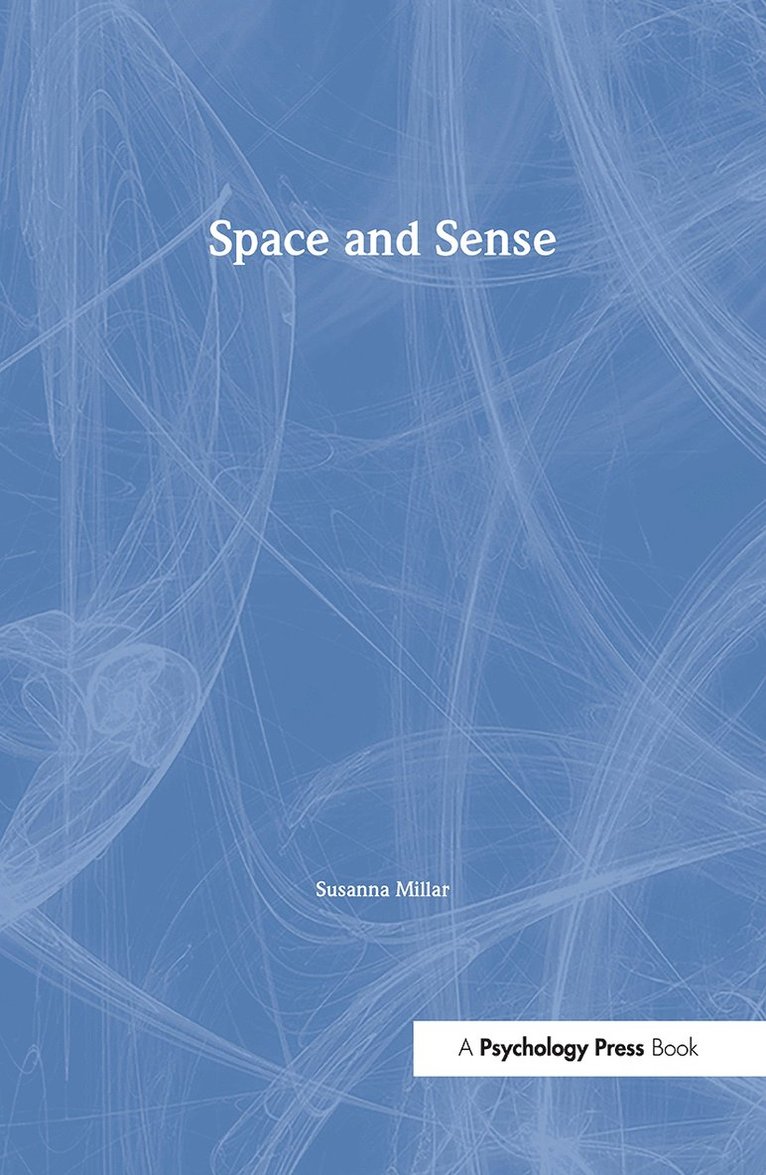





Du kanske också är intresserad av
- Nyhet
Del 3
- Nyhet
Del 11
- Nyhet
Del 6
- Nyhet
Del 4
Del 3
Del 1
Del 2
Del 7