
Tulsa Speaks
A City Council, Reparations, and Race in America Today
Inbunden, Engelska, 2026
409 kr
Beställningsvara. Skickas inom 5-8 vardagar. Fri frakt för medlemmar vid köp för minst 249 kr.
In 2021, the international media descended upon Tulsa, Oklahoma, for the centennial commemoration of the May 31–June 1, 1921, massacre in which a white mob killed more than three hundred African American residents, burned homes and businesses, and decimated a thriving town once referred to as "Black Wall Street." Tulsa Speaks is about the ongoing work of the Tulsa City Council, both before the Centennial and afterward, when the cameras were no longer trained on the city. It dives deep into the interpersonal dynamics among the nine councilors, exploring the continuing fight for reparations and racial justice and the long-running efforts of councilor, Vanessa Hall-Harper of District 1, to bring repair to Greenwood.Tulsa, like many municipal bodies across the country, serves as a hopeful sign of what we might become, as Americans and as a microcosm of race relations in America today.
Produktinformation
- Utgivningsdatum2026-06-09
- Mått140 x 216 x 20 mm
- Vikt313 g
- FormatInbunden
- SpråkEngelska
- Antal sidor166
- FörlagRutgers University Press
- ISBN9781978848320
Tillhör följande kategorier
Hoppa över listan

Du kanske också är intresserad av
- Nyhet
Del 4

- Nyhet
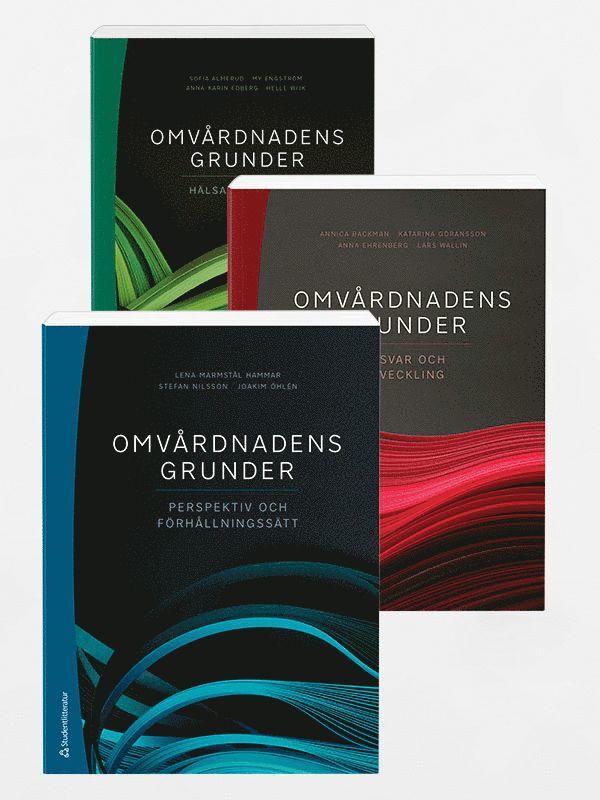
Omvårdnadens grunder - paket
Sofia Almerud, Annica Backman, Anna-Karin Edberg, Anna Ehrenberg, My Engström, Katarina Göransson, Lena Marmstål Hammar, Stefan Nilsson, Lars Wallin, Helle Wijk, Joakim Öhlén, Lilas Ali, Anette Alvariza, Ann-Christine Andersson, Pia Andersson, Anna Anåker, Charlotta van Eggermont Arwidson, Margareta Asp, Åsa Audulv, Malin Axelsson, Mariette Bengtsson, Eva Benzein, Lena Berg, Monica Bergqvist, Eva-Karin Bergström, Ida Björkman, Catrin Björvell, Angela Bång, Carina Bååth, Josefin Bäckström, Karin Bölenius, David Edvardsson, Rakel Eklund, Inger Ekman, Mirjam Ekstedt, Ann Catrine Eldh, Karin Enskär, Sofia Erestam, Anneli Eriksson, Henrik Eriksson, Marie Ernsth Bravell, Jan Florin, Anna Forsberg, Henrietta Forsman, Anette Forss, Mio Fredriksson, Febe Friberg, Maria Grandahl, Tanja Gustafsson, Agneta Gånemo, Elizabeth Hanson, Malin Hansson, Amanda Hellström, Ingela Henoch, Inger Jansson, Maria Jirwe, Lena Johansson, Pauline Johansson, Unn-Britt Johansson, Birgitta Kerstis, Ann-Sofie Källberg, Ulrika Källman, Anita Kärner Köhler, Cecilia Larsdotter, Margret Lepp, Maria Lindström Nilsson, Mikael Lundmark, Anneli Löf, Lennart Magnusson, Catharina Melander, Jenny Milton, Beata Molin, Annika Nordin, Maria Norinder, Sepideh Olausson, Carina Persson, Kerstin Prignitz Sluys, Josefin Rahmqvist, Birgit Holritz Rasmussen, Anneli Ringblom, Karin C. Ringsberg, Ann Rudman, Ann-Marie Rydholm Hedman, Silje Rysst, Lars Sandman, Regina Santamäki Fischer, Britt-Inger Saveman, Johanna Sjömar, Karin Stenzelius, Anna Strömberg, Annelie J. Sundler, Märtha Sund Levander, Kristina Svantesson, Anna Swall, Susanne Syrén, Pia Tingström, Johanna Ulfvarson, Sara Wallström, Albert Westergren, Lena Wiklund Gustin, Ulrika Winblad
Häftad, 2025
1 569 kr